

In a country where more than 25 million people are estimated to be living with disabilities, many continue to battle systemic barriers that limit access to education, employment, vocational opportunities, and economic independence. Yet, despite these challenges, the conversation around disability inclusion in Nigeria is gradually shifting from sympathy to empowerment, from limitations to possibilities.
At the forefront of this change is Lafarge Africa Plc, which has once again demonstrated its commitment to inclusive growth and sustainable empowerment through its groundbreaking Disability to Ability (D2A) Programme.
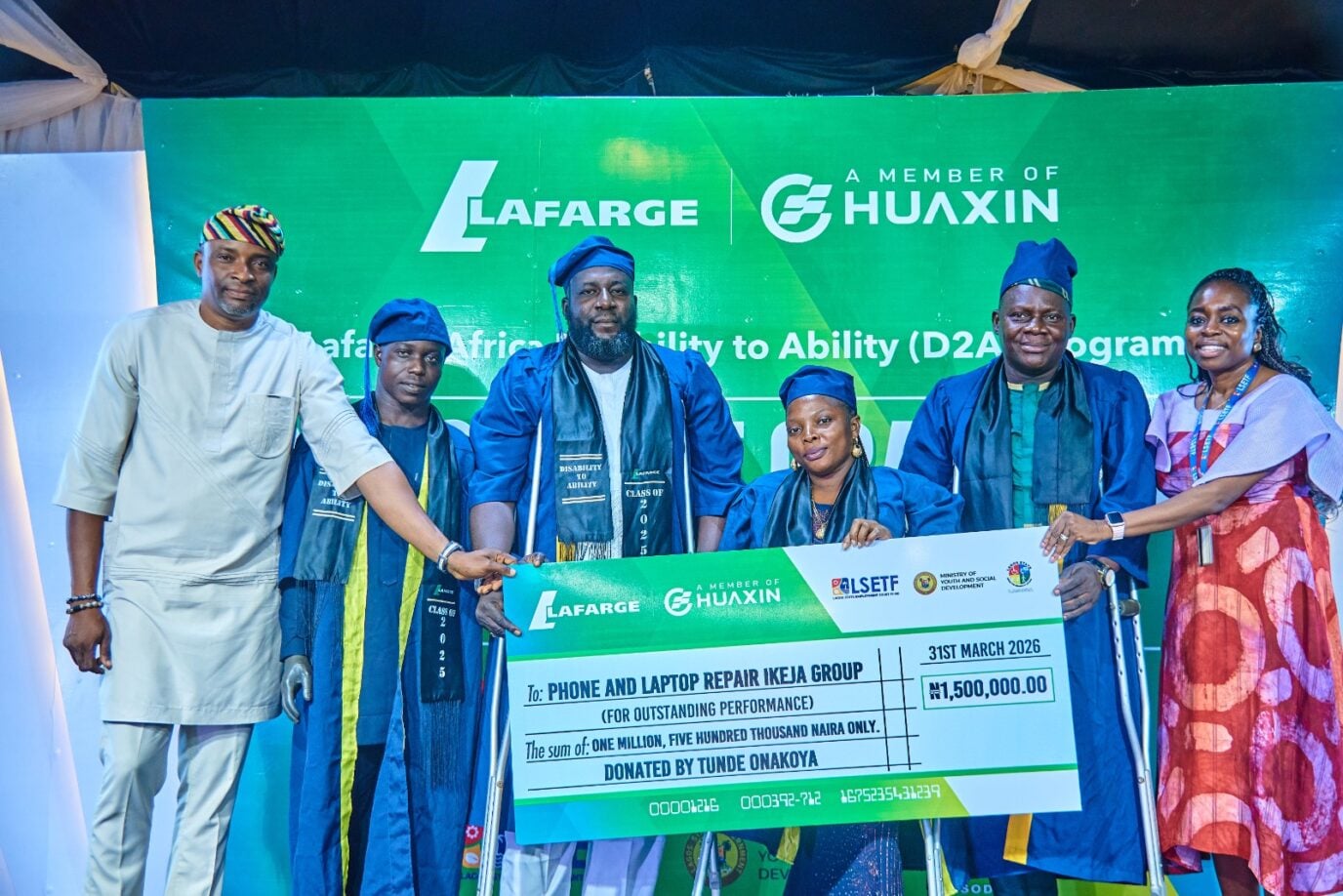
The company recently celebrated the successful graduation of 100 Persons with Disabilities (PWDs) in Lagos State after an intensive vocational and entrepreneurial training programme aimed at equipping beneficiaries with practical skills for self-reliance and economic empowerment.
The initiative, themed “Ability Reimagined,” was implemented through strategic collaboration with renowned Nigerian chess champion and social impact advocate Tunde Onakoya, alongside the Lagos State Employment Trust Fund, the Lagos State Ministry of Youth and Social Development, and the Lagos State Office for Disability Affairs.
The programme stood as more than just a training initiative; it became a symbol of hope, dignity, inclusion, and renewed confidence for participants who have long struggled against societal and economic exclusion.
Held at The Sheba Centre in Maryland, Lagos, the graduation ceremony brought together government officials, disability advocates, development partners, facilitators, and proud family members to celebrate the remarkable achievements of the beneficiaries who completed their training across various hubs in Ikeja and Ikorodu.
For many of the participants, the programme represented a life-changing opportunity to break free from dependency and embrace financial independence. Through hands-on practical sessions, beneficiaries were trained in several income-generating skills, including laptop and phone repairs, make-up artistry and gele styling, wig and braids making, as well as shoe and bag production.
The atmosphere at the graduation ceremony reflected excitement, pride, and renewed optimism as beneficiaries proudly showcased their newly acquired skills, tools, and certificates. Beyond the vocational knowledge gained, many participants described the initiative as a confidence-restoring experience that helped them rediscover their potential and place in society.
Speaking at the event, stakeholders emphasized the urgent need for sustained collaboration between the private sector, government institutions, and civil society organizations in advancing disability inclusion and economic participation for Persons with Disabilities in Nigeria.
The Commissioner for Youth and Social Development in Lagos State, Mobolaji Ogunlende, commended the initiative and highlighted the importance of creating opportunities that allow young persons with disabilities to contribute meaningfully to society and the economy.
Similarly, the Executive Secretary of the Lagos State Employment Trust Fund, Feyisayo Alayande, praised the collaboration behind the programme, noting that strategic partnerships remain essential in addressing unemployment and social exclusion among vulnerable populations.
They encouraged the graduates to maximize the opportunity by using their newly acquired skills not only to improve their own lives but also to inspire others within the disability community.
One of the beneficiaries, Funmilayo Idowu, who received training in laptop and phone repairs, expressed deep appreciation to the organizers for giving participants a chance to become self-reliant.
“I thank Lafarge, LSETF and LASODA for this opportunity to be independent and face the future with confidence,” she said emotionally.
For disability rights advocates, the D2A Programme represents a significant example of what genuine corporate inclusion should look like in practice. Rather than treating disability inclusion as charity, the initiative focused on empowerment, capacity building, and long-term economic sustainability.
The programme also reinforces the growing recognition that disability does not diminish talent, creativity, or productivity. What many Persons with Disabilities require is simply equal access to opportunities, support systems, and enabling environments.
Through the Disability to Ability initiative, Lafarge Africa Plc has continued to demonstrate that inclusive development is achievable when organizations intentionally invest in people who are often marginalized.
As Nigeria continues to push conversations around inclusion, accessibility, and equal opportunity, initiatives such as D2A are proving that when barriers are removed and opportunities are created, ability truly shines.
For the 100 graduates of the programme, the journey ahead is no longer defined by disability, but by possibility, purpose, and the confidence to build a brighter future.
Click the link below to join our WhatsApp channel


