

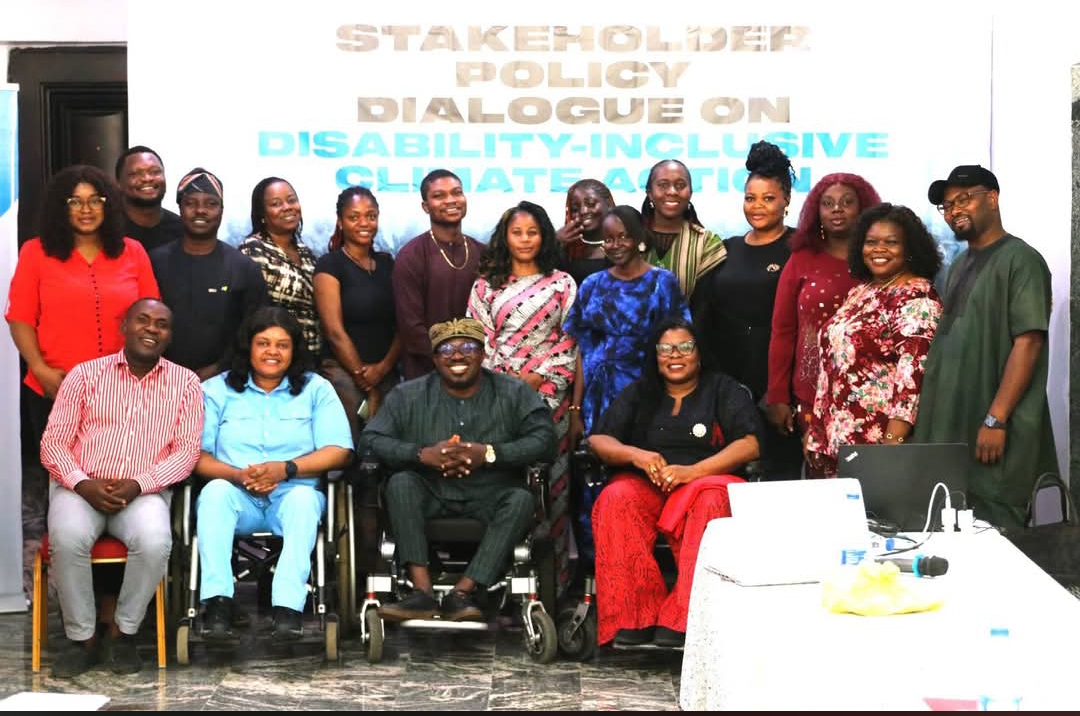
As the devastating effects of climate change continue to intensify across Nigeria, stakeholders have called for urgent and deliberate action to ensure that persons with disabilities, particularly women and girls with disabilities, are fully included in climate policies, disaster response mechanisms, and environmental governance frameworks.
This call formed the centerpiece of a Stakeholder Policy Dialogue on Disability-Inclusive Climate Action organized by the Inclusive Friends Association (IFA) with support from Rise Up Together, held in Abuja on Wednesday.
The dialogue brought together representatives of Organizations of Persons with Disabilities (OPDs), Civil Society Organizations (CSOs), climate change advocates, development partners, and government stakeholders to examine existing policy gaps and chart a path toward a more inclusive climate action agenda in Nigeria.
Climate Change Deepening Vulnerabilities
Participants noted that Nigeria is increasingly experiencing severe climate-related challenges, including flooding, coastal erosion, prolonged heatwaves, desertification, and water scarcity. While these disasters affect entire communities, they disproportionately impact vulnerable populations, especially persons with disabilities.
Women and girls with disabilities were identified as among the most affected groups due to persistent barriers in accessing climate information, early warning systems, healthcare services, emergency response mechanisms, humanitarian assistance, and recovery support during climate-induced emergencies.
Although Nigeria’s National Climate Change Policy (2021–2030) and National Adaptation Plan acknowledge the need to consider gender and vulnerable populations, stakeholders observed that the specific experiences, needs, and rights of persons with disabilities especially women and girls with disabilities remain largely absent from implementation strategies and climate interventions.
IFA Calls for Action Beyond Policy Recognition
Speaking during her Welcome Remarks and Goodwill Message, the Executive Director of the Inclusive Friends Association (IFA), Grace Jerry, emphasized that climate change is no longer a distant threat but a pressing reality already affecting millions of Nigerians.
“Climate change is no longer a future concern—it is a present reality affecting communities across Nigeria. From flooding and displacement to heatwaves and environmental stress, these impacts continue to shape the lives and wellbeing of millions of people,” she said.
Jerry lamented that despite growing awareness around climate action, persons with disabilities—particularly women and girls with disabilities—remain among those most affected while continuing to be excluded from many climate-related discussions and interventions.
She acknowledged the progress made through national climate frameworks and adaptation efforts but stressed that much more needs to be done to ensure disability inclusion translates from policy statements into practical implementation.
According to her, the dialogue provided a unique opportunity for stakeholders to collectively identify gaps, share experiences, and develop practical solutions capable of advancing disability-inclusive climate governance in Nigeria.
She further highlighted the importance of collaboration among OPDs, CSOs, government agencies, climate actors, and development partners, noting that sustainable change can only be achieved through collective ownership and partnership.
“Our expectation is that today’s engagement will not only identify challenges but also generate recommendations that strengthen climate governance, inform advocacy efforts, and contribute to more inclusive climate action in Nigeria,” she stated.
The IFA Executive Director also expressed appreciation to Rise Up Together for supporting the initiative and commended participating organizations for their commitment to promoting inclusion and sustainable development.
Experts Highlight Need for Inclusive Climate Solutions
The dialogue featured presentations from the Rise Up Together Leader, Stephen Oloche Idoko, and Technical Facilitator, Friday Ogezi, who provided participants with valuable insights into disability-inclusive climate action.
Their presentations explored the fundamentals of inclusive climate solutions, the intersection between disability and climate change, and the importance of building strong partnerships to ensure no one is left behind in climate adaptation and mitigation efforts.
Participants were taken through practical approaches for integrating disability inclusion into climate policies, emergency preparedness systems, disaster risk reduction strategies, and environmental sustainability programs.
The facilitators emphasized that climate resilience cannot be achieved if millions of persons with disabilities continue to face exclusion from decision-making processes and climate interventions.
Stakeholders Identify Critical Gaps
During interactive sessions, participants examined existing climate policies and identified several critical gaps hindering effective disability inclusion.
Among the concerns raised were the lack of accessible climate information, inadequate disability-responsive disaster preparedness plans, limited participation of persons with disabilities in climate decision-making processes, inaccessible emergency shelters and Internally Displaced Persons (IDP) camps, and insufficient investment in green livelihood opportunities for persons with disabilities.
Participants also highlighted the absence of disability-disaggregated data in many climate-related programs, making it difficult to accurately assess the impact of climate change on persons with disabilities and develop evidence-based interventions.
The dialogue further underscored the need for stronger coordination between disability rights organizations and climate-focused institutions to ensure inclusive policy development and implementation.
Communiqué Calls for Inclusive Climate Governance
At the end of the dialogue, stakeholders issued a communiqué containing key recommendations aimed at strengthening disability-inclusive climate action in Nigeria.
The communiqué called on government institutions, development partners, humanitarian actors, and climate stakeholders to prioritize persons with disabilities in the planning, implementation, monitoring, and evaluation of climate policies and programs.
Participants specifically advocated for:
- Accessible and disability-responsive early warning systems.
- Inclusive disaster preparedness and emergency response mechanisms.
- Accessible Internally Displaced Persons (IDP) camps and humanitarian facilities.
- Increased access to green jobs and climate-related livelihood opportunities for persons with disabilities.
- Greater representation of persons with disabilities in climate governance and decision-making structures.
- Improved collection of disability-disaggregated data to guide policy formulation and implementation.
- Mainstreaming disability inclusion across all climate adaptation and mitigation initiatives.
Stakeholders also pledged to strengthen partnerships and sustain advocacy efforts aimed at ensuring that climate action in Nigeria reflects the realities and lived experiences of persons with disabilities.
A Call for Urgent Action
As climate emergencies continue to threaten communities across the country, participants agreed that inclusive climate action is not merely a development objective but a matter of social justice and human rights.
The dialogue concluded with a strong commitment from participating organizations to work collectively toward building a climate-resilient Nigeria where persons with disabilities, particularly women and girls with disabilities, are not left behind but are recognized as active contributors and leaders in climate solutions.
For many participants, the message was clear: achieving sustainable climate action in Nigeria will require policies and interventions that are accessible, inclusive, and responsive to the diverse needs of all citizens.
Click the link below to join our WhatsApp channel


