

By Our Correspondent
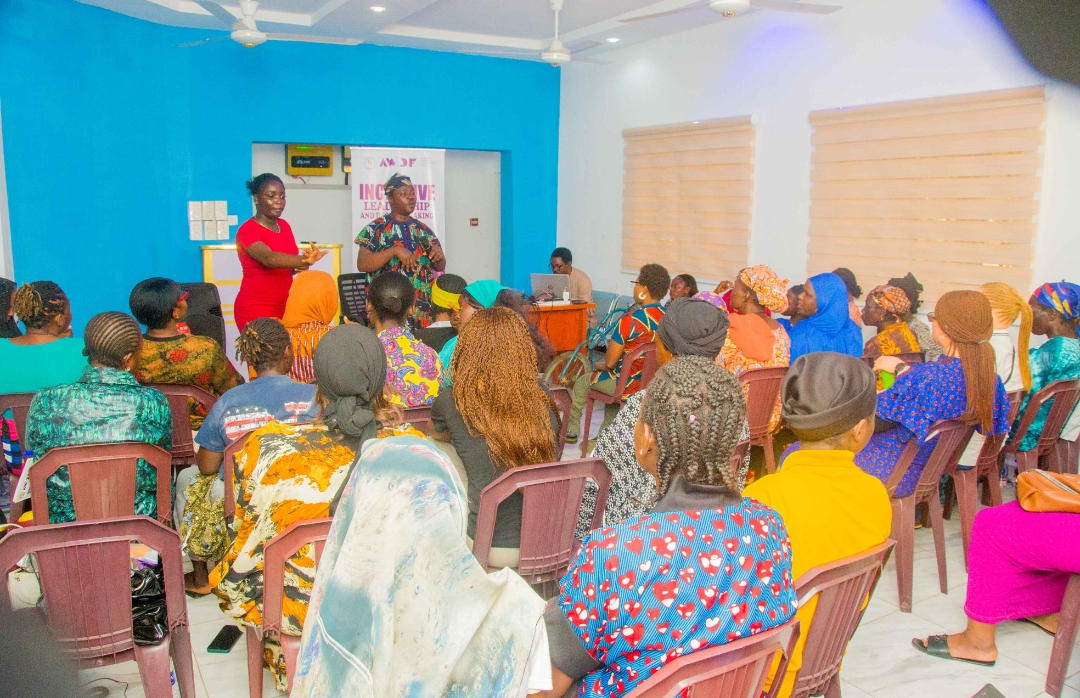
In a significant step towards advancing disability inclusion and strengthening the leadership capacity of women with disabilities, the Advocacy for Women with Disabilities Initiative (AWWDI), with support from the African Women’s Development Fund (AWDF), has conducted a comprehensive Monitoring and Evaluation (M&E) session for mentors and mentees participating in its Inclusive Leadership and Decision-Making Empowerment for Women with Disabilities Project in Bwari Area Council of the Federal Capital Territory (FCT).
The event brought together women and girls with disabilities, mentors, project staff, and key stakeholders to assess the impact of the mentorship programme, review progress made so far, identify challenges, and document lessons that will help strengthen future interventions.
The initiative is designed to equip women and girls with disabilities with leadership skills, confidence, decision-making abilities, and civic engagement competencies while creating opportunities for increased participation in governance, public leadership, and community development processes.
Building Future Women Leaders
Delivering a powerful presentation during the session, AWWDI’s Executive Director, Mrs. Patience Ogolo Dickson, emphasized the urgent need for inclusive leadership that recognizes and values the contributions of women with disabilities.
According to her, inclusive leadership goes beyond representation; it is about intentionally creating opportunities for marginalized groups to participate meaningfully in decision-making processes and leadership structures.
She challenged participants to see themselves not as passive beneficiaries of development programmes but as future leaders capable of influencing policies, transforming communities, and driving social change.
“Women with disabilities have the right, capacity, and potential to lead. The challenge is often not disability itself but the barriers society creates. We must continue to break those barriers and occupy spaces where decisions are made,” she said.
Her message resonated strongly with participants as she shared deeply personal experiences from her own journey as a woman with a physical disability.
From Exclusion to Leadership
Reflecting on her childhood experiences, Mrs. Dickson recounted how societal stereotypes almost denied her access to education and opportunities.
She revealed that many people questioned why she was attending school, believing that girls with disabilities had little need for education because they were unlikely to achieve meaningful success in life.
Despite the discrimination and low expectations placed upon her, she remained determined to succeed.
Through resilience, hard work, and perseverance, she navigated numerous barriers and eventually emerged as one of Nigeria’s respected advocates for disability rights, inclusion, and gender equality.
Her story served as a powerful reminder that disability does not diminish a person’s capacity to learn, lead, or contribute meaningfully to society.
Participants listened attentively as she narrated another experience that highlighted the widespread misconceptions many persons with disabilities face daily.
She recalled a moment early in her career when a stranger offered her money after seeing her walking with crutches, assuming she was a beggar.
Rather than accepting the gesture, she used the opportunity to educate the individual and challenge the stereotype that disability automatically equates to poverty, helplessness, or dependence.
The experience, she said, strengthened her resolve to advocate for economic empowerment and equal opportunities for persons with disabilities.
She encouraged participants to reject limiting societal narratives and focus instead on building confidence, pursuing education, acquiring skills, and achieving financial independence.
Participants Report Remarkable Growth
Following the leadership presentation, AWWDI’s Project Manager, Dr. Kola Jayeoba, facilitated an interactive Monitoring and Evaluation session that provided participants with an opportunity to reflect on their experiences since the commencement of the mentorship programme.
The exercise generated rich discussions as mentors and mentees openly shared personal stories, achievements, challenges, and lessons learned.
Many participants reported significant improvements in their self-confidence, communication abilities, leadership awareness, and community engagement.
Several mentees explained that before joining the programme, they often struggled to express their opinions during meetings or public gatherings due to fear, self-doubt, and societal stigma.
However, through continuous mentorship, encouragement, and leadership coaching, they now feel empowered to speak confidently, engage in public discussions, and contribute meaningfully to conversations affecting their communities.
One participant disclosed that she previously avoided leadership responsibilities and public speaking opportunities but now actively mobilizes other women with disabilities and facilitates discussions around issues affecting their rights and wellbeing.
Others described the mentorship programme as a life-changing experience that has helped them discover their strengths, build valuable networks, and develop a stronger sense of purpose and belonging.
For many, the programme has become more than a leadership initiative—it has become a supportive community where women with disabilities can learn, grow, and inspire one another.
Persistent Barriers Remain
Despite the progress recorded, participants acknowledged that women and girls with disabilities continue to face significant challenges across Nigeria.
Among the issues highlighted were discrimination, social stigma, exclusion from leadership and political spaces, inaccessible environments, inadequate access to education and employment opportunities, and persistent negative stereotypes about disability.
Participants noted that these barriers continue to limit the full participation of women with disabilities in community development and governance processes.
However, they expressed optimism that initiatives such as AWWDI’s mentorship programme are helping to dismantle these obstacles by providing practical support, leadership training, networking opportunities, and platforms for collective advocacy.
Stakeholders emphasized that empowering women with disabilities is not only a matter of human rights but also a critical requirement for achieving inclusive development and sustainable progress.
Measuring Impact and Strengthening Future Interventions
The Monitoring and Evaluation exercise provided AWWDI with an opportunity to assess progress against project objectives, evaluate mentor-mentee engagement, document success stories, identify implementation gaps, and gather recommendations for improving future programming.
The feedback generated will contribute significantly to enhancing the effectiveness and sustainability of interventions aimed at promoting leadership and decision-making participation among women with disabilities.
The session also reinforced the importance of mentorship as a tool for nurturing emerging leaders and creating pathways for greater representation of women with disabilities in governance and public life.
“Nothing About Us Without Us”
As the event drew to a close, participants reaffirmed their commitment to disability rights advocacy and inclusive leadership.
In a united voice, they echoed the globally recognized disability rights slogan, “Nothing About Us Without Us,” underscoring the importance of ensuring that women with disabilities are actively involved in decisions, policies, and programmes that affect their lives.
The declaration reflected a growing determination among women with disabilities to move beyond the margins and take their rightful place in leadership, governance, and community development.
For AWWDI, the message is clear: empowering women and girls with disabilities today means creating a future where they are not merely represented but are influential leaders, decision-makers, and changemakers driving inclusive development across Nigeria.
About AWWDI
The Advocacy for Women with Disabilities Initiative (AWWDI) is a women-led organization committed to promoting the rights, inclusion, empowerment, and leadership of women and girls with disabilities. Through advocacy, mentorship, capacity development, research, awareness creation, and community engagement, AWWDI continues to champion a more inclusive society where women with disabilities can thrive and contribute fully to national development.
Click the link below to join our WhatsApp channel


