

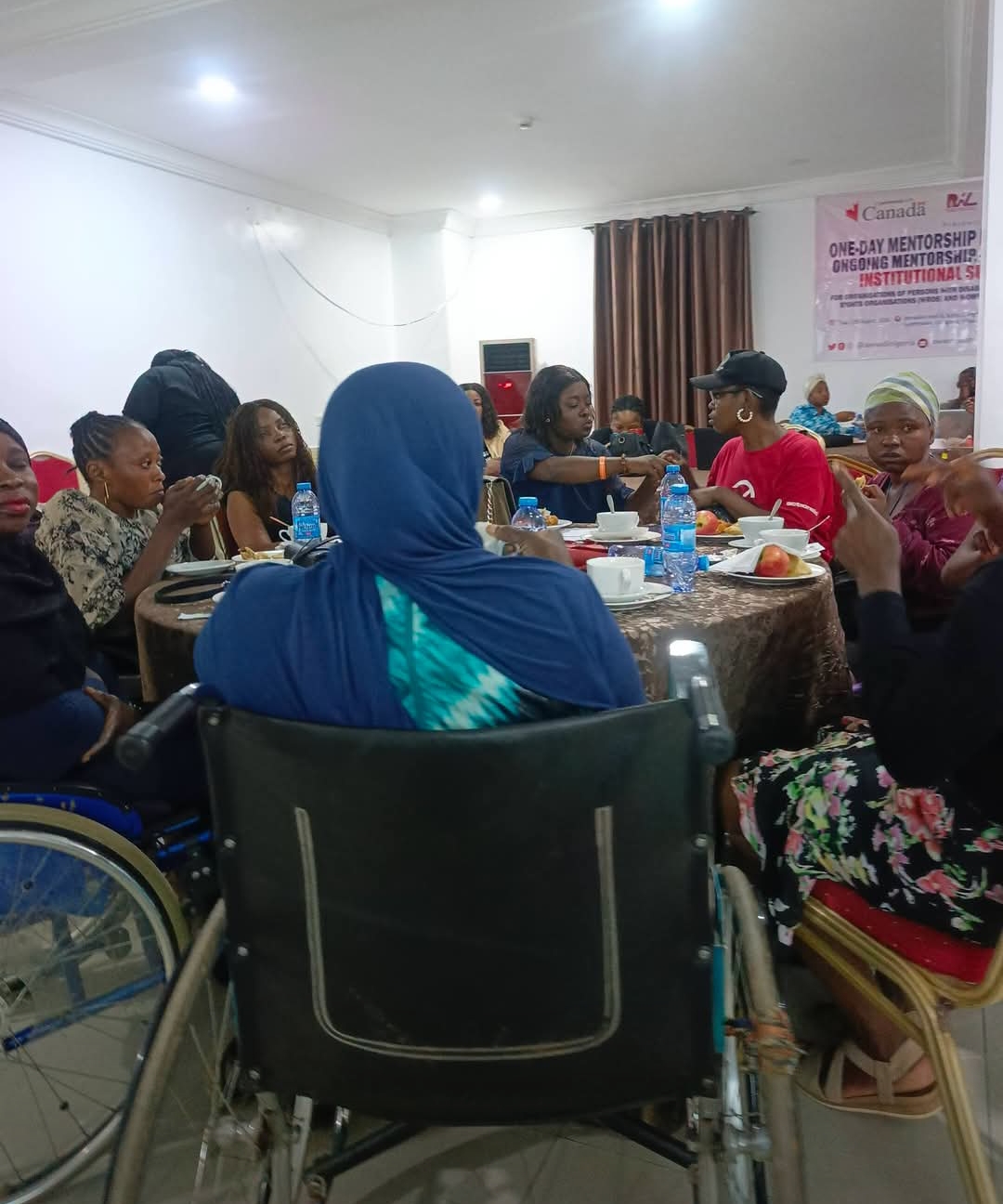
ABUJA, NIGERIA — The Advocacy for Women With Disabilities Initiative (AWWDI) has launched a one-day Mentorship Link-up and ongoing mentorship, coaching, and institutional support programme designed to equip women with disabilities with the skills and confidence needed to become effective advocates and future leaders.
The initiative is being implemented under the AMPLIFY Disability-Inclusion Policies and Programmes Project, with a focus on disability gender equality, Gender-Based Violence (GBV) prevention and response, Sexual and Reproductive Health and Rights (SRHR), climate justice, economic empowerment, and inclusive feminist movement strengthening.
Supported by ActionAid Nigeria and Global Affairs Canada, the programme brings together Organisations of Persons with Disabilities (OPDs), Organisations of Women with Disabilities (OWDs), and Women’s Rights Organisations (WROs) to create opportunities for mentorship, practical learning, networking, and institutional development.
Speaking with The Qualitative Magazine (TQM), the Acting National Coordinator of AWWDI, Mrs. Biliskisu Yakubu, said the programme is designed to develop a new generation of women with disabilities who can confidently speak out and advocate on issues that directly affect their lives.
“These women are directly affected, and equipping them to speak on their issues is the best thing that can happen to them,” Yakubu said.
She explained that AWWDI expects the programme to produce women who will not only become strong advocates for disability rights but also emerge as leaders capable of contributing meaningfully to solving broader societal challenges in Nigeria.

Building Confidence Through Mentorship
For the mentees, the programme represents more than training—it is an opportunity to discover their voices, build confidence, and gain practical experience within the civil society space.
Jamila Abdulahi, a wheelchair user and one of the mentees, described the initiative as a welcome development, saying it offers her an opportunity to strengthen her public speaking skills.
She said the low self-esteem she has often experienced is something she hopes to overcome through the programme.
Abdulahi expressed confidence that by the end of the mentorship, she would have achieved remarkable improvement in her confidence and communication abilities.
Another mentee, Cynthia Ukachi, a woman with albinism, said the initiative would broaden her understanding of her rights while equipping her with practical skills to participate more meaningfully in civil society.
From Mentorship to Practical Experience
A major component of the programme is a six-month practical mentorship and internship arrangement.
AWWDI is working with partner OPDs and civil society organisations serving as mentors. The participating women with disabilities will be attached to selected organisations as volunteers or apprentices, giving them an opportunity to learn firsthand how advocacy, programme implementation, organisational management, and civil society engagement are carried out.
At the end of the six-month placement, the mentees are expected to submit reports documenting their experiences and lessons learned during the internship.
Before selecting their mentors, representatives of the partner organisations presented brief profiles of their respective areas of work. This enabled the mentees to make informed decisions about the organisations they wished to learn from.
Strengthening Disability Inclusion
The mentorship link-up, held on Thursday, August 13, 2026, also featured training sessions on disability inclusion and related issues.
One of the sessions was facilitated by the AWWDI Programme Manager, Dr. Kolawole Jayeoba, who engaged participants on key principles and practices of disability inclusion.
For AWWDI, the programme is ultimately about moving women with disabilities from being beneficiaries of advocacy to becoming active voices, leaders, decision-makers, and agents of change.
With six months of practical exposure ahead, the organisers hope the initiative will help nurture a stronger generation of women with disabilities who can confidently occupy space, influence policy, challenge discrimination, and contribute to addressing Nigeria’s wider social challenges.
Follow the The Qualitative Magazine channel on WhatsApp:


