

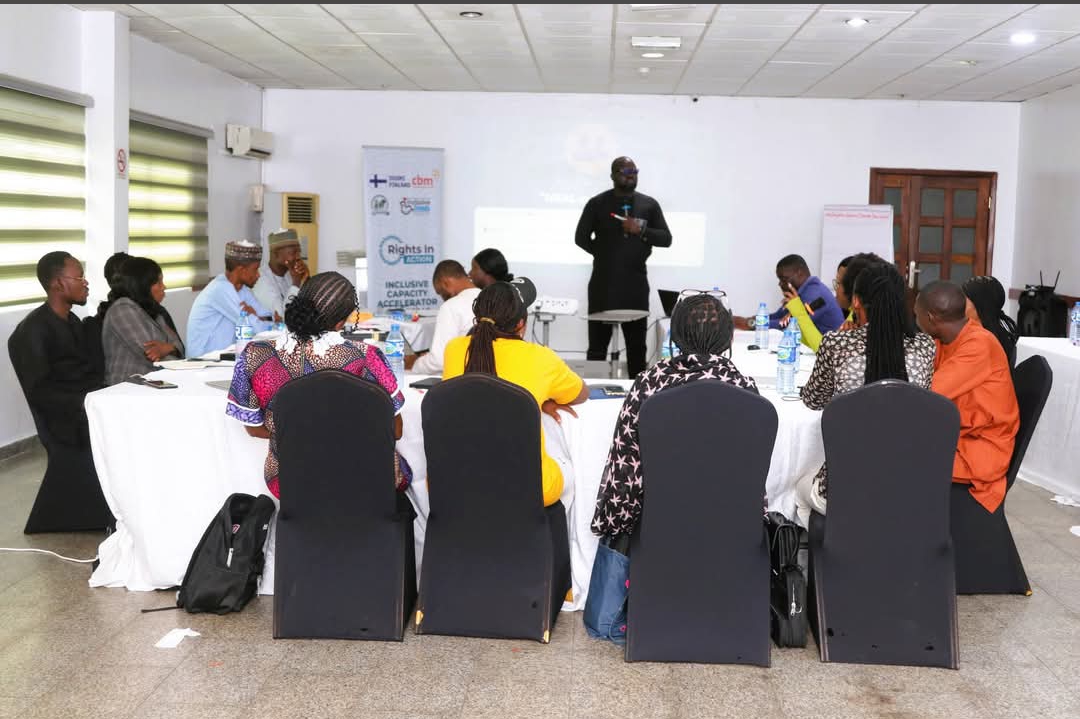
Abuja, Nigeria – In a renewed effort to build stronger, more effective, and impact-driven disability organizations across Nigeria, the Inclusive Friends Association (IFA) has continued the implementation of its Right in Action programme through the Inclusive Capacity Accelerator Hub (ICAH), a pioneering training and mentorship initiative designed to strengthen the capacity of Organisations of Persons with Disabilities (OPDs).
The latest phase of the programme brought together representatives of disability organizations for an intensive learning session focused on Monitoring and Evaluation (M&E), a critical tool for measuring impact, strengthening accountability, and advancing evidence-based advocacy.
The session commenced with a welcome address by the Programme Manager of ICAH, Moses Oluwaseyi, who reiterated the programme’s commitment to equipping OPDs with the knowledge, skills, and institutional capacity required to drive sustainable change within the disability movement.
According to Oluwaseyi, strengthening the capacity of Organizations of Persons with Disabilities is essential to ensuring that disability advocates are better positioned to influence public policies, implement impactful programmes, and effectively represent the interests of Persons with Disabilities in governance and development processes.
He emphasized that as disability inclusion continues to gain recognition within national and international development agendas, OPDs must possess the technical competencies needed to demonstrate results, measure progress, and sustain interventions that improve the lives of Persons with Disabilities.
Following the opening remarks, participants were treated to an engaging and highly interactive facilitation led by Olaniyi Olumayowa of the CLEEN Foundation. The training immediately captured participants’ attention as discussions centered on the fundamentals of Monitoring and Evaluation and its growing importance in today’s development landscape.
Olaniyi introduced participants to foundational concepts such as What is Monitoring?, What is Evaluation?, and Why Monitoring and Evaluation Matters. Through practical illustrations, he explained how effective M&E systems enable organizations to move beyond assumptions and rely on measurable evidence to assess the success of their interventions.
He noted that many organizations often implement projects without adequately tracking outcomes, making it difficult to determine whether their activities are producing the desired impact. Monitoring and Evaluation, he explained, provides organizations with the tools needed to assess performance, identify challenges, and make informed decisions based on reliable data.
Working alongside his colleagues, Chigozinm Okoro and Ekobat Benard, Olaniyi further guided participants through the practical process of developing comprehensive and effective M&E plans.
The facilitators provided detailed insights into designing Monitoring and Evaluation frameworks, developing indicator banks, establishing data collection systems, and creating mechanisms for measuring project outcomes and long-term impact.
A major highlight of the training was the session on the Theory of Change, a strategic planning framework widely used in the development sector to map the pathway between activities, outputs, outcomes, and impact.
Participants learned how the Theory of Change helps organizations clearly define their goals, identify assumptions, establish measurable indicators, and understand how their activities contribute to broader social transformation.
The facilitators emphasized that a well-developed Theory of Change serves as a roadmap for achieving organizational objectives and provides a strong foundation for monitoring progress and evaluating success.
Throughout the training, participants engaged in practical exercises, group discussions, and real-life case studies that enabled them to apply the concepts being taught. These hands-on activities helped participants gain practical experience in designing M&E systems tailored to the unique realities of disability-focused programmes.
The interactive nature of the sessions created opportunities for participants to share experiences, discuss common challenges faced by OPDs, and explore innovative solutions for improving programme effectiveness.
The training also highlighted the role of Monitoring and Evaluation in strengthening advocacy efforts. Participants learned that credible data and documented evidence are powerful tools for influencing policymakers, attracting donor support, promoting accountability, and advancing disability-inclusive policies and programmes.
Facilitators stressed the importance of setting clear and measurable indicators, collecting high-quality data, maintaining accurate records, and regularly reviewing findings to improve programme implementation and decision-making.
According to them, organizations that invest in robust M&E systems are better positioned to demonstrate impact, build stakeholder confidence, secure funding opportunities, and sustain their interventions over the long term.
Participants expressed appreciation for the quality of the training, noting that the knowledge gained would significantly improve their ability to monitor projects, evaluate outcomes, and strengthen their organizations’ advocacy and programme delivery efforts.
Many described the session as timely and transformative, particularly at a period when evidence-based advocacy is becoming increasingly important in advancing the rights and inclusion of Persons with Disabilities.
As the Right in Action programme continues to empower disability organizations across the country, stakeholders believe that initiatives such as the Inclusive Capacity Accelerator Hub will play a vital role in building a stronger disability movement capable of delivering measurable impact and driving meaningful social change.
The training marks yet another milestone in IFA’s ongoing commitment to promoting disability inclusion, strengthening institutional capacity, and ensuring that Organizations of Persons with Disabilities have the tools and expertise needed to effectively champion the rights and aspirations of millions of Nigerians with disabilities.
With participants leaving the session equipped with new knowledge, practical skills, and renewed determination, the future of disability advocacy and inclusive development in Nigeria appears increasingly promising.
Click the link below to join our WhatsApp channel


