

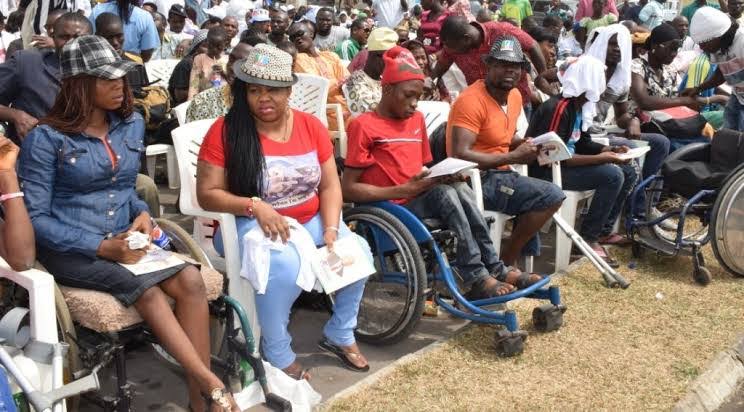
Breaking the Silence Around Sexual Violence Against Women with Disabilities in Nigeria
A Special Advocacy Feature by The Qualitative Magazine (TQM)
She has the right to say NO. She has the right to make decisions about her body. She has the right to report sexual violence. Her wheelchair, hearing impairment, visual impairment, intellectual disability or need for personal assistance does not diminish these rights.
A woman, a disability and a painful silence
Imagine a young woman who uses a wheelchair. We will call her Esther.
Esther is educated, intelligent and capable of making decisions about her life. However, because of the nature of her mobility impairment, she sometimes requires assistance with transportation and certain daily activities.
One day, someone she trusts sexually abuses her.
She is devastated. She wants to report the incident, but fear begins to overwhelm her.
What if the person responsible is someone her family knows? What if she is blamed? What if nobody believes her? What if the person she depends on for assistance abandons her? What if she reports the matter and encounters an inaccessible police station?
She eventually confides in someone close to her.
Instead of receiving the support she desperately needs, she is told to keep quiet.
“Who will marry you if this becomes public knowledge?”
“Are you sure you understood what happened?”
“Don’t destroy your life because of one incident.”
“Besides, how will you manage without the person who helps you?”
Esther is left wondering whether speaking out will bring justice or create another crisis in her life.
Her story is illustrative, not a claim about an actual survivor. But the questions it raises are real challenges that disability-inclusive SGBV prevention and response systems must confront.
For women with disabilities, sexual violence can be accompanied by another painful experience: having their voices questioned, their autonomy undermined and their right to justice treated as negotiable.
Her disability is not consent. Her dependence is not permission. Her silence is not approval.
The dangerous misconception: Disability does not take away a woman’s right to consent
One of the most damaging attitudes society must confront is the belief that women with disabilities are less entitled to sexual autonomy than other women.
Some people wrongly assume that a woman with a disability cannot make decisions about her body, understand relationships or express her sexual preferences.
Others believe that because a woman depends on a man for financial support, transportation, personal assistance or accommodation, she should tolerate whatever treatment he gives her.
These assumptions are dangerous.
A woman with a disability has the same right to bodily integrity, dignity and protection from sexual violence as any other woman.
A wheelchair user does not surrender her right to refuse sexual advances because she needs assistance transferring from her wheelchair to her bed.
A Deaf woman does not lose her right to refuse sexual activity because she communicates through sign language.
A woman with visual impairment does not become sexually available because she sometimes needs someone to guide her.
A woman with an intellectual disability does not become a person without rights simply because she may require support to understand information or communicate decisions.
Disability must never be treated as automatic consent.
Consent must be freely given and assessed within the applicable legal framework and circumstances. Where a person’s decision-making or communication requires support, the response must protect her rights, will and preferences rather than make assumptions about her.
The question is not whether she has a disability.
The question is whether the sexual act was lawful and consensual.
When the perpetrator is someone she depends on
Consider another illustrative situation.
A woman with a physical disability lives with a man who provides financial support and assists her with transportation. Over time, he begins to use that dependence to control her.
He threatens to withdraw support whenever she refuses his sexual demands. He reminds her that she has nowhere else to go and that nobody else will care for her.
Eventually, she begins to comply out of fear.
This is not a relationship based on mutual respect. It is an example of how dependence can be manipulated as a means of coercion and abuse.
Unfortunately, perpetrators may exploit the very support arrangements that are supposed to enable women with disabilities to participate fully in society.
Abuse may also occur within families, institutions, care arrangements, workplaces, schools and intimate relationships.
In some situations, the perpetrator may be a caregiver, relative, intimate partner, employer, teacher or someone regarded by the community as trustworthy.
This makes prevention and reporting particularly complicated.
A woman may fear losing her accommodation, personal assistance, income or family support if she reports the person responsible.
The danger is that society may mistake her continued dependence or silence for acceptance.
We must understand that needing assistance does not mean surrendering control over one’s body.
Care is not ownership. Assistance is not authority to abuse. And dependency must never become a weapon of exploitation.
The Deaf woman whose voice nobody hears
Imagine a Deaf woman who walks into a police station to report sexual assault.
She tries to communicate what happened, but there is no sign-language interpreter.
The officer asks questions. She struggles to understand them. She attempts to explain through gestures and written notes, but her account is not properly understood.
After several frustrating exchanges, she leaves without knowing whether her complaint has been formally received.
What has happened here?
The woman has attempted to exercise her right to justice, but the institution has failed to make reasonable communication arrangements.
Now consider a woman with an intellectual disability who is repeatedly asked complicated questions without adequate explanation or time to respond.
Her communication difficulties may be wrongly interpreted as dishonesty or inconsistency.
These situations demonstrate why disability inclusion must be integrated into police training, investigation procedures, medical examinations and court processes.
The solution is not to expect every survivor to communicate in the same way.
The solution is to provide appropriate support.
This may include qualified sign-language interpreters, accessible written information, easy-to-understand explanations, communication aids, trained interviewers and other reasonable procedural accommodations.
Women with disabilities must be heard, not merely invited to speak.
Girls with disabilities: When childhood is not adequately protected
The situation becomes even more concerning when the survivor is a girl with a disability.
A girl with a developmental or intellectual disability may depend on adults for personal care, education, communication and protection.
A person who exploits that dependence may assume that she will not understand what is happening, cannot report the abuse or will not be believed.
Some children may struggle to explain what has happened to them, especially when the perpetrator is someone they know or someone who provides care.
Others may attempt to disclose abuse but encounter adults who dismiss their statements.
This is why parents, teachers, healthcare workers, social workers, religious leaders and child-protection agencies must understand disability-inclusive safeguarding.
Parents must create environments where children can communicate discomfort, ask questions about bodily boundaries and report inappropriate touching without fear of punishment.
Schools must establish safeguarding procedures that include children with disabilities.
Care institutions must be monitored.
And when abuse is suspected, professionals must respond promptly, safely and appropriately.
A child’s inability to communicate through conventional speech must never be interpreted as an absence of feelings, understanding or rights.
The laws are there. Are the protections reaching her?
Nigeria has legal and international human-rights frameworks that provide important protections against violence, discrimination and abuse.
However, the existence of a law does not automatically guarantee that a woman with a disability can access justice.
1. Violence Against Persons (Prohibition) Act, 2015
Section 1 defines rape and criminalises specified forms of penetration without consent, including circumstances involving force, threats, intimidation, fear of harm and other prohibited means.
The Act provides severe criminal penalties for rape upon conviction and empowers courts to award appropriate compensation.
The federal VAPP Act applies in the Federal Capital Territory. Outside the FCT, the relevant state VAPP law or other applicable criminal legislation must be examined because adoption and provisions differ across states.
This distinction is important: a survivor in Abuja should not be given the impression that every state has precisely the same statutory framework.
2. Discrimination Against Persons with Disabilities (Prohibition) Act, 2018
This Act establishes a national framework for protecting persons with disabilities against discrimination.
It addresses accessibility, participation and equal opportunities and establishes the National Commission for Persons with Disabilities (NCPWD).
Its provisions on accessibility are relevant to police stations, hospitals, courts and other public facilities.
A survivor should not be denied access to a public service because the building has no ramp, the information is inaccessible or the institution has failed to consider her disability-related needs.
3. Constitution of the Federal Republic of Nigeria, 1999, as amended
Section 34 protects the dignity of the human person and prohibits torture and inhuman or degrading treatment.
Section 42 addresses discrimination on specified grounds.
These constitutional protections form part of the foundation for human dignity and equality before the law.
4. Child Rights Act, 2003
Section 31 prohibits sexual intercourse with a child and establishes the offence of rape in the circumstances specified by the Act.
State child-rights laws must also be considered when responding to cases outside the Federal Capital Territory.
The protection of girls with disabilities must be an essential component of child safeguarding.
5. United Nations Convention on the Rights of Persons with Disabilities (CRPD)
Nigeria’s obligations under the CRPD are particularly relevant.
- Article 6 recognises the multiple discrimination experienced by women and girls with disabilities.
- Article 13 addresses effective access to justice, including procedural and age-appropriate accommodations.
- Article 16 requires protection from exploitation, violence and abuse, including gender-based violence, and calls for accessible protection and support services.
- Article 17 protects the physical and mental integrity of persons with disabilities.
These provisions establish that women with disabilities must not be excluded from violence-prevention programmes, protection services or justice systems.
The challenge is implementation.
It is time to move from quoting laws at conferences to ensuring that women with disabilities experience their protection in everyday life.
Who should be held accountable?
Ending sexual violence against women with disabilities requires coordinated action from government institutions and civil society.
The Nigeria Police Force (NPF)
Police officers must be trained to receive complaints from survivors with different disabilities. Gender Units and other appropriate investigative units should make reasonable arrangements for communication, confidentiality and accessible reporting.
No survivor should be humiliated, threatened or dismissed because of her disability.
The National Commission for Persons with Disabilities (NCPWD)
The Commission should work with law-enforcement agencies, health institutions and other stakeholders to identify and remove disability-related barriers in SGBV prevention and response.
It should promote accessible reporting procedures, monitor disability inclusion and ensure that women with disabilities participate meaningfully in policy development.
Federal Ministry of Justice — SGBV Response/Gender Unit
The Unit has responsibilities relating to access to justice, legal counselling, prosecution coordination, capacity building, SGBV data and advocacy.
It should ensure that disability inclusion is not treated as an optional addition to Nigeria’s SGBV response architecture.
National Human Rights Commission (NHRC)
The Commission provides an avenue for human-rights complaints and should continue to strengthen awareness of the rights of women with disabilities and the routes available for seeking redress.
Federal Ministry of Women Affairs and Social Development
The Ministry has an important role in coordinating policies, programmes and institutional responses to violence against women and girls.
Its initiatives should deliberately include women and girls with disabilities.
National Agency for the Prohibition of Trafficking in Persons (NAPTIP)
Where sexual exploitation is connected to trafficking or offences within its mandate, NAPTIP has an important investigative, protective and referral role.
Sexual Assault Referral Centres (SARCs)
SARCs provide important services that may include medical examination, treatment, psychosocial support, documentation and referrals.
However, their services must be accessible to wheelchair users, Deaf survivors, women with visual impairments and survivors with intellectual or psychosocial disabilities.
FIDA Nigeria and other legal-aid organisations
Women who need legal information, advice and assistance should be able to access qualified legal support without disability-related discrimination.
The institutions must work together. Survivors should not be left to coordinate their own rescue, medical care, legal assistance and protection.
The uncomfortable questions Nigeria must answer
As a disability-inclusive society, we must ask ourselves some difficult questions.
- How many police stations in Nigeria have accessible entrances, toilets and facilities for wheelchair users?
- How many police Gender Units have access to qualified sign-language interpreters?
- Are women with intellectual disabilities provided with appropriate communication and procedural support when reporting sexual violence?
- Are SGBV shelters accessible to women who require personal assistance?
- What happens when the alleged perpetrator is the survivor’s caregiver, relative or financial provider?
- Are women with disabilities adequately represented in government SGBV response committees and policy-development processes?
- How many government agencies collect and analyse disability-disaggregated information on sexual violence and service access?
- Are survivors able to obtain medical care, psychosocial support and legal assistance without encountering additional discrimination?
These questions should not remain in conference halls. They should become part of institutional assessments, public accountability and measurable policy action.
What must change: From sympathy to rights-based action
The fight against sexual violence must move beyond public sympathy and occasional awareness campaigns.
We need practical changes.
First: Make reporting accessible.
Police stations, hospitals, courts and other relevant institutions should provide accessible infrastructure, communication assistance and reasonable accommodations.
Second: Train frontline professionals.
Police officers, doctors, nurses, social workers, prosecutors and judicial personnel should understand disability rights, informed consent, trauma-informed practice and appropriate safeguarding.
Third: Strengthen economic independence.
Women with disabilities must have access to education, employment, social protection and independent living support. Economic empowerment cannot eliminate sexual violence, but reducing forced dependence can strengthen a woman’s ability to seek safety and exercise her choices.
Fourth: Protect survivors from retaliation.
Confidentiality, safety planning, appropriate referrals and protection from intimidation must be prioritised.
Fifth: Improve data collection.
Government agencies should collect ethically managed, appropriately disaggregated data to understand the experiences of women with different disabilities and identify service gaps. Survivor confidentiality must remain paramount.
Sixth: Put women with disabilities at the centre.
Women with disabilities must not merely be invited to attend advocacy events. They must participate in designing, implementing and monitoring SGBV prevention and response programmes.
Nothing about women with disabilities should be decided without their meaningful participation.
A message to parents, caregivers and families
If a woman or girl with a disability confides in you about sexual abuse, your first responsibility is not to protect the family’s reputation.
It is to listen.
Believe that her disclosure deserves to be taken seriously. Ensure that she is safe. Seek appropriate medical and professional support. Help her understand her options without forcing her to report publicly, confront the alleged perpetrator or recount the experience repeatedly.
Do not blame her clothing, behaviour, disability or relationship with the alleged perpetrator.
Do not use her dependence on you as a reason to control her decisions.
And never assume that because she requires assistance, she has surrendered her right to decide what happens to her body.
Families should be safe spaces, not places where survivors are silenced.
The role of the media: Breaking the silence without exploiting survivors
The media has an enormous responsibility in changing public attitudes.
Too often, stories about women with disabilities are framed around helplessness, pity and tragedy.
This approach must change.
Journalists should investigate the systems that make women with disabilities vulnerable to exploitation and the institutional barriers that prevent survivors from accessing justice.
Reporting must also protect survivors’ identities, respect informed consent and avoid publishing intimate details that could expose them to stigma or retaliation.
A survivor should never have to tell her story publicly to prove that she deserves justice.
The media must give visibility to the issue while protecting the dignity of the people involved.
This is where The Qualitative Magazine (TQM) has an important role to play.
The Qualitative Magazine’s call to action
The Qualitative Magazine believes that disability rights are human rights and that the protection of women with disabilities from sexual and gender-based violence must be a priority in Nigeria’s development and human-rights agenda.
We call on the Federal Government, state governments, the NCPWD, NPF, NHRC, relevant ministries, healthcare providers, development partners, disability organisations and women’s rights groups to strengthen disability-inclusive SGBV prevention, reporting, protection and justice mechanisms.
We particularly call for:
- Disability-inclusive SGBV policies and response guidelines.
- Accessible police stations, courts, hospitals and shelters.
- Qualified sign-language interpretation and other communication support.
- Stronger safeguarding systems in schools, care facilities and institutions.
- Accessible legal aid and survivor-centred psychosocial services.
- Meaningful participation of women with disabilities in SGBV policy and programme decisions.
- Better data, institutional monitoring and accountability.
We must also recognise women with disabilities as leaders, advocates, professionals, decision-makers and agents of change.
Their stories must not be reduced to the violence they have experienced.
They are entitled to lives defined by their choices, aspirations, relationships, achievements and dignity.
The final message: Her body belongs to her
Let us return to the central message of this article.
A woman who uses a wheelchair has the right to refuse sexual advances.
A Deaf woman has the right to communicate her consent or refusal in a language she understands.
A woman with visual impairment has the right to bodily autonomy.
A woman with an intellectual disability has the right to dignity, protection, appropriate support and respect for her rights, will and preferences.
A woman who depends on someone for personal assistance has not given that person ownership of her body.
Nobody has the right to exploit her disability, manipulate her dependence or violate her dignity.
We must stop treating women with disabilities as though their bodies are available for exploitation or their voices are less important.
We must challenge the harmful beliefs that enable perpetrators and the institutional failures that allow survivors to suffer in silence.
Her disability is not consent. Her silence is not permission. Her dependence is not an invitation to abuse.
And when she speaks, we must listen.
When she reports, we must respond.
When she seeks justice, we must remove the barriers.
The right to live free from sexual violence belongs to every woman. No disability should ever take that right away.
The Qualitative Magazine (TQM) — Amplifying voices, challenging barriers and advancing disability rights and inclusion.


