

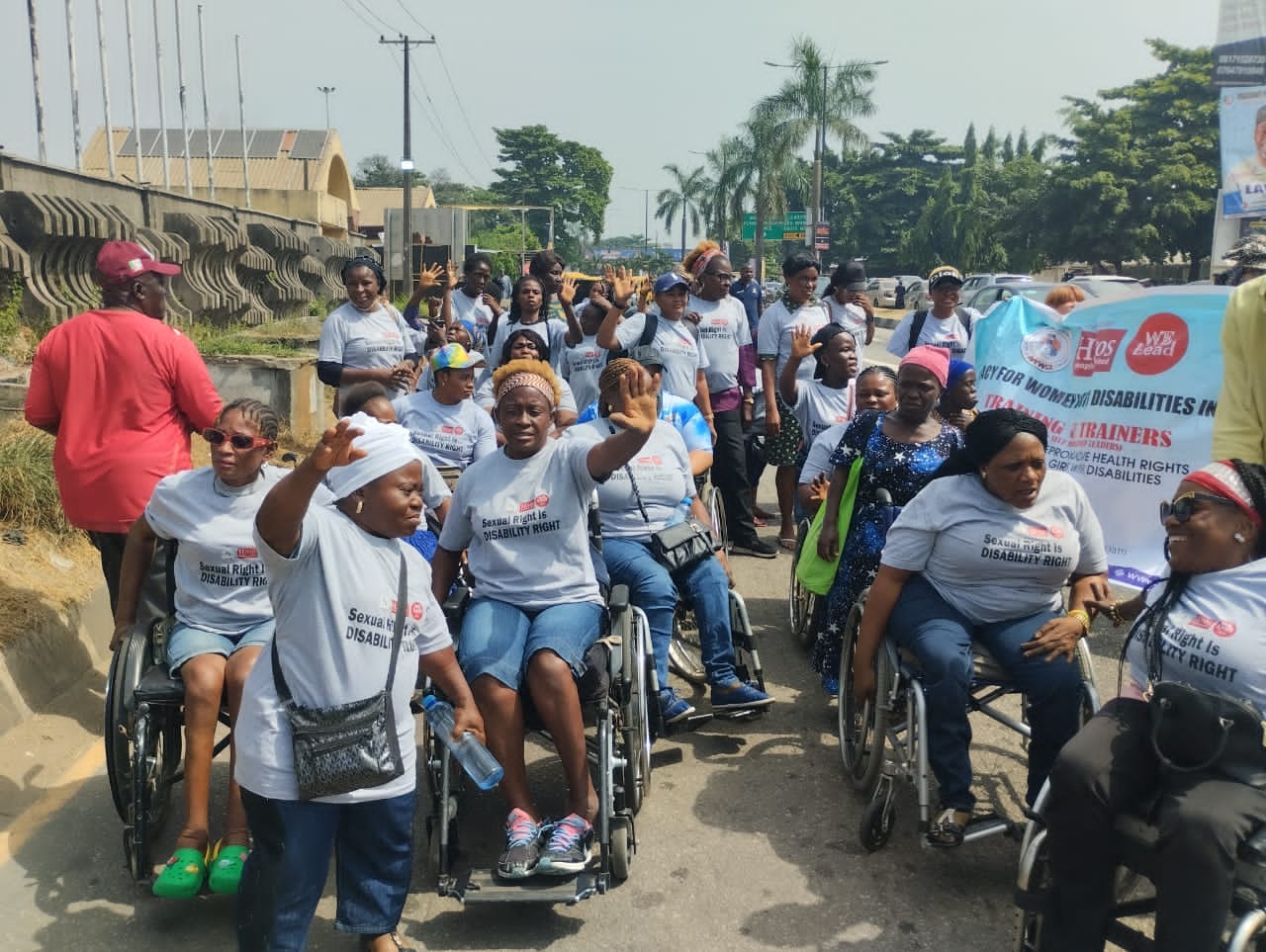
The greatest injustice may not end when the violence stops. Sometimes, it begins when a survivor finally finds the courage to speak—and nobody believes her.
By Chris Agbo
Imagine a woman with a physical disability walking into a police station in Nigeria and reporting that she has been sexually assaulted.
She has gathered every ounce of courage to speak.
Instead of being asked what happened, she is asked:
“Are you sure?”
“How could he have raped you?”
“You are disabled; why would a man want to do that?”
“Maybe you misunderstood him.”
Or perhaps someone simply tells her:
“Don’t destroy the family because of this.”
For many women and girls with disabilities, the violence does not necessarily end with the physical or sexual assault. It can continue through disbelief, victim-blaming, humiliation, inaccessible reporting systems and the refusal of families, communities and institutions to take their testimony seriously.
This is one of the most painful and least discussed dimensions of sexual and gender-based violence (SGBV) in Nigeria.
When disability becomes a reason to doubt a survivor
There is a dangerous misconception that persons with disabilities—particularly women with certain disabilities—are either incapable of understanding what happened to them, incapable of making decisions about their bodies, or unlikely to be sexually targeted.
All three assumptions are dangerous.
A woman with a disability is still a woman.
She has bodily autonomy. She has sexual and reproductive rights. She can experience sexual violence. She can identify her perpetrator. She can report abuse. And, most importantly, her testimony deserves to be taken seriously.
UN Women has highlighted how stigma, discrimination and harmful stereotypes can become barriers to women with disabilities accessing protection and justice. It specifically calls for accessible reporting and justice systems that are sensitive to the experiences of women with disabilities.
The problem is therefore not simply that violence occurs.
The problem is what happens after she speaks.
“Nobody will believe you because you are disabled”
Consider a hypothetical situation in Abuja.
A Deaf young woman is sexually assaulted by someone she knows. She wants to report the incident, but the police station has no sign-language interpreter.
She attempts to communicate through writing.
The officer struggles to understand her.
Someone calls a relative to interpret.
Now the survivor’s private experience is being communicated through another person.
What if the alleged perpetrator is known to the family?
What if the interpreter knows him?
What if the interpreter does not understand sexual-violence terminology?
What if the survivor cannot communicate freely?
The problem has now moved beyond the original assault. The justice system itself has become inaccessible.
This is not merely hypothetical as a structural concern. UNFPA has documented how Deaf women can face serious barriers to accessing information and reporting mechanisms when sign-language interpretation and accessible communication are unavailable.
Accessibility is therefore not a luxury.
In an SGBV case, accessibility can determine whether a survivor is heard at all.
The wheelchair user who is told to “prove it”
Imagine another Nigerian scenario.
A woman who uses a wheelchair reports that a man sexually assaulted her inside a compound.
Instead of concentrating on the allegation, people begin questioning her mobility:
“How did you get there?”
“Why did you go there alone?”
“How could he have done that when you cannot walk?”
Some even suggest that perhaps she is exaggerating because of her disability.
This exposes another dangerous misconception: that physical disability somehow protects a woman from sexual violence.
It does not.
In fact, disability can sometimes increase vulnerability because of dependence on caregivers, inaccessible environments, poverty, social isolation and unequal power relationships.
UNFPA’s Nigeria landscape analysis on SGBV reported that 80% of people with disabilities surveyed had experienced some form of abuse. The same analysis also found a broader culture of silence around violence, with many women not reporting their experiences or reporting only to parents.
These figures should make us uncomfortable.
Not because women with disabilities are inherently vulnerable, but because society creates conditions in which perpetrators can exploit vulnerability and survivors struggle to obtain justice.
The family can become another barrier
In many Nigerian communities, the first response to an allegation of sexual violence is sometimes not justice but reputation management.
“What will people say?”
“Don’t expose the family.”
“He is our relative.”
“She will never get married if this becomes public.”
“Maybe they should settle it.”
For a woman with a disability, the pressure can become even greater.
Families may already believe that she has limited options for marriage, employment or independent living. Consequently, they may fear that reporting sexual violence will further stigmatise her.
The result can be silence.
And silence protects the perpetrator—not the survivor.
UNFPA’s national analysis found that cultural expectations and the stigma surrounding reporting violence can contribute to women remaining silent.
“She has an intellectual disability, so she cannot know what happened”
This is another dangerous form of disbelief.
A woman with an intellectual disability may communicate differently. She may require more time, simpler language, communication support or an appropriate accommodation.
But communication difference should never automatically be interpreted as lack of credibility.
The appropriate response is not:
“She cannot understand.”
It should be:
“What support does she need to communicate what happened?”
There is a profound difference between the two.
UN Women has specifically identified women and girls with intellectual disabilities as facing intersectional risks and has called for reporting and justice systems that are sensitive, accessible and responsive to their needs.
The justice system must learn to distinguish communication difficulty from lack of truthfulness.
The dangerous question: “Why didn’t she report earlier?”
Another barrier is the expectation that a genuine survivor must report immediately.
But survivors may delay reporting because of fear, dependence, threats, shame, trauma, poverty, lack of accessible reporting channels or fear that nobody will believe them.
For a woman with a disability, there may be additional barriers.
Perhaps the perpetrator is her caregiver.
Perhaps she depends on him for transportation.
Perhaps she needs him to access healthcare.
Perhaps her family depends financially on him.
Perhaps the police station is physically inaccessible.
Perhaps she cannot communicate independently with the police.
Perhaps she has previously reported abuse and was dismissed.
So when she finally speaks months later, the response should not be:
“Why did you wait?”
The better question is:
“What prevented you from speaking earlier, and how can we support you now?”
Nigeria already has a legal framework
Nigeria is not without laws and policies addressing violence and disability rights.
The Violence Against Persons (Prohibition) Act, 2015 provides a federal legal framework addressing violence against persons, while Nigeria’s disability-rights framework prohibits discrimination against persons with disabilities and recognizes their rights to equal participation and protection. UN Women identifies the VAPP Act as Nigeria’s stand-alone law addressing violence against women and girls.
But legislation on paper does not automatically translate into justice in practice.
A law can prohibit discrimination, but if the police station has no accessible entrance, no sign-language interpreter, no accessible communication mechanism and officers have not been trained to interact appropriately with survivors with disabilities, the legal right may remain practically inaccessible.
Justice must be accessible before it can be equal.
Stop confusing accommodation with favour
When a Deaf survivor requires a sign-language interpreter, that is not preferential treatment.
When a blind survivor requires information in an accessible format, that is not special treatment.
When a wheelchair user needs an accessible police station, that is not a favour.
When a woman with an intellectual disability requires communication support, that does not mean someone should speak for her without safeguards.
These are reasonable accommodations and accessibility measures necessary to enable equal access to justice.
UN Women recommends accessibility, non-discrimination and reasonable accommodation to be mainstreamed into laws and systems addressing violence against women with disabilities.
What must change?
Nigeria needs an SGBV response system that recognises disability from the beginning—not as an afterthought.
1. Believe first, investigate properly
Taking a survivor seriously does not mean abandoning due process.
It means do not dismiss her because she is a woman, because she has a disability, because she communicates differently or because her account makes you uncomfortable.
Listen.
Document.
Investigate.
Preserve evidence.
Follow due process.
2. Make reporting accessible
Police stations, hospitals, courts, shelters and SGBV response centres must be physically and communicatively accessible.
This includes:
- ramps and accessible entrances;
- accessible toilets;
- sign-language interpretation;
- captioning where appropriate;
- Braille and large-print information;
- easy-read materials;
- accessible digital reporting;
- communication support; and
- trained personnel.
3. Train police, healthcare workers and justice actors
Disability inclusion and SGBV response should not operate in separate silos.
Police officers, prosecutors, judges, healthcare workers, social workers and SGBV service providers need training on the intersection between disability and gender-based violence.
4. Stop treating disability as evidence against credibility
A woman’s disability should never become a shortcut for dismissing her testimony.
Her impairment does not determine whether she is telling the truth.
Evidence should be assessed through proper investigative and judicial processes—not through stereotypes about disability.
5. Put women with disabilities at the centre
Policies about violence against women with disabilities should not be designed without women with disabilities.
They should participate in:
- policy development;
- service design;
- training;
- monitoring;
- research;
- public awareness campaigns; and
- accountability mechanisms.
Nothing about women with disabilities should be designed without women with disabilities.
We must change the question
For too long, society has asked women with disabilities:
“Are you sure?”
“Why were you there?”
“Why didn’t you leave?”
“Why didn’t you report earlier?”
“Can you really understand what happened?”
Perhaps it is time to ask society different questions:
Why didn’t we believe her?
Why was the reporting system inaccessible?
Why was she forced to depend on someone else to communicate her experience?
Why was her disability used to question her credibility?
Why did protecting family reputation become more important than protecting the survivor?
And perhaps the most uncomfortable question of all:
How many women with disabilities have spoken, but we simply refused to hear them?
SGBV against women with disabilities is not a “disability issue” alone. It is a human-rights, gender-equality, justice and public-safety issue.
The answer cannot be silence.
The answer cannot be pity.
The answer cannot be family settlement.
And the answer cannot be disbelief.
Listen to her. Protect her. Investigate. Accommodate. Pursue justice.
Because when a survivor finally finds the courage to speak, the least society can do is make sure she is heard.
The Qualitative Magazine
Disability. Rights. Inclusion. The stories that matter.


