

From inaccessible facilities and expensive treatment to reproductive health gaps and inadequate insurance, women with disabilities demand a healthcare system designed to include them—not exclude them
For many women, visiting a hospital is a routine part of life. For women with disabilities, however, the journey to receiving medical care can sometimes become a struggle of its own.
From navigating inaccessible health facilities to confronting high medical costs, limited reproductive health services, inadequate information and a shortage of disability-inclusive healthcare providers, women with disabilities continue to face barriers that can have serious consequences for their wellbeing.
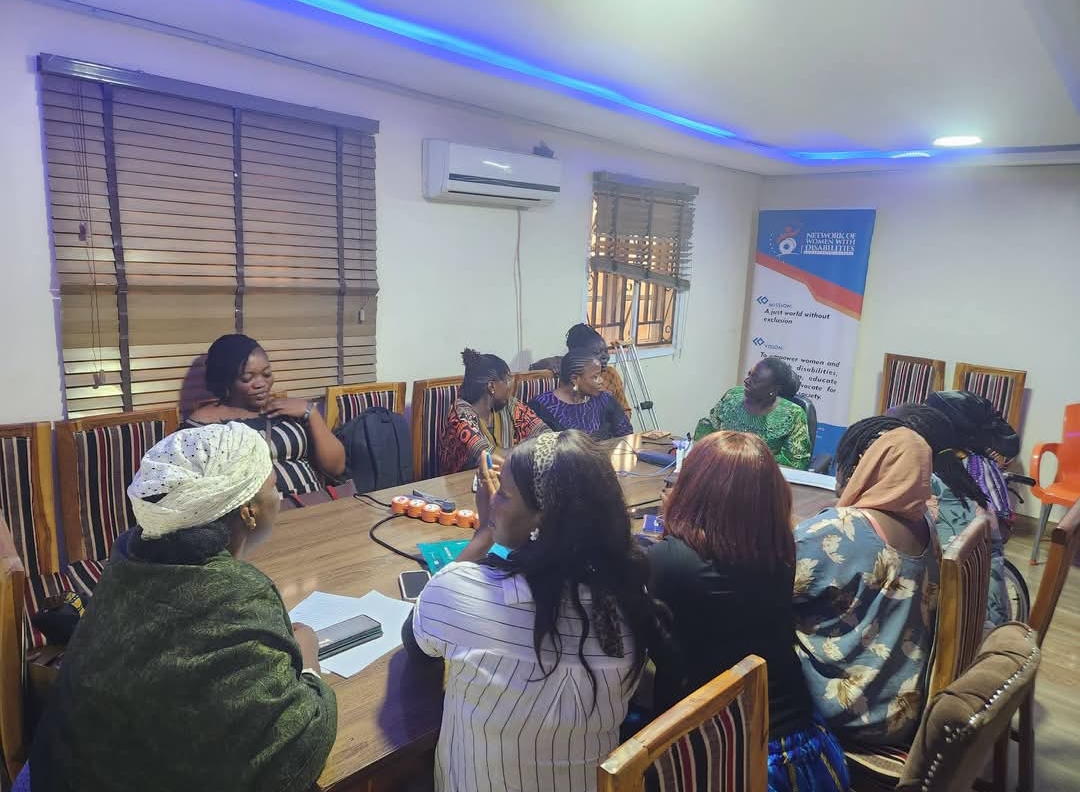
These challenges formed the focus of a Focus Group Discussion (FGD) organised by the Network of Women with Disabilities (NWD) in collaboration with the African Field Epidemiology Network (AFENET).
Held at the NWD Office, the engagement provided a platform for women with disabilities to share their experiences, identify gaps within the healthcare system and propose practical solutions capable of making healthcare more accessible, affordable and inclusive.
A healthcare system that does not fit everyone
The discussion exposed a reality that is often overlooked in mainstream conversations about healthcare: simply having a hospital in a community does not necessarily mean that everyone can access it.
Participants identified inaccessible health facilities as a major challenge. For persons with disabilities, barriers can begin at the entrance and continue through consultation rooms, toilets, diagnostic services and other areas of a health facility.
But accessibility is not only about ramps and buildings.
It also involves communication, affordability, information, attitudes and the ability of patients to receive services with dignity.
The price of healthcare can be even higher for women with disabilities
The cost of healthcare and rehabilitation services was another major concern raised during the FGD.
Women with disabilities may require additional services, rehabilitation, assistive devices or specialised care, creating costs that can place significant pressure on individuals and families.
Participants called for stronger social protection and affordable health insurance mechanisms capable of reducing these financial barriers.
A health system that is technically available but financially inaccessible, they argued, cannot be described as genuinely inclusive.
Reproductive healthcare must include women with disabilities
The discussion also drew attention to gaps in access to sexual and reproductive health services.
Women with disabilities have the same rights to reproductive healthcare, accurate information, privacy and informed choices as every other woman.
Yet barriers—including inaccessible information, inappropriate attitudes and limited understanding of disability among some service providers—can prevent women with disabilities from receiving the services they need.
Participants therefore called for reproductive health programmes to deliberately include women and girls with disabilities rather than treating disability inclusion as an optional component.
No one should be left without health information
Another important issue was the lack of health information in accessible formats.
Information about diseases, treatment options, reproductive health, prevention and available services is only useful when people can access and understand it.
Participants stressed the need for healthcare information to be provided in formats that respond to diverse accessibility needs.
Mental health matters too
Beyond physical healthcare, participants highlighted mental health concerns affecting women with disabilities.
The combined effects of discrimination, exclusion, poverty, stigma and other social pressures can take a toll on psychological wellbeing.
Participants therefore called for mental health to be incorporated into disability-inclusive healthcare interventions.
Training healthcare workers is essential
One of the solutions strongly emphasised during the discussion was the need to train healthcare workers on disability inclusion.
Healthcare professionals need the knowledge and skills to communicate appropriately with patients with disabilities, understand their specific needs and provide services without prejudice or discrimination.
Participants also called for greater access to assistive devices and stronger government investment in inclusive healthcare infrastructure.
Nothing about women with disabilities without women with disabilities
Perhaps one of the most important messages from the FGD was the demand for meaningful participation.
Women with disabilities should not merely be recipients of healthcare policies designed by others. They should be active participants in determining what those policies should look like.
Their experiences can help policymakers identify barriers that statistics alone may not reveal.
Their voices can help determine whether a programme is genuinely accessible.
And their participation can help ensure that resources are directed towards solutions that actually work.
A call to action
The NWD-AFENET engagement ultimately delivered a powerful message: inclusive healthcare must move from policy language to practical action.
Government and health institutions must invest in accessible facilities, affordable healthcare, inclusive insurance, disability-sensitive training, assistive devices, accessible health information and meaningful participation of women with disabilities in policymaking.
The goal should not simply be to create a healthcare system that allows women with disabilities to enter.
It should be to create one where they can enter, communicate, receive quality care, make informed decisions and leave with their dignity intact.
The NWD reaffirmed its commitment to collaborating with AFENET and other stakeholders to advance policies and interventions that remove barriers confronting women and girls with disabilities.
Because healthcare is not a favour.
It is a right.
And for women with disabilities, the time has come for that right to be accessible, affordable, inclusive and non-negotiable.
No barriers. No exclusion. No one left behind.


