

Commission says needs-based support, assistive technology and inclusive systems are critical to ensuring no learner with disability is left behind
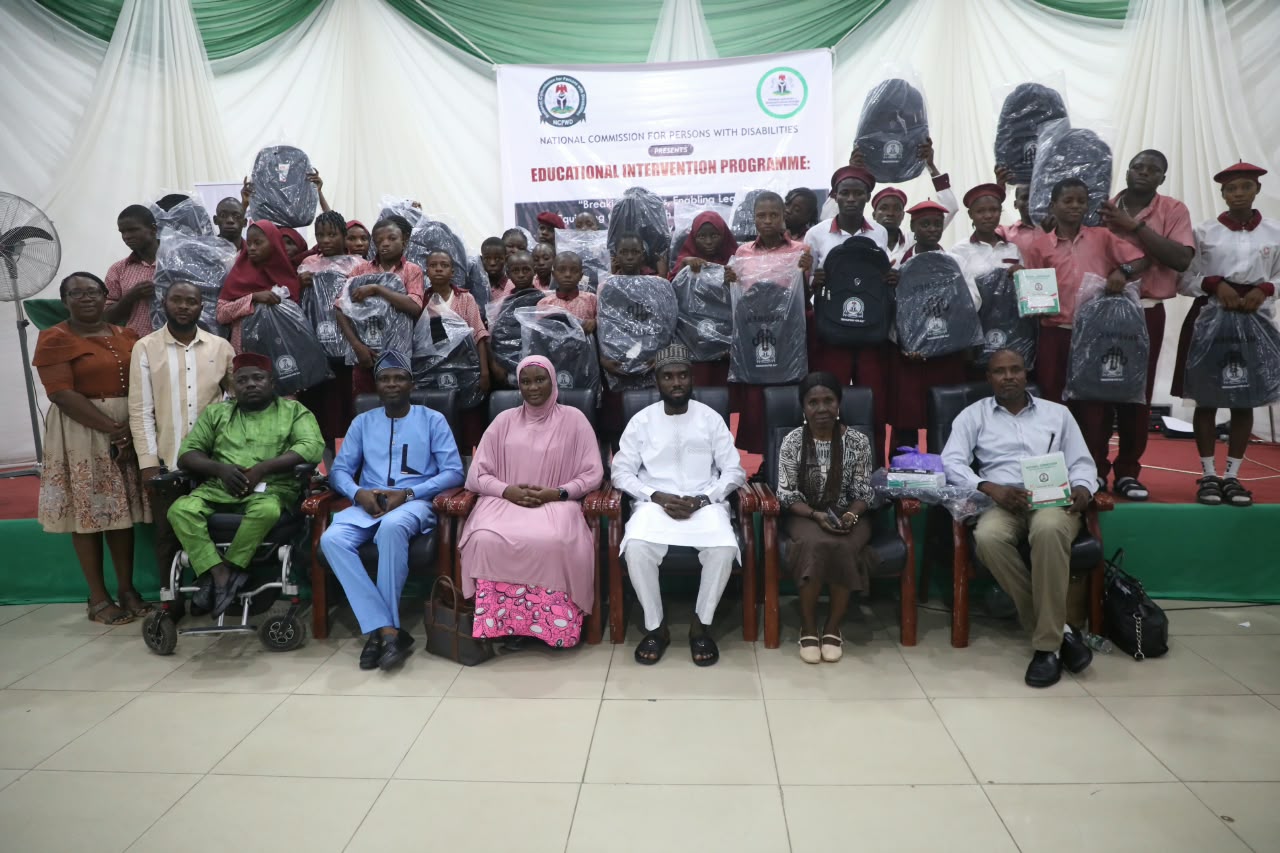
The National Commission for Persons with Disabilities (NCPWD) has distributed educational materials and assistive devices to children and students with disabilities in the Federal Capital Territory, reaffirming its commitment to removing barriers to inclusive and quality education.
The intervention, held at the National Women Development Centre, Abuja, was organised under the theme, “Breaking Barriers, Enabling Learning: Equipping Children with Disabilities for Inclusive and Quality Education.”
Representing the Executive Secretary of NCPWD, Hon. Ayuba Burki Gufwan, Dr. Aisha Ali Yahaya, Head of the Commission’s Health and Rehabilitation Unit, said the initiative was more than the distribution of materials, describing it as a practical intervention aimed at addressing the barriers that prevent children with disabilities from participating fully in education.
According to Gufwan, the Commission is adopting a needs-based approach to ensure that support provided to learners is appropriate and relevant to their individual circumstances.

He stressed that effective inclusion requires more than providing equipment, noting the importance of assessment, orientation, teacher support, caregiver involvement and continuous follow-up.
“When we remove barriers, children can learn. When we provide the right support, children can participate. When we create inclusive systems, children can thrive.”
Education is a fundamental right
Dr. Kehinde Ogunbiyitan, Head of the Education Unit, said the presence of schools, Organisations of Persons with Disabilities (OPDs) and other stakeholders demonstrated the collective responsibility required to build an inclusive education system.
He emphasised that education is a fundamental right, but learners with disabilities often require additional support to participate meaningfully in the classroom.
“Education is a fundamental right. Yet, for many learners with disabilities, meaningful participation requires additional support—whether Braille and large-print materials, communication support, mobility aids, adapted learning resources, or assistive technology.”
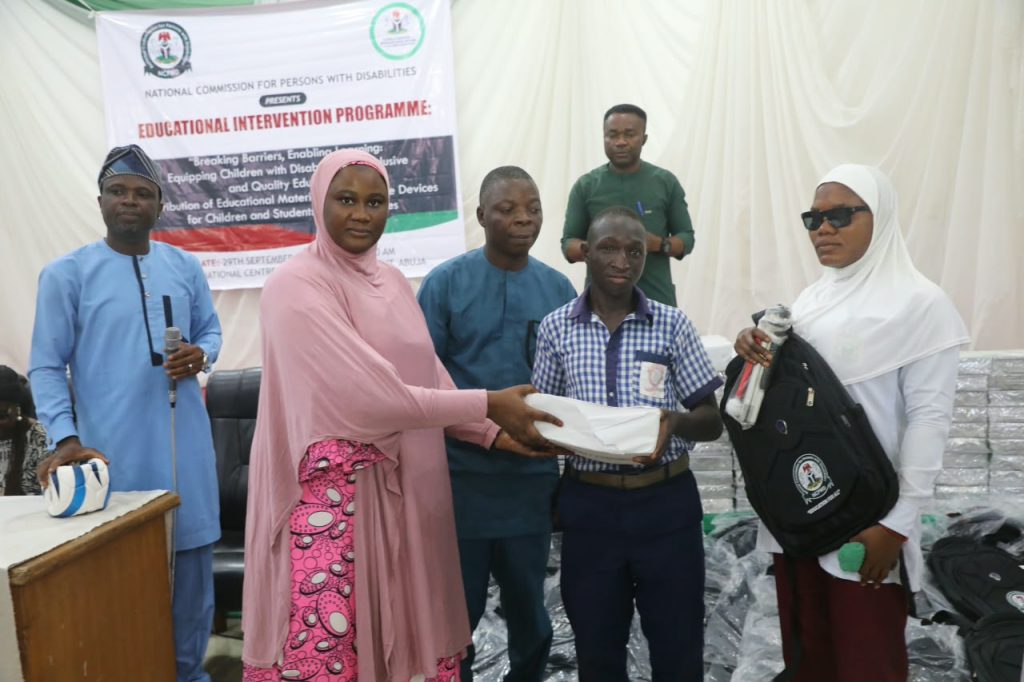
The official presentation of the educational materials and assistive devices was performed by the representative of the Executive Secretary.
Schools benefit from intervention
The beneficiaries included:
- FCT School for the Deaf, Kuje
- FCT School for Children with Special Needs, Kuje
- Government Junior Secondary School, Pasali
- Government Junior Secondary School, Kwali
- Government Junior Secondary School, Kuje
- Government Senior Secondary School, Kuje
- Government Senior Secondary School, Kwali
The educational materials distributed included school bags, notebooks, mathematical sets, Braille papers, sign language dictionaries, slates and styluses, guide canes, blind balls and other learning aids.
Addressing the pupils, Ogunbiyitan encouraged them to use the resources effectively and remain confident in pursuing their aspirations.
“Your disability does not take away your right to education, your talents, or your potential.”
He urged the beneficiaries to take good care of the devices entrusted to them, adding that Nigeria needs their talents and contributions.
Assistive devices to go beyond one-off distribution
Dr. Ismail Idris, Head of the Assistive Devices and Technology Unit, said NCPWD was committed to ensuring that assistive devices are not merely distributed but made accessible to persons with disabilities in locations where they can easily obtain and use them.
He said the Commission was working towards providing assistive devices in hospitals, schools and other relevant centres, in line with international best practices.
The devices presented included:
- Paediatric wheelchairs
- Standing frames
- Bath chairs
- Elbow crutches
- Axillary crutches
- Guide canes
- Braille papers
- Blind balls
- Slates and styluses
Idris acknowledged the support of the Economic Community of West African States (ECOWAS) and other partners in advancing the wellbeing and inclusion of persons with disabilities in Nigeria.
Beneficiary applauds NCPWD
Speaking on behalf of the beneficiaries, Oyama Prospect, a visually impaired student of Government Secondary School, Kwali, commended the Commission for the intervention.
He described the support as a stepping stone that would enable beneficiaries to improve their academic performance and pursue their educational aspirations.
The NCPWD said it would continue to collaborate with government institutions, schools, families, OPDs, development partners and other stakeholders to strengthen inclusive education across Nigeria.
The Commission called for continued efforts to build an education system where every child is seen, every learner is supported and every child has an opportunity to reach their full potential.


