

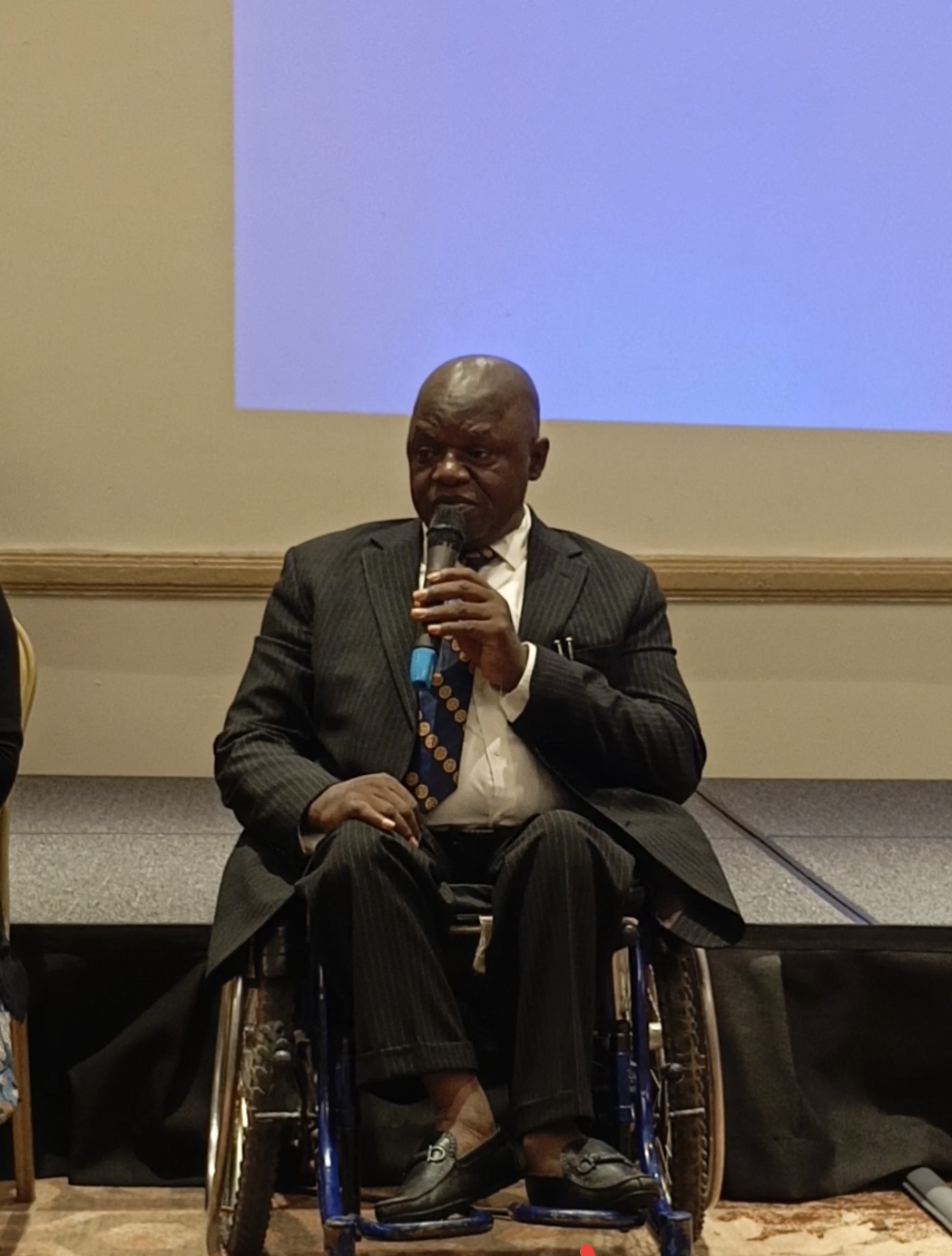
LAGOS, NIGERIA – The Executive Secretary of the National Commission for Persons with Disabilities (NCPWD), Hon. Ayuba Gufwan, has called for decisive and practical measures to dismantle the numerous barriers preventing millions of Nigerians with disabilities from accessing financial services and participating fully in the nation’s economy.
Speaking at a two-day workshop on “Barriers to Financial Inclusion Services for Persons with Disabilities in Nigeria” held in Lagos and organized by Sightsavers Nigeria, Gufwan emphasized that financial inclusion is not a privilege but a fundamental right that must be accessible to all citizens regardless of disability.
The workshop brought together key stakeholders from the financial sector, regulatory agencies, development institutions, researchers, fintech companies, civil society organizations, and Organizations of Persons with Disabilities (OPDs) to deliberate on strategies for creating a more inclusive financial ecosystem.
In his goodwill message, Gufwan commended Sightsavers Nigeria and its partners for convening the gathering, describing it as a timely intervention aimed at addressing one of the most persistent challenges confronting persons with disabilities across the country.
According to him, financial inclusion extends beyond merely opening bank accounts or accessing financial products.
“Financial inclusion is not merely about access to banking services. It is fundamentally about access to opportunity, economic participation, social protection, entrepreneurship, employment, savings, insurance, credit facilities, digital finance, and ultimately, human dignity,” he stated.
Millions Still Locked Out
The NCPWD boss expressed concern that despite growing awareness about disability rights, many persons with disabilities continue to face systemic obstacles that limit their access to financial services.
He identified several challenges, including inaccessible banking facilities, communication barriers affecting persons with hearing and visual disabilities, digital exclusion, discriminatory attitudes, lack of disability-friendly financial products, limited access to identification documents, poverty, low levels of financial literacy, and weak compliance with accessibility standards by institutions.
Gufwan stressed that these barriers continue to exclude a significant segment of Nigeria’s population from participating in economic activities and benefiting from financial services that many citizens take for granted.
He warned that no nation can achieve sustainable economic growth and development while millions of its citizens remain excluded from the financial system because of disability.
Beyond Legislation
While acknowledging the importance of the Discrimination Against Persons with Disabilities (Prohibition) Act 2018, Gufwan noted that legislation alone is insufficient to guarantee inclusion.
He explained that practical implementation remains the key challenge and urged stakeholders to move beyond policy declarations to concrete actions that will ensure persons with disabilities can independently access and utilize financial services in a safe, affordable, and dignified manner.
According to him, achieving meaningful financial inclusion requires a deliberate commitment from financial institutions, regulators, policymakers, and technology providers to eliminate structural barriers that hinder accessibility.
Inclusion Is Good Business
In a strong message to financial institutions and regulators, Gufwan challenged them to stop viewing disability inclusion as an act of charity.
Instead, he urged the sector to recognize it as a matter of human rights, legal compliance, sustainable development, and sound business strategy.
He noted that persons with disabilities represent a substantial population with enormous economic potential that remains largely untapped due to years of systemic exclusion.
“Persons with disabilities constitute a significant market segment whose economic potential remains underutilized because of barriers that continue to restrict their participation,” he said.
He further emphasized that embracing disability inclusion can unlock new opportunities for financial institutions while contributing to broader national development goals.
Workshop to Drive Solutions
The Executive Secretary expressed optimism that the workshop would serve as a strategic platform for identifying critical barriers, assessing policy and institutional gaps, sharing innovative solutions, and strengthening partnerships between disability stakeholders and financial service providers.
He said the gathering should also generate practical recommendations capable of transforming the financial inclusion landscape for persons with disabilities across Nigeria.
Gufwan urged participants to engage actively, share experiences, and focus on developing implementable solutions rather than merely highlighting existing challenges.
He stressed that the ultimate objective should be to create a financial system where persons with disabilities can participate equally and contribute meaningfully to national economic growth.
NCPWD Reaffirms Commitment
Reaffirming the Commission’s commitment to advancing disability inclusion, Gufwan pledged that the NCPWD would continue to collaborate with government agencies, private sector organizations, development partners, fintech companies, civil society groups, and OPDs to promote policies and systems that leave no one behind.
He maintained that financial inclusion remains a critical component of disability rights and social justice, adding that Nigeria cannot achieve true inclusive development unless persons with disabilities are fully integrated into every aspect of economic life.
The NCPWD boss concluded by appreciating Sightsavers Nigeria and other partners for championing the initiative and expressed hope that the deliberations would produce actionable outcomes capable of improving the lives and livelihoods of millions of Nigerians with disabilities.
As stakeholders continue discussions on the future of disability-inclusive finance in Nigeria, advocates believe that the workshop could mark another significant step toward ensuring that persons with disabilities are not merely recognized in policy documents but are fully empowered to participate in the country’s economic transformation.
Click the link below to join our WhatsApp channel


