

Technology-facilitated gender-based violence (TFGBV) is emerging as one of the most serious yet underreported threats to the safety, economic wellbeing, and human rights of vulnerable populations in Nigeria, with a new report revealing that more than half of survivors have suffered setbacks to their employment or ability to earn a living.
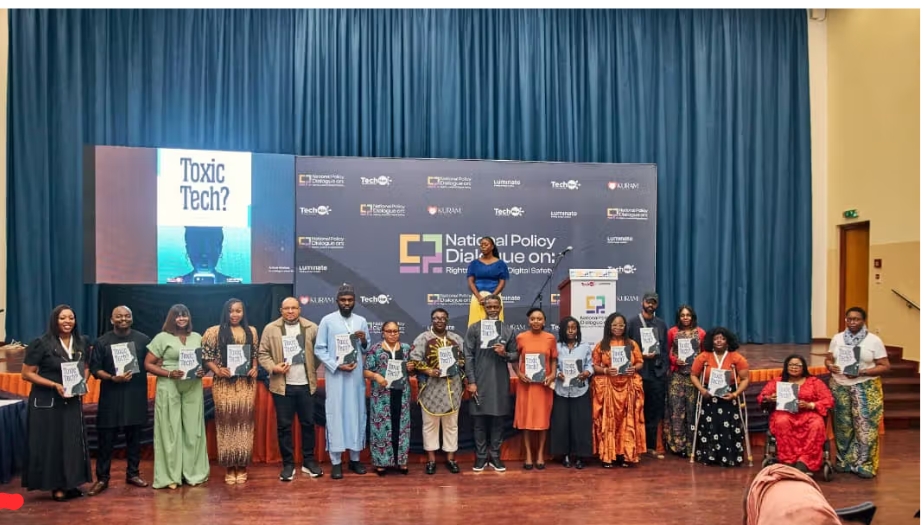
The findings were unveiled during a national policy dialogue on rights, justice, and digital safety held in Abuja, where TechHer, in partnership with Luminate, launched a groundbreaking report titled “Toxic Tech.” The report paints a troubling picture of how online abuse is increasingly spilling into the real world, affecting livelihoods, mental health, personal safety, and access to justice—particularly for women with disabilities and other marginalized groups.
Drawing from three comprehensive surveys involving 373 analytically eligible respondents, alongside interviews and focus group discussions, the report provides one of the most detailed examinations yet of technology-facilitated gender-based violence in Nigeria.
Online Abuse Taking Heavy Economic Toll
According to the report, 54.9 percent of respondents in the supplementary survey disclosed that online violence had negatively affected their employment or capacity to generate income.
For many survivors, the consequences extended beyond emotional trauma. The report found that digital abuse frequently translated into financial hardship, disrupted careers, and business losses.
Among respondents whose livelihoods were affected:
- 46.2 percent said psychological distress resulting from online abuse prevented them from working effectively.
- 35.9 percent reported that relocating for personal safety disrupted their income.
- Another 35.9 percent lost customers, clients, or business opportunities because of the abuse.
- 7.7 percent said they eventually lost their jobs.
The findings underscore how cyber harassment, intimidation, stalking, and other forms of online violence are no longer confined to digital platforms but have become significant barriers to economic independence.
Victims Spending Thousands to Stay Safe
Beyond income losses, survivors also reported spending significant amounts of money simply to protect themselves from continued online attacks.
The report revealed that 54.9 percent of respondents had incurred personal expenses on safety measures aimed at mitigating digital abuse.
Even more alarming, nearly three-quarters of those who disclosed the amount spent said they had paid at least ₦50,000, placing an additional financial burden on individuals who were already coping with the consequences of online violence.
For many Nigerians, particularly those earning close to the national minimum wage, such expenses represent a substantial portion of their monthly income.
Access to Justice Comes at a Cost
Speaking during the unveiling of the report, Peter Akinnusi, Head of Programmes at TechHer, said the research was designed to generate evidence that would help shape policies and strengthen digital safety protections for women and vulnerable communities.
He described digital platforms as “the new public square,” emphasizing that the increasing migration of social interactions online makes digital safety a pressing human rights issue.
According to him, one of the report’s most concerning discoveries was the repeated pattern of online abuse experienced by many respondents, especially persons with disabilities.
Akinnusi noted that persons with disabilities face a unique and compounded challenge because they are often targeted online while simultaneously navigating digital platforms that remain largely inaccessible.
He further disclosed that survivors who attempted to pursue justice frequently incurred significant legal and administrative expenses.
“We also found out that people who were trying as much as possible to spend some money to get some form of justice after experiencing digital harm spent anywhere between ₦50,000 and ₦100,000,” he said.
Questioning the affordability of justice for ordinary Nigerians, he added:
“If somebody’s minimum wage is roughly ₦70,000, for you to be able to get justice, you have to spend anywhere between ₦50,000 and ₦100,000. What is left for you to live your life?”
Persons with Disabilities Face Multiple Layers of Discrimination
The report highlights that technology-facilitated violence often stems from multiple intersecting identities rather than gender alone.
Akinnusi explained that women who belong to vulnerable groups—including persons with disabilities—frequently become targets because of the combination of identities they hold.
“Sometimes it’s not because they’re a woman; it is that you’re a woman who is a person with a disability or a member of another vulnerable community,” he stated.
The findings reinforce growing concerns among disability rights advocates that digital exclusion, inaccessible technologies, and discriminatory online behavior continue to place women with disabilities at heightened risk of abuse.

Online Violence Becoming Physical Threat
Representing Toyin Akinniyi, Vice-President for Africa at Luminate, Tari Wills emphasized that online abuse increasingly evolves into real-world violence.
According to her, actions such as doxxing, cyberstalking, and digital harassment frequently expose survivors to physical danger.
“You see how someone is doxxed, someone is stalked, and someone is abused online, and that is easily translated offline,” she said.
“People are traced, they are tracked, and what became an abuse online, seemingly unharmful, becomes harmful to one physically.”
She stressed that efforts to combat online abuse must not undermine fundamental human rights, including freedom of expression, association, and access to information.
Instead, she called for stronger collaboration among government institutions, civil society organisations, technology companies, and digital rights advocates to create safer online environments while preserving democratic freedoms.
Call for Inclusive Digital Policies
The report concludes with recommendations urging government agencies, regulators, technology companies, and civil society organisations to strengthen the implementation of existing legal frameworks, improve digital accessibility, and ensure online platforms are designed with the needs of women and persons with disabilities in mind.
It also advocates greater cooperation between public institutions and civil society to improve access to justice for survivors while reducing the financial burden associated with seeking legal remedies.
As Nigeria’s digital economy continues to expand, stakeholders warned that failure to address technology-facilitated gender-based violence could deepen existing inequalities, silence vulnerable voices, and undermine efforts toward inclusive development.
For women, persons with disabilities, and other marginalized communities, the message from the “Toxic Tech” report is unmistakable: online abuse is not merely a virtual problem—it has profound consequences for livelihoods, safety, mental health, and equal participation in society.


