

By TQM News,
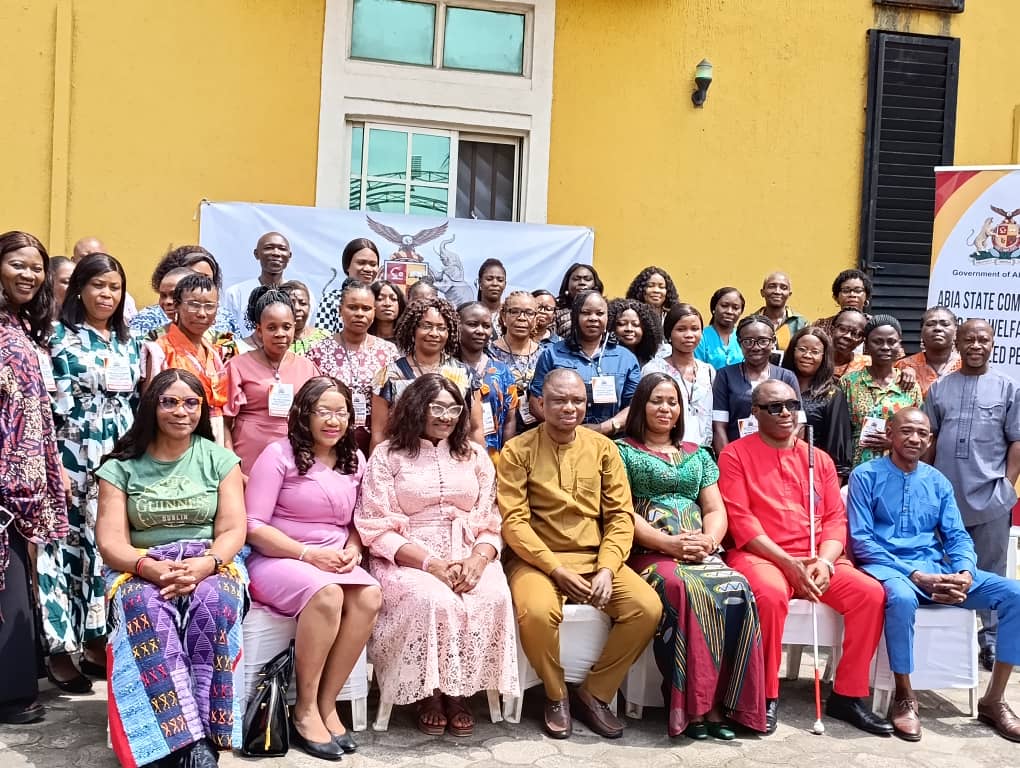
In a significant step towards strengthening disability rehabilitation services and promoting inclusive healthcare, the Abia State Commission for the Welfare of Disabled Persons has commenced a week-long intensive capacity-building workshop for disability therapists, caregivers, teachers, and primary healthcare workers across the state.
The training programme, which brings together frontline professionals involved in disability care, is designed to improve the quality of rehabilitation services for children and persons with disabilities by equipping participants with modern knowledge, practical skills, and professional competencies required to deliver effective and compassionate support.
The initiative underscores the commitment of the Abia State Government to building an inclusive society where persons with disabilities have equal opportunities to access quality healthcare, rehabilitation services, education, and social protection.
Building an Inclusive Abia Through Professional Capacity Development
Declaring the workshop open, the Chairman of the Abia State Commission for the Welfare of Disabled Persons, Dr. David Anyaele, described the programme as a strategic investment in the future of disability inclusion in the state.
According to him, the training aligns with the vision of Governor Dr. Alex Otti, whose administration has continued to champion policies that promote equal opportunities and improve the welfare of persons with disabilities.
Dr. Anyaele explained that the workshop was carefully designed to address the growing need for qualified therapists and caregivers capable of responding to the complex needs of children living with intellectual and developmental disabilities.
He noted that while awareness about disability has improved in recent years, many families continue to struggle with inadequate access to professional care, early intervention services, and community-based rehabilitation.
“Families raising children with disabilities often face enormous emotional, social and financial challenges,” he said.
“One of the best ways to reduce these burdens is by building a strong workforce of well-trained professionals who can provide quality services close to where people live.”
He emphasized that disability care extends beyond clinical knowledge and requires empathy, patience, dedication, and a genuine passion for improving lives.
“This training is not just about career advancement,” Dr. Anyaele told participants. “It is about service to humanity. Every skill you acquire here has the potential to transform the life of a child, restore hope to a family, and strengthen communities.”
Outstanding Participants to Receive Advanced Opportunities
In what many participants described as an added motivation, Dr. Anyaele disclosed that the workshop would include continuous assessment throughout the training period.
He revealed that participants who demonstrate exceptional commitment, competence, and professionalism would be selected for advanced training programmes and future leadership responsibilities as the Commission expands disability support services across Abia State.
“We are deliberately building a new generation of professionals who will provide immediate support within communities,” he said.
“This is only the first phase. Those who distinguish themselves will move on to more advanced levels and eventually become supervisors and trainers who will help expand disability services throughout the state.”
He challenged participants to become ambassadors of disability inclusion by promoting the rights, dignity, independence, and wellbeing of persons with disabilities wherever they serve.

Government Institutions Rally Behind Disability Inclusion
The workshop received widespread support from key government institutions, reflecting growing collaboration among ministries and agencies responsible for health, education, social welfare, and public service.
Delivering a goodwill message on behalf of the Chairman of the Abia State Civil Service Commission, Pastor Eno Jerry, Mrs. Ifeoma Agu praised the Commission for investing in the professional development of therapists and caregivers.
She described the initiative as a strategic intervention that would strengthen public service delivery while improving support systems for persons with disabilities across Abia State.
Similarly, the Honourable Commissioner for Health, Prof. Enoch Ogbonnaya Uche, represented by the Director of Public Health, Dr. Agomoh Princess Orieji, reaffirmed the Ministry’s commitment to ensuring inclusive healthcare services for every resident of the state.
She observed that strengthening the skills of frontline caregivers and therapists would improve rehabilitation services, encourage early diagnosis and intervention, and ultimately contribute to better health outcomes for persons with disabilities.
Also lending their support were the Chairman of the Abia State Primary Health Care Development Agency, Dr. Kalu Ulu, represented by Dr. Adaugo Onwere, and the Commissioner for Poverty Alleviation and Social Protection, Mrs. Ngozi Blessing Felix, represented by Mr. Boniface Kalu.
Both representatives applauded the Commission’s initiative and pledged continued collaboration in advancing disability inclusion, improving access to social services, and enhancing the welfare of persons with disabilities throughout the state.
Expert Highlights Importance of Early Intervention
Leading the technical sessions, disability specialist Dr. Eziafakaku Nwokolo emphasized that effective disability care begins with education, professional competence, and timely intervention rather than awareness campaigns alone.
She explained that the training was designed for therapists, caregivers, teachers, and primary healthcare workers who serve as the first point of contact for many children living with developmental and intellectual disabilities.
According to her, participants would acquire practical skills to identify developmental challenges early, provide appropriate support, improve rehabilitation outcomes, and assist families in navigating available interventions.
She noted that strengthening the knowledge of frontline workers would significantly improve the quality of services provided in schools, hospitals, rehabilitation centres, and communities across the state.
Participants Applaud the Initiative
Participants expressed appreciation to the Commission for providing an opportunity to enhance their professional knowledge and practical skills.
Speaking on behalf of participants, Miss Precious Mbaraonye, a special educator at the Special Education Centre for the Deaf and Persons with Intellectual Disabilities, described the workshop as both timely and impactful.
She said the training had expanded her understanding of caring for children with intellectual and developmental disabilities and appealed to the Abia State Government to establish a specialised school for children living with autism and other developmental conditions.
According to her, many families currently spend enormous amounts of money travelling outside the state in search of specialised educational and therapeutic services.
Another participant, Mr. Ndubisi Oriaku, commended the Commission for organizing what he described as a highly practical and transformative training programme.
He expressed confidence that the knowledge acquired during the workshop would improve service delivery and enable therapists and caregivers to make greater contributions to the lives of persons with disabilities.
Advancing Inclusive Development
The week-long workshop forms part of the Commission’s broader strategy to strengthen disability services through professional development, community-based rehabilitation, and inter-agency collaboration.
By bringing together therapists, caregivers, educators, healthcare professionals, and other stakeholders, the programme aims to create a stronger network of trained personnel capable of delivering quality support services to persons with disabilities across Abia State.
As disability inclusion continues to gain momentum in Nigeria, initiatives such as this demonstrate that investing in human capacity remains one of the most effective ways to improve rehabilitation services, promote independence, and ensure that persons with disabilities enjoy equal opportunities to participate fully in society.
For many families, the workshop represents more than a training programme—it is a beacon of hope that the future of disability care in Abia State is becoming more professional, more inclusive, and more responsive to the needs of those who require it most.


