

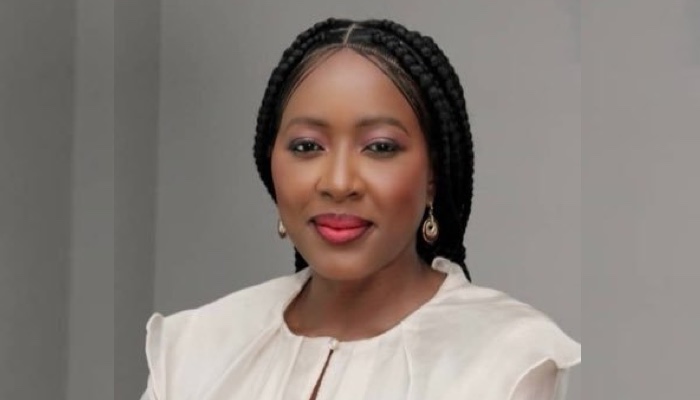
As Nigeria inches closer to the 2027 general elections, a chieftain of the African Democratic Congress (ADC), Dr. Constance Chiogo Ikokwu, has ignited a fresh conversation around the cost of political participation, calling on political parties to either scrap or significantly reduce the high fees attached to nomination forms.
Ikokwu, who is vying to represent Idemili Federal Constituency in Anambra State in the House of Representatives under the ADC platform, warned that Nigeria’s democracy risks being stifled if access to leadership continues to be dictated by financial capacity rather than competence and vision.
In a strongly worded statement titled “End the Paywall on Leadership: Let Competence, Not Cash, Decide Our Candidates,” obtained by Arise News in Abuja, the journalist-turned-politician described the current system as exclusionary and damaging to the country’s democratic growth.
According to her, the rising cost of nomination forms across political parties has effectively transformed Nigeria’s political space into what she termed “an exclusive club for the wealthy,” leaving behind capable individuals who lack deep pockets but possess the capacity to lead.
“If leadership is truly about service, then access to contest must not be determined by bank balance, but by vision, integrity, and the courage to lead,” Ikokwu stated.
She emphasized that political parties—particularly her own, the ADC—must take deliberate and bold steps to dismantle financial barriers that prevent wider participation. Beyond general reduction, she advocated targeted concessions, urging parties to introduce discounted nomination fees for women and Persons With Disabilities (PWDs) as a concrete step toward inclusive governance.
“If we are serious about deepening democracy, then access to contest should not be reserved for the wealthy or those backed by powerful financiers,” she added.
Ikokwu did not mince words in her critique of what she described as the corrosive influence of “money politics,” noting that it has significantly undermined the quality of representation in Nigeria. According to her, the system sidelines visionary leaders—those with ideas, integrity, and a genuine desire to serve—simply because they lack the financial muscle to compete.
She argued that this trend has created a dangerous imbalance, where political tickets are often secured not by merit, but by the size of one’s wallet or the strength of elite backing.
“Money politics has done deep damage to the quality of our representation. It shuts out credible voices and weakens the foundation of our democracy,” she said.
Drawing from her background in journalism and her firsthand observations within Nigeria’s political landscape, Ikokwu highlighted how exorbitant nomination fees discourage not just women, but also young people and PWDs from even attempting to contest.
“These fees are not a measure of competence or commitment; they are simply a financial gatekeeping tool that narrows our democratic space,” she declared.
She further stressed that Nigeria cannot continue to preach inclusivity while maintaining structural barriers that systematically exclude large segments of its population.
Her call adds to growing advocacy across civil society and political reform circles for a more accessible and equitable electoral process—one that prioritizes leadership quality over financial strength.
As conversations around electoral reforms gather momentum ahead of 2027, Ikokwu’s stance underscores a critical question facing Nigeria’s democracy: Should leadership be earned through merit and service, or bought through wealth?
For many observers, the answer may determine not just who gets on the ballot, but the future direction of governance in Africa’s most populous nation.
Click the link below to join our WhatsApp channel


