

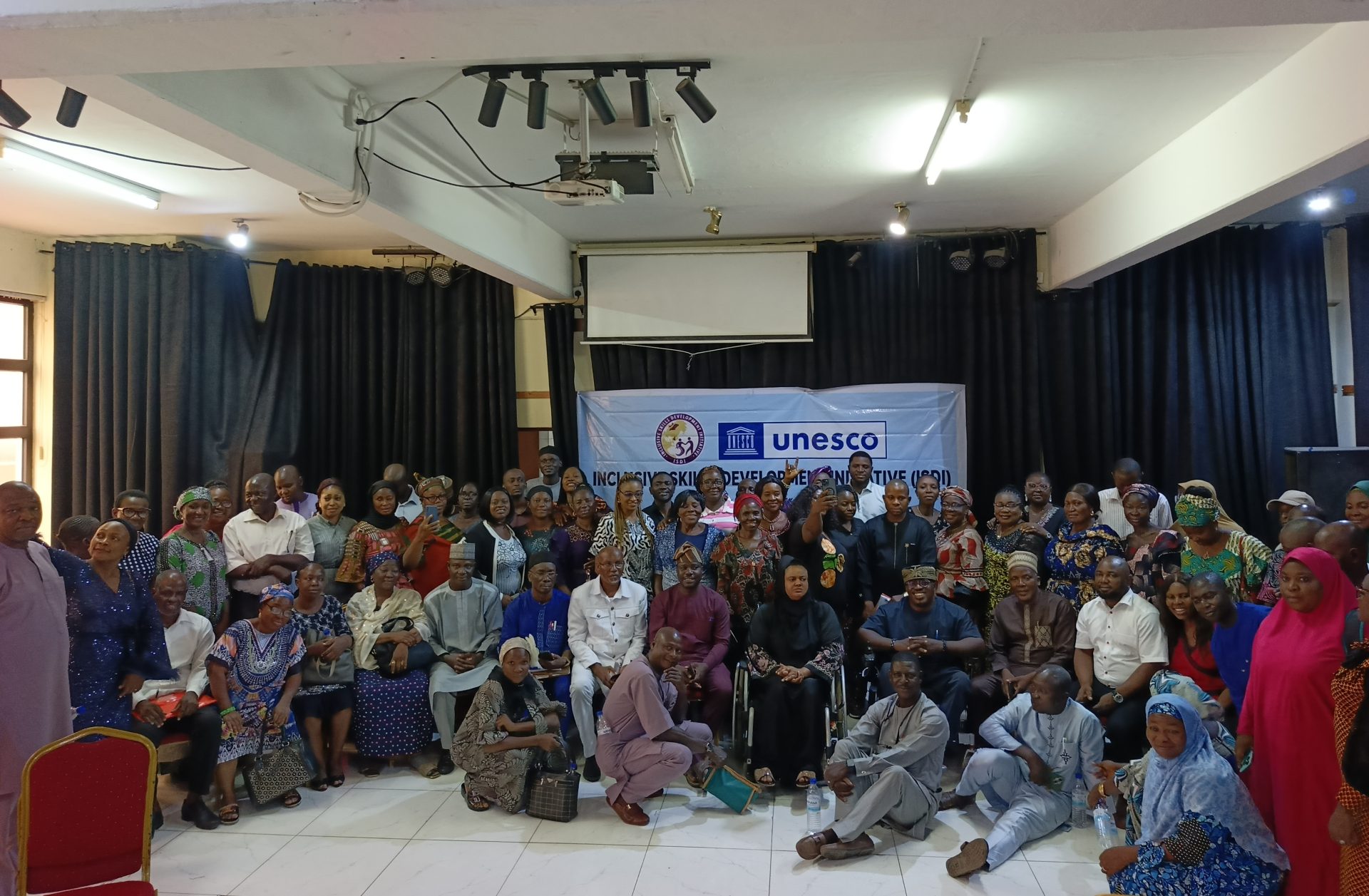
In a major step towards advancing inclusive education and protecting the rights of learners with disabilities in Nigeria, the Inclusive Skills Development Initiative (ISDI), with support from UNESCO Nigeria, has successfully concluded a transformative two-day Training of Trainers workshop for 80 teachers and school administrators in the Federal Capital Territory (FCT), Abuja.
The impactful workshop, themed “Adapting the National Family Life and HIV Education (FLHE) Curriculum for Learners with Disabilities,” brought together participants from the FCT Universal Basic Education Board (UBEB), FCT Secondary Education Board (SEB), special schools, and inclusive schools across the FCT.
The training focused on equipping teachers with practical skills, inclusive teaching strategies, and disability-sensitive approaches to Family Life and HIV Education (FLHE), especially for adolescents with disabilities who often face exclusion, abuse, stigma, and lack of access to critical information about sexuality and reproductive health.
Speaking during the closing session, the Executive Director of ISDI, Angelina Ugben, described the workshop as a bold intervention aimed at ensuring that no child is left behind in accessing quality education and sexual reproductive health knowledge.
According to her, adolescents with disabilities remain among the most vulnerable groups in society, particularly in schools where many suffer abuse, discrimination, and silence around issues of sexuality and reproductive health rights.
She explained that the organization discovered alarming gaps in knowledge among students with disabilities regarding body autonomy, consent, abuse prevention, and sexual reproductive health rights, thereby necessitating the urgent intervention.
“Our expectation is for the teachers to step down everything they have learnt here to their students. The reason why this training was organized is because we found out that adolescents with disabilities are being abused in schools, and even those who are not abused do not know issues of sexuality, when to say no, how to speak up, and what their rights are regarding sexual and reproductive health,” she stated.
Ugben stressed that every learner, regardless of disability status, deserves access to inclusive and quality education that empowers them with life-saving knowledge on health, relationships, safety, dignity, and well-being.
“At ISDI, we believe inclusion is a right, not charity. Every child deserves to be seen, valued, protected, and empowered,” she added.
She further disclosed that one of the major expectations from the training is for the adapted learning materials and recommendations developed during the workshop to be integrated into school curricula across the FCT education system.
According to her, the trained teachers now have a deeper understanding of the realities and challenges faced by persons with disabilities concerning sexual and reproductive health rights (SRHR), and are now better positioned to guide, mentor, and protect learners with disabilities in their schools.
Ugben also highlighted inadequate funding of special schools as one of the major challenges confronting special educators in Nigeria.
She noted that the presence of representatives from UBEB and SEB at the workshop was strategic, as it would help amplify the concerns raised by teachers and stakeholders to relevant authorities for policy actions and institutional reforms.
“One of the challenges special educators face is inadequate funding of special schools, and this affects their performance. That is why UBEB and SEB were part of this engagement — so that the challenges mapped out here can get to the appropriate authorities and hopefully lead to policies that address issues of sexual and reproductive health rights among persons with disabilities, especially adolescents,” she explained.
Ugben also appreciated UNESCO Nigeria for supporting the two-day capacity-building initiative, describing the partnership as a powerful collaboration for advancing equitable and inclusive education in Nigeria.
The workshop facilitator, Dr. Kolawole Jayeoba, emphasized that inclusive sexual and reproductive health education for persons with disabilities, particularly teenagers, is both urgent and essential.
He charged participants to embrace what he described as a “shift initiative” by changing their mindset and approach toward teaching sexuality education to learners with disabilities.
“These educators are not new in this field. They have spent years with these students, so there must be a shift in mindset towards inclusion as regards sexual and reproductive health rights of teenage boys and girls with disabilities,” he said.
Dr. Jayeoba pointed out that many teenagers with disabilities are highly vulnerable due to societal neglect, lack of awareness, low confidence, and fear of discussing sexuality-related matters.
“Most of them are still trying to find their way around disability. Some are shy to talk about sexuality, which makes it a very important issue. They should be sensitized about their sexual and reproductive health rights and given adequate attention to ensure their safety and protection,” he stated.
He added that denying learners with disabilities access to information about their bodies, consent, abuse prevention, and reproductive rights amounts to depriving them of their legitimate rights.
“They have the right to know their bodies, how, where, and when to say no, especially when they are abused. We believe the best platform to achieve all these is through teachers because they have direct access to the students, and that is what drives this initiative,” he added.
The workshop featured interactive sessions, practical learning activities, and extensive experience-sharing among participants, many of whom described the training as enlightening and transformative.
One of the participants, Mrs. Shongutayo from Government Girls Secondary School, Dutse, Abuja, described the training as an eye-opener.
According to her, the workshop exposed many realities faced by students with disabilities and reinforced the importance of empowering them with knowledge about their rights and personal safety.
“This initiative is timely and very important. It has opened our eyes to the things students with disabilities face daily. They have the right to know, and this knowledge will help reduce the rate of abuse against students with disabilities,” she said.
The training drew participants from several secondary schools across the FCT, including GSS Kuje, GSS Kwali, GGSS Dutse, GSS Tupechi, GDSS Gwagwalada, GSS Kubwa, GSS Orozo, GSS Nyanya, GDSS Karu, GSS Haji-Camp, GSS Gaube, GSS Naharati, ADSS Asokoro, GSS Apo, GDSS Dutse, GSS Jibi, GSS Bako, and GSS Dangara.
Teachers from inclusive and special needs schools also participated, including FCT School for the Deaf, Kuje; FCT School for the Blind Children, Jabi; FCT School for Special Needs Children, Kuje; JSS Pasali (Inclusive); and JSS Kwali (Inclusive).
The event further recorded the presence of the Director of Special Services Division, FCT Secondary Education Board and team, representatives of the Universal Basic Education Board, as well as officials from the National Human Rights Commission.
As stakeholders continue to advocate for inclusive education and the protection of vulnerable learners, the successful completion of the workshop marks another significant milestone in the drive toward building safer, healthier, and more inclusive schools and communities across Nigeria.
Click the link below to join our WhatsApp channel


