

Call for Free Sanitary Pads as Stakeholders Champion Menstrual Dignity for Women and Girls with Disabilities
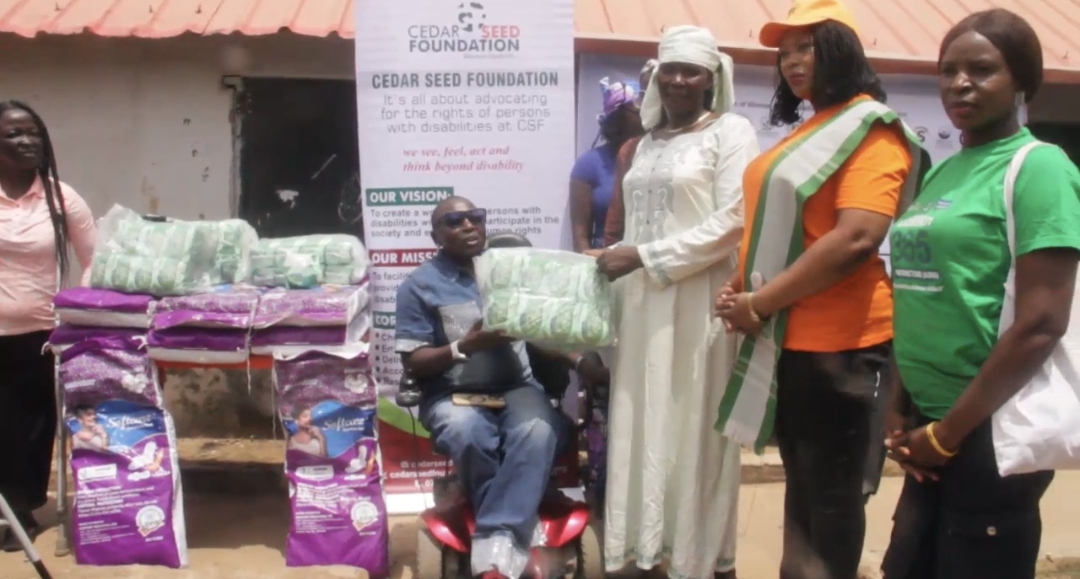
In a powerful demonstration of solidarity, inclusion, and compassion, the Network of Women with Disabilities (NWD), in collaboration with Cedar Seed Foundation and several partner organizations, marked the 2026 World Menstrual Hygiene Day with an impactful outreach to the New Kuchigoro Internally Displaced Persons (IDP) Camp in the Federal Capital Territory (FCT), Abuja.
The event, held on Friday, May 29, 2026, brought together disability rights advocates, healthcare professionals, development partners, and humanitarian actors to promote menstrual health awareness and distribute sanitary materials to vulnerable women and girls living in the camp.
With the global theme, “Together for a #PeriodFriendlyWorld,” the outreach focused on advancing menstrual dignity, breaking stigma, and ensuring that no woman or girl is left behind in conversations and interventions relating to menstrual health and hygiene.
Speaking during the event, the President of the Network of Women with Disabilities and Executive Director of Cedar Seed Foundation, Lois Auta, emphasized that menstruation is a fundamental human rights issue and that women and girls with disabilities must be included in all policies, programs, and conversations surrounding menstrual health.
According to her, the commemoration was designed not only to celebrate World Menstrual Hygiene Day but also to amplify the voices of women and girls with disabilities whose menstrual health needs are often ignored.
“Today is about recognizing the rights of every woman and girl during menstruation. It is also an opportunity to remind society that women and girls with disabilities have the same rights as everyone else to participate in global conversations on menstrual health and hygiene,” she said.
Auta noted that the outreach was intended to draw attention to the unique challenges faced by women and girls with disabilities as well as those living in displacement camps.
“It is a day to remind government institutions, civil society organizations, development partners, and other critical stakeholders that women and girls with disabilities, including those living in IDP camps, deserve to be part of the global agenda on menstruation. We must look at how they can manage their menstrual health safely and with dignity. That is why health education forms a key component of today’s activities.”
She further declared:
“It is time we move from waste to water, from discrimination to dignity, and from declarations to delivery.”
Explaining the choice of the IDP camp as the venue for the outreach, Auta said many displaced women face severe economic hardships that make access to menstrual hygiene products almost impossible.
“We understand the economic realities confronting these women. Many have lost their sources of livelihood due to displacement and insecurity. For many families here, buying sanitary pads is a luxury they cannot afford. That is why we ensured that sanitary pads would be distributed individually so that every woman in this camp receives at least one pack.”
She called on governments at all levels to subsidize or provide free sanitary pads for vulnerable women and girls, particularly those with disabilities.
“If condoms can be subsidized as a public health intervention, then there is nothing wrong with sanitary pads receiving similar support. Menstrual hygiene is a health issue, and governments should treat it as such,” she stressed.
The event also featured comprehensive health education sessions led by members of the Medical Women’s Association of Nigeria (MWAN), FCT Branch.
Speaking during the outreach, Dr. Adenike Adeyemi, a senior member of the association, explained that MWAN was among several organizations working to improve menstrual health outcomes for women and girls.
She described menstruation as a natural biological process that every woman experiences regardless of social status, economic background, or disability.
“Every woman menstruates. It is a natural process that cuts across all social classes. We are here to support women and girls to achieve healthy menstrual practices because menstrual hygiene is essential for overall health and wellbeing.”
Dr. Adeyemi warned that poor menstrual hygiene could expose women to infections and other health complications.
“Women can easily become vulnerable to infections if proper hygiene practices are not observed during menstruation. That is why education and access to menstrual products are very important.”
Also speaking, Dr. Oiza Tessy Ahmadu, President-Elect of the Medical Women’s Association of Nigeria (MWAN), FCT Branch, said the association considered it important to identify with women in displacement settings where access to healthcare and hygiene facilities remains limited.
She noted that the health education session focused on helping women understand their bodies and maintain proper hygiene during menstruation.
“We educated the women on the signs of irregular menstruation, personal hygiene practices, how to stay clean during their menstrual periods, and how to maintain confidence and dignity while menstruating. We also discussed overall hygiene, including bathing practices and other preventive health measures.”
Dr. Ahmadu stressed that menstrual health should not be viewed as solely a women’s issue.
“Menstruation is everybody’s business. It affects women directly, but support must come from families, communities, institutions, and governments. Women need financial, emotional, and psychological support during menstruation.”
She further called on policymakers to create enabling environments that make menstrual hygiene products affordable and accessible.
“Government has a critical role to play by ensuring that sanitary products are available and affordable while also providing water, sanitation, and hygiene facilities that make healthy menstrual management possible.”
One of the highlights of the event was a practical demonstration on the proper use and disposal of sanitary pads. The session provided participants with valuable knowledge on menstrual hygiene management and helped dispel common myths and misconceptions surrounding menstruation.
Beneficiaries expressed appreciation to the organizers, describing the intervention as timely and life-changing. Many women in the camp noted that access to sanitary products remains one of their most pressing challenges, particularly for women and girls with disabilities who often face additional barriers.
The outreach concluded with the distribution of sanitary pads and hygiene materials to participants, reinforcing the message that menstrual dignity is a right, not a privilege.
As stakeholders continue to advocate for menstrual equity and inclusion, the event served as a reminder that achieving a truly period-friendly world requires collective action, policy commitment, and deliberate efforts to ensure that the most vulnerable women and girls are not left behind.
For many women at the New Kuchigoro IDP Camp, the day was more than a celebration—it was a reaffirmation of their dignity, their rights, and their place in the global movement for menstrual health and social inclusion.
The visit was made possible through the collaborative support of several committed organizations, including Savis Foundation, Maden Healthcare Foundation (Abuja Chapter), African Jewels Development Initiative, Community Creative Centre for Women and Girls with Disabilities, Julsy Enterprise, Disability Pathway Trust Foundation, Ability Centre, Medical Women’s Association of Nigeria (FCT Chapter), Falconscare Initiative for Women with Disabilities Empowerment (FIWDE), and the Young Persons with Disabilities Network (YPDN).
Their collective efforts and commitment to advancing the rights, inclusion, health, and empowerment of women and girls with disabilities contributed significantly to the success and impact of the visit.
Click the link below to join our WhatsApp channel


