

By TQM news,
ABUJA, Nigeria – A groundbreaking nationwide survey has challenged one of Nigeria’s most persistent political assumptions, revealing that the country’s voters may be far more open to electing women, young people and persons with disabilities (PWDs) than previously believed.
Instead, the report points to political parties—not the electorate—as the greatest barrier preventing these underrepresented groups from occupying elective offices.
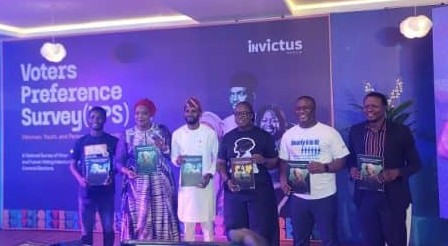
The findings are contained in the Voters’ Preference Survey (VPS) conducted by civic-tech organisation Invictus Africa, which surveyed 11,196 eligible voters across Nigeria’s 36 states and the Federal Capital Territory (FCT) ahead of the 2027 general elections.
The study examined Nigerians’ previous voting patterns, current attitudes and voting intentions, providing fresh insight into the country’s evolving political landscape.
Political Parties Under Scrutiny
Presenting the report in Abuja, the Executive Director of Invictus Africa, Bukky Shonibare, said the findings challenge the long-standing narrative that Nigerians are unwilling to vote for women or other historically marginalised groups.
According to her, the real question is no longer whether Nigerians are prepared to support women, youths and persons with disabilities, but whether political parties are giving them a fair chance to contest elections.
“For years, conversations about women’s political representation have centred on why Nigerians are not voting for women. Today, we want to bring something that has often been missing from these conversations—the voices of voters themselves,” she said.
She explained that many Nigerians have simply not had the opportunity to vote for candidates from these groups because such candidates rarely secure party nominations or receive adequate support to become visible during election campaigns.
Majority Willing to Vote for Women and Young Candidates
One of the report’s most striking findings is the overwhelming willingness of Nigerians to support candidates based on merit rather than identity.
According to the survey:
- 64.4 per cent of respondents said they would vote for a woman in the 2027 elections.
- 74.3 per cent indicated they would support a young candidate.
- 38.7 per cent expressed willingness to vote for a person with a disability, a significant increase compared to the 8.7 per cent who said they had previously voted for a candidate with a disability.
The report suggests that these figures represent a major shift in public perception and could signal growing acceptance of inclusive leadership in Nigeria if political parties provide equal opportunities during candidate selection.
Visibility, Not Voter Bias, Is the Real Problem
The survey reveals that lack of visibility remains one of the greatest obstacles confronting women, youths and persons with disabilities seeking elective office.
Among respondents who had never voted for a woman, 51.1 per cent said they had simply never seen a female candidate on the ballot.
Similarly:
- 79.9 per cent said they were unaware that young candidates were contesting elections.
- 61.3 per cent did not know that a person with a disability had appeared on the ballot.
These findings, according to Shonibare, suggest that Nigeria’s political exclusion begins long before election day.
She questioned whether political parties are creating a level playing field by giving women, youths and persons with disabilities equal access to party tickets, campaign funding, media exposure and political structures.
Competence Still Matters Most
Despite the encouraging support for inclusive representation, the report found that Nigerians continue to prioritise competence over identity.
Most respondents said they would vote for candidates based on their qualifications, integrity, honesty and proven track record rather than on gender, age or disability status.
Shonibare cautioned that willingness to vote for candidates from underrepresented groups does not automatically translate into electoral victory.
“It is one thing to intend to vote for a woman or a person with disability. It is another thing to get to the polling unit and actually vote,” she noted.
Women Favoured More for Legislative Offices
The survey also uncovered interesting differences in voter attitudes toward various elective positions.
While respondents showed considerable willingness to elect women into legislative offices such as the House of Representatives and State Houses of Assembly, support was noticeably lower for women seeking executive offices, particularly the presidency.
The findings suggest that although public attitudes are changing, some traditional perceptions about women occupying the country’s highest political offices still persist.

Strong Interest in the 2027 Elections
Another encouraging outcome of the study is the growing enthusiasm among Nigerians ahead of the next general elections.
According to the report, 74.9 per cent of respondents said they are certain they will vote in the 2027 elections, indicating sustained public interest in democratic participation despite previous electoral challenges.
Structural Barriers Remain the Biggest Challenge
Head of Research at Invictus Africa, Gabriel Mobuogwu, said the study was designed to redirect attention from political institutions to the electorate in order to understand what Nigerians truly think about inclusive representation.
He observed that women make up nearly half of Nigeria’s population and registered voters, while young people constitute the country’s largest voting bloc. Persons with disabilities are estimated to number about 35 million, yet all three groups remain grossly underrepresented in elective offices.
According to him, the evidence suggests that structural barriers—not voter resistance—continue to prevent inclusive political participation.
Mobuogwu urged political parties to create more opportunities for women, youths and persons with disabilities to emerge as candidates, while encouraging aspirants from these groups to campaign on competence, credibility, vision and performance rather than identity alone.
Call for Inclusive Electoral Reforms
The report concludes that achieving meaningful political inclusion in Nigeria will require reforms that extend beyond voter mobilisation.
It recommends that political parties adopt more inclusive candidate selection processes, provide equitable campaign support and increase opportunities for women, youths and persons with disabilities to contest elections.
The report also calls on the Independent National Electoral Commission (INEC), civil society organisations, development partners and the media to intensify voter education and increase public awareness about candidates from underrepresented groups before election day.
As preparations for the 2027 general elections gather momentum, the findings present a compelling message: Nigerians appear increasingly willing to embrace inclusive leadership. The challenge now lies with political parties and the broader electoral system to remove barriers and create an environment where women, young people and persons with disabilities can compete on equal terms and translate public goodwill into electoral success.


