

…Calls for stronger laws, inclusive policies, and accessible emergency response for persons with disabilities
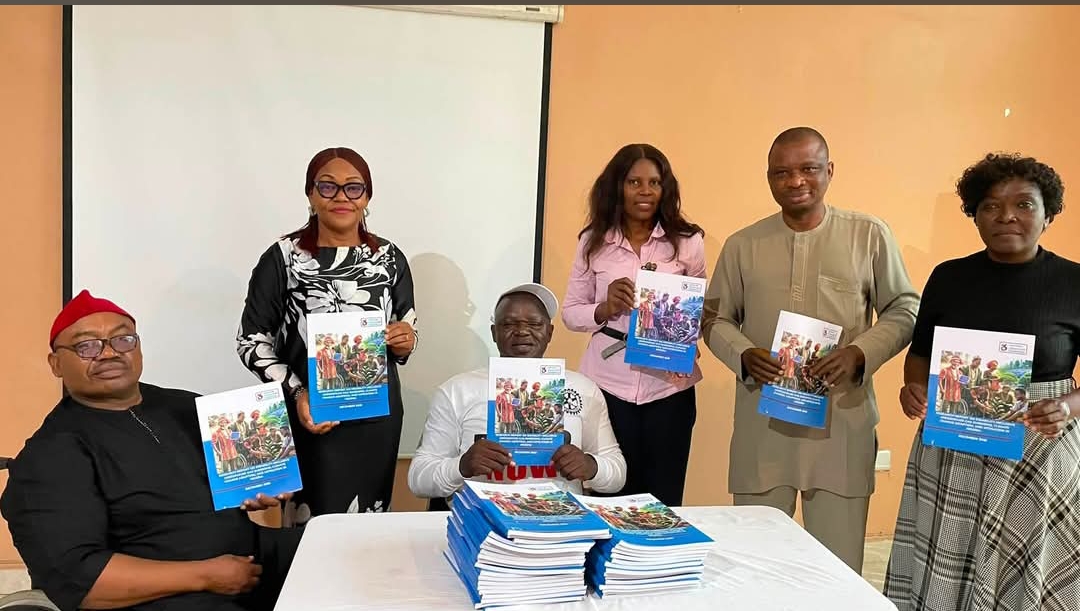
ABUJA – The Centre for Citizens with Disabilities (CCD), with support from the International Climate Initiative (IKI), has unveiled a groundbreaking research report on Disability-Inclusive Greenhouse Gas Emissions and Climate Change Adaptation and Mitigation in Nigeria, calling for urgent policy reforms to ensure persons with disabilities are no longer left behind in the country’s climate response.
The report, officially launched on August 5, 2026, in Abuja, is one of the most comprehensive studies ever conducted in Nigeria examining the intersection between disability, greenhouse gas emissions, climate change, and disaster preparedness. It provides evidence-based recommendations aimed at strengthening inclusive climate governance and ensuring that persons with disabilities are fully integrated into climate adaptation and mitigation strategies.
The launch attracted senior government officials, development partners, disability rights advocates, representatives of organisations of persons with disabilities, and key institutions responsible for humanitarian services, disaster management, and national development planning.
Among the institutions represented were the Federal Ministry of Humanitarian Affairs and Poverty Alleviation, the National Commission for Persons with Disabilities (NCPWD), the National Human Rights Commission (NHRC), the National Emergency Management Agency (NEMA), the Federal Ministry of Budget and Economic Planning, the Abia State Commission for the Welfare of Disabled Persons, as well as several development partners committed to advancing disability inclusion in Nigeria.
The research was conducted to assess and document the disproportionate impact of climate change and greenhouse gas emissions on persons with disabilities across Nigeria. It also explored the barriers they face before, during, and after climate-related disasters, while proposing practical policy solutions to make climate action more inclusive.
Delivering the goodwill message on behalf of the Honourable Minister of Humanitarian Affairs and Poverty Alleviation, Dr. Bernard Mohammed Doro, the Executive Secretary of the National Commission for Persons with Disabilities, Chief Ayuba Gufwan, described climate change as one of the greatest humanitarian challenges confronting humanity today.
He noted that although climate change affects everyone, persons with disabilities, older persons, women, and children remain among the most vulnerable due to persistent barriers that limit their access to emergency information, evacuation services, relief materials, healthcare, and livelihood opportunities during disasters.
According to him, many persons with disabilities continue to experience exclusion because emergency communication systems are often inaccessible, evacuation centres are rarely disability-friendly, and humanitarian interventions frequently overlook their unique needs.
Chief Gufwan described the research report as a landmark publication that provides critical evidence on how floods, heatwaves, drought, displacement, and other climate-induced emergencies disproportionately affect persons with disabilities in Nigeria.
He commended the Centre for Citizens with Disabilities for producing a timely and policy-oriented document capable of influencing government actions and improving climate governance through disability inclusion.
In his opening remarks, the Founding Executive Director of CCD and Chairman of the Abia State Commission for the Welfare of Disabled Persons, Hon. Dr. David Obinna Anyaele, said climate change is no longer a future concern but a present-day reality already affecting millions of Nigerians.
He explained that persons with disabilities are often exposed to greater risks during climate emergencies because of social, environmental, communication, and infrastructural barriers that limit their ability to respond effectively.
Dr. Anyaele stressed that meaningful climate action must begin with knowledge, research, and deliberate policy interventions.
He noted that the newly launched publication represents CCD’s second major research output on climate change and disability, demonstrating the organisation’s continued commitment to generating evidence that supports inclusive national development.
He encouraged participants and stakeholders to continue expanding their knowledge of climate change while sustaining advocacy efforts until disability inclusion becomes a standard component of every national policy, programme, and development agenda.
Also speaking during the event, the Director of Compliance and Enforcement at the National Commission for Persons with Disabilities, Barr. Ikem Uchegbulam, who represented the Executive Secretary of the Commission, applauded CCD for undertaking what he described as a timely and impactful study.
He observed that climate change affects every segment of society and emphasised the importance of raising awareness among persons with disabilities so they can better understand climate risks and actively participate in preparedness, adaptation, and mitigation efforts.
Earlier in her welcome remarks, delivered on behalf of the Acting Director of CCD, Mrs. Florence Chima Austin, organisers described the research as one of the first comprehensive national studies examining the relationship between disability, greenhouse gas emissions, and climate change in Nigeria.
She explained that the report fills a longstanding knowledge gap by documenting the lived experiences of persons with disabilities while offering practical recommendations for policymakers, humanitarian actors, and development partners.

According to her, achieving climate justice will only be possible when climate policies intentionally include persons with disabilities and ensure that no one is left behind.
One of the highlights of the event was the presentation of key recommendations emerging from the research.
The report urged the National Council on Climate Change (NCCC) to develop supplementary regulations that explicitly integrate persons with disabilities into the implementation of Nigeria’s Climate Change Act 2021 and incorporate disability-inclusive indicators into the Council’s Climate Action Plan.
It also recommended that the Federal Government, state governments, and all Local Government Areas establish Directorates of Persons with Disabilities (DPWDs) across Ministries, Departments, and Agencies instead of maintaining disability desks. According to the report, these directorates should be managed by qualified persons with disabilities who possess expertise in climate policy, environmental sustainability, disaster risk reduction, and inclusive development.
The researchers further called on the Federal Ministry of Environment, the National Emergency Management Agency, State Emergency Management Agencies, the Nigeria Security and Civil Defence Corps, the Nigeria Police Force, the Nigerian Red Cross Society, the Federal Fire Service, and other first responders to adopt universal design principles in public infrastructure, emergency communication systems, evacuation procedures, and disaster response mechanisms to guarantee accessibility for persons with disabilities.
Participants at the launch described the report as a significant contribution to Nigeria’s climate discourse, expressing optimism that its findings would guide future legislation, institutional reforms, and development programming aimed at protecting the rights and wellbeing of persons with disabilities in the face of increasing climate threats.
The event culminated in the official unveiling of the research report by the Honourable Minister of Humanitarian Affairs and Poverty Alleviation, Dr. Bernard Mohammed Doro, represented by the Executive Secretary of the National Commission for Persons with Disabilities, Chief Ayuba Gufwan.
Stakeholders at the event agreed that as climate change continues to intensify across Nigeria, disability inclusion can no longer remain an afterthought. Instead, they stressed that inclusive climate action must become a national priority if the country is to build resilient communities and achieve sustainable development that truly leaves no one behind.


