

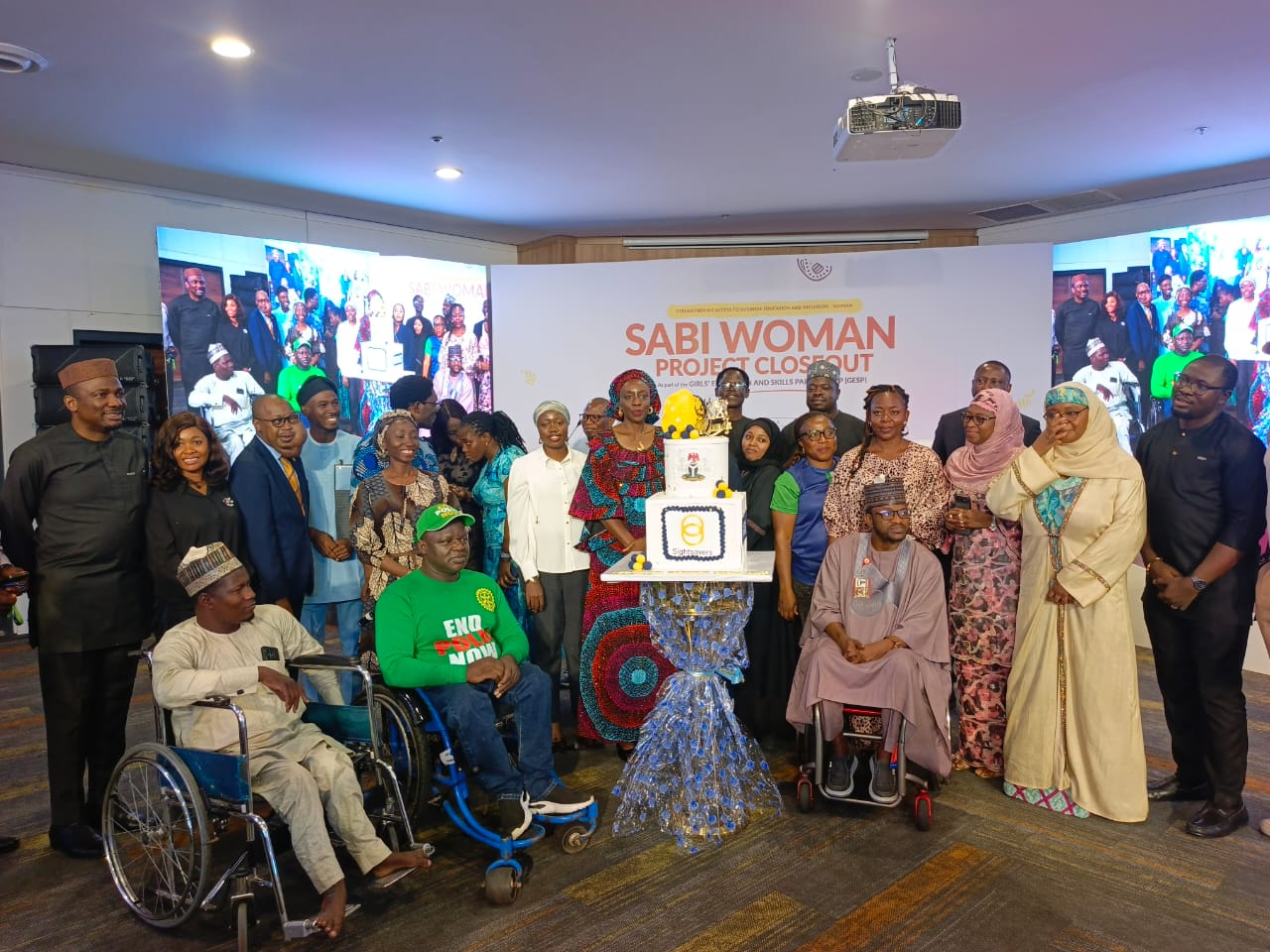
Stakeholders in the disability inclusion and development sector have called for sustained investment in disability-inclusive education, skills development, entrepreneurship, and economic empowerment following the successful implementation of the Supporting Access to Business Initiative (SABI) Women Project, which has transformed the lives of thousands of women and girls with disabilities in Nigeria.
The call was made during the close-out ceremony of the SABI-Women Project, where government officials, development partners, disability advocates, beneficiaries, and private sector representatives gathered to celebrate the project’s achievements and chart a path for sustaining its impact.
The initiative, implemented by Sightsavers Nigeria and its partners, was designed to address the educational, social, and economic barriers faced by adolescent girls and young women with disabilities, particularly in Kano and Lagos States.
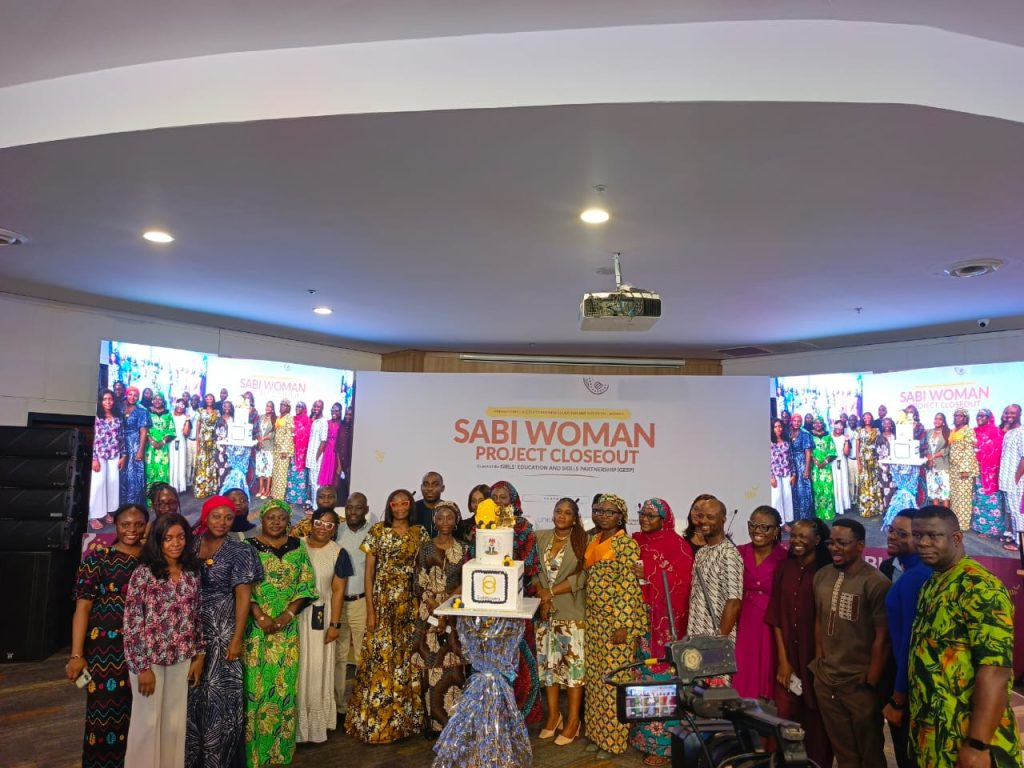
Speaking at the event, the Country Director of Sightsavers Nigeria, Professor Joy Shu’aibu, described the project as a deliberate effort to bridge long-standing gaps that have prevented many girls and women with disabilities from realizing their full potential.
According to her, the project focused on building confidence, strengthening skills, creating economic opportunities, and ensuring that beneficiaries were equipped to pursue meaningful livelihoods.
“The education component was designed to support adolescent girls with disabilities through mentorship and life-coaching programmes,” she explained. “We deliberately selected schools with girls and adolescents with disabilities and engaged life coaches to mentor and inspire them. We wanted them to understand that disabilities should not limit their dreams or aspirations.”
She noted that beyond mentorship, participants received entrepreneurship and financial literacy training covering critical areas such as business management, bookkeeping, product costing, and enterprise development.
Professor Shu’aibu explained that beneficiaries were further connected to manufacturers and suppliers, including Unilever, creating practical opportunities for them to establish and grow sustainable businesses.
While acknowledging the progress made, she identified stigma, discrimination, and negative societal attitudes as major barriers confronting persons with disabilities in Nigeria.
She therefore challenged media practitioners to play a leading role in dismantling stereotypes and promoting positive narratives about disability.
“The media has enormous power to shape public perception. We need more stories that highlight the abilities, achievements, and contributions of persons with disabilities rather than reinforcing harmful stereotypes,” she said.
The Sightsavers Country Director also emphasized the importance of inclusive education, noting that learning alongside peers without disabilities fosters acceptance, confidence, and social integration.
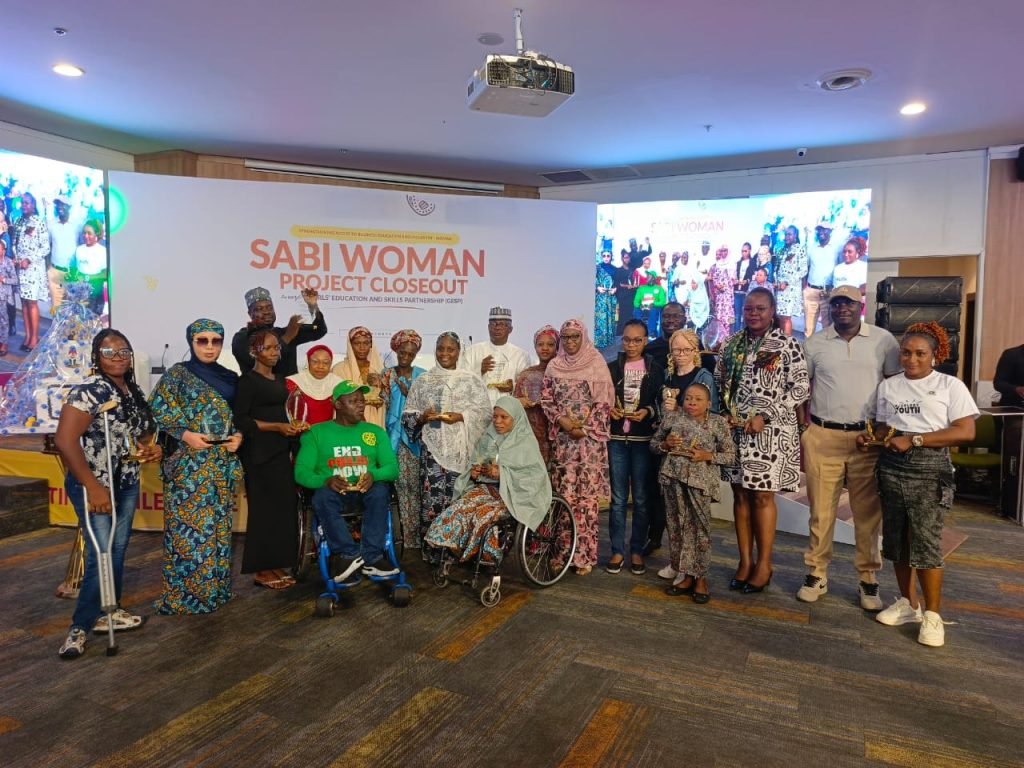
Also speaking at the event, Richard Grubb, Education Adviser at the Foreign, Commonwealth and Development Office (FCDO), commended the project for creating practical pathways from learning to earning for girls and young women with disabilities.
He said the initiative demonstrated how inclusive systems can unlock the economic potential of persons with disabilities and contribute significantly to national development.
According to him, when women and girls with disabilities are empowered with skills, education, and opportunities, they become active contributors to economic growth and community development.
Similarly, Mrs. Nneka Ogbansiegbe, Education Specialist representing UNICEF, reaffirmed the agency’s commitment to disability inclusion and equitable access to opportunities.
She noted that testimonies from beneficiaries in Kano and Lagos States clearly demonstrated the transformative impact of deliberate inclusion efforts.
The Senior Special Assistant to the President on Special Needs and Equal Opportunities, Mohammed Abba Isa, also reiterated the Federal Government’s commitment to advancing policies that protect the rights of persons with disabilities and promote their inclusion in all spheres of national life.
He emphasized the need for stronger collaboration among government institutions, development partners, private sector actors, and Organisations of Persons with Disabilities (OPDs) to accelerate progress toward disability inclusion.
Addressing Persistent Barriers
During a presentation on the project overview, Esther Bature, Programme Officer at Sightsavers, highlighted the challenges that informed the design of the SABI-Women Project.
She noted that many adolescent girls and young women with disabilities face limited access to education and skills development opportunities, while negative societal perceptions continue to undermine their confidence and participation in economic activities.
Other challenges identified included weak pathways linking training to employment and viable business opportunities, limited support from parents and caregivers, inadequate disability inclusion knowledge among trainers and service providers, low awareness among employers on recruiting and retaining persons with disabilities, and restricted access to financial services needed to establish or expand businesses.
According to Bature, the SABI-Woman Project was developed to respond directly to these barriers.
“The project built the employment readiness and confidence of adolescent girls aged 13 to 18 through skills development and mentoring, while supporting young women with disabilities aged 18 to 30 to secure jobs or establish micro and small businesses in Kano and Lagos States,” she explained.
The project was implemented in partnership with Organisations of Persons with Disabilities (OPDs), including Project Enable Africa and the Kanawa Educational Foundation for the Disabled, alongside private sector partners such as Unilever Nigeria, Access Bank, and the Industrial Training Fund (ITF).
Innovative Approaches Driving Inclusion
To achieve its objectives, the project adopted several innovative and inclusive strategies.
An inclusive entrepreneurship training guide was developed in collaboration with the Industrial Training Fund, while facilitators received training on disability-inclusive and gender-responsive methodologies.
Through a partnership with Unilever and the Growing Business Foundation, the globally recognized Shakti business empowerment model was adapted to meet the specific needs of young women with disabilities.
The project also partnered with the International Coaching Federation Lagos Chapter and the Buba F. Foundation to develop life-skills learning materials focused on financial literacy, career exploration, and personal development for adolescent girls with disabilities.
In addition, employers were engaged and trained to improve their understanding of disability inclusion and strengthen their capacity to recruit, support, and retain women with disabilities in their workforce and supply chains.
With support from the Central Bank of Nigeria, advocacy efforts were undertaken to promote inclusive financial policies and improve access to financial services for women with disabilities.
Remarkable Impact
The project recorded impressive results across education, employment, entrepreneurship, and disability inclusion.
According to project data, 1,512 young women with disabilities were supported to build employability and entrepreneurship skills, while 1,366 adolescent girls with disabilities received life-skills training and career guidance.
A total of 1,647 employees were trained on workplace disability inclusion, helping to foster more inclusive work environments.
The initiative also strengthened local capacity by training 217 life coaches on disability inclusion to provide career guidance, supporting 202 Technical Vocational Education and Training (TVET) trainers in inclusive facilitation, and equipping 127 business advisors with skills to sustain enterprise growth beyond the project’s lifespan.
Stakeholders observed that community engagement played a significant role in driving social change by helping communities understand and address the unique needs of young women with disabilities.
They also noted that the project demonstrated how sustainable and replicable inclusive economic growth can be achieved through skills development, private sector engagement, and policy advocacy.
Many beneficiaries reported increased confidence and self-belief as a result of the training programmes.
Through exposure to market-relevant skills and career opportunities, young women with disabilities began to see themselves as future professionals, entrepreneurs, and leaders.
Several beneficiaries have since attained financial independence, supported their families, become mini-distributors, and contributed to local economic development.
One of the most remarkable achievements of the project was the provision of business starter kits worth over ₦40 million to 670 women with disabilities.
Project records further showed that beneficiaries have successfully refunded 88 percent of the revolving funds provided, demonstrating strong business commitment, accountability, and sustainability.
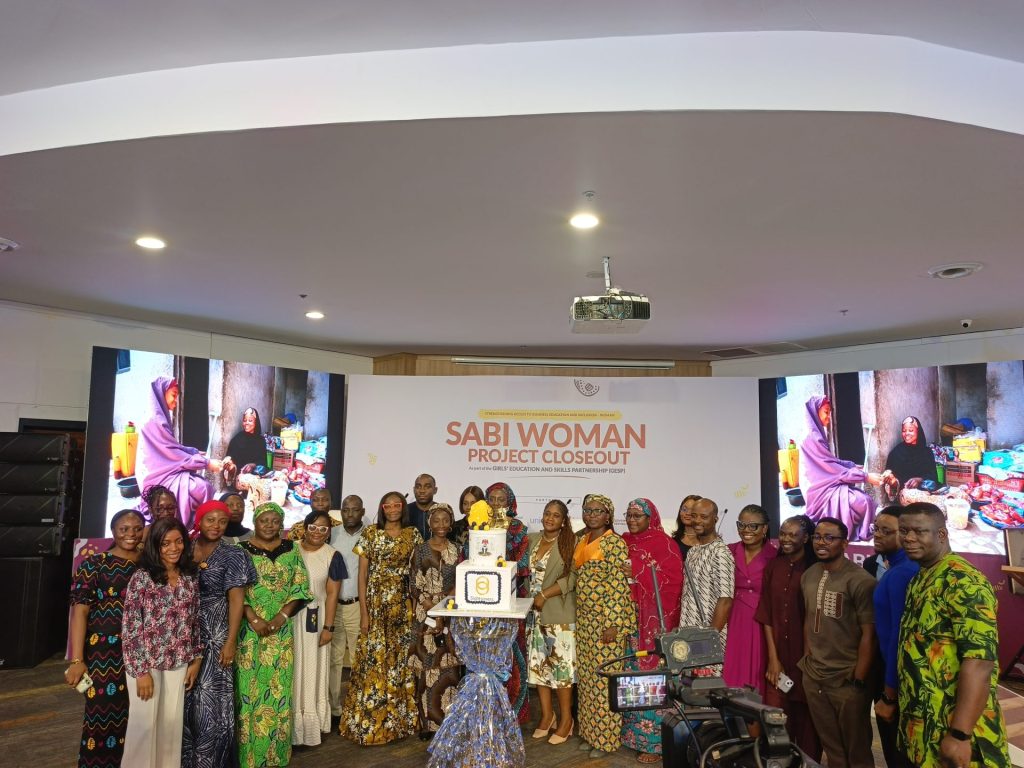
Beneficiaries Share Inspiring Stories
Beneficiaries, including Morenikeji Ogunkoya and Aisha Abdullahi, expressed gratitude to Sightsavers and its partners for giving them opportunities they never imagined possible.
They described the project as life-changing, noting that the skills, mentorship, and financial support received had significantly improved their confidence, economic independence, and outlook on life.
They pledged to encourage other persons with disabilities to pursue their ambitions and contribute meaningfully to national development.
Sustaining the Momentum
As the project comes to an end, stakeholders unanimously agreed that the lessons learned from the SABI-Women Project should inform future interventions aimed at expanding economic participation, educational opportunities, and social inclusion for women and girls with disabilities across Nigeria.
They stressed that investing in disability inclusion is not merely a social responsibility but a strategic development imperative capable of unlocking talent, reducing poverty, and accelerating national growth.
For many beneficiaries, the SABI-Women Project has proven that when barriers are removed and opportunities are created, women and girls with disabilities can thrive, lead, and contribute significantly to society.
The challenge now, stakeholders say, is ensuring that the gains recorded are sustained and expanded so that no woman or girl with a disability is left behind.
Click the link below to join our WhatsApp channel


