

Stakeholders rally behind community-driven approach to breaking barriers, transforming schools and ensuring no child is left behind
ABUJA, August 11, 2026 — The Women and Girls with Albinism Network (WGWAN), in collaboration with SafeHost International Initiative, has commenced a major community-based inclusive education project aimed at strengthening educational opportunities for neurodivergent children and children with albinism across the Federal Capital Territory (FCT), Abuja.
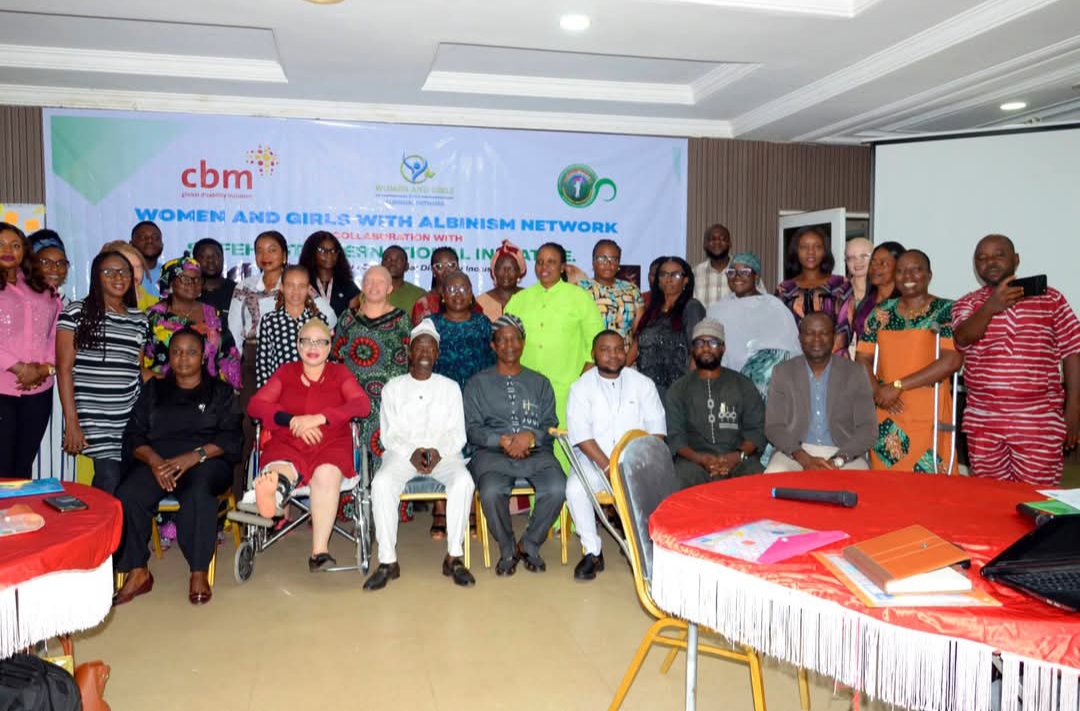
The project, supported by the CBM Global Disability Inclusion LEAP Fund, was formally unveiled during a Project Inception Meeting and Stakeholder Engagement held on Tuesday, August 11, 2026, at De-George’s Grand Resorts, Jikwoyi, Abuja.
The initiative, titled “Strengthening Community-Based Inclusive Education for Neurodivergent Children and Children with Albinism in FCT, Abuja,” brought together representatives of government Ministries, Departments and Agencies, organisations of persons with disabilities, disability-focused organisations, community stakeholders, education actors, development partners and other key stakeholders.
Delivering the opening remarks and welcome address, Constance Nneka Onyemaechi, Executive Director of WGWAN, described the gathering as more than the formal commencement of another development project, stressing that it represented a collective commitment to ensuring that disability does not determine which children have access to education, participation and opportunities.
She said the project was founded on a simple but powerful principle: education is a right, not a privilege reserved for children who fit neatly into existing systems.
According to her, many children with disabilities continue to encounter barriers not only within schools but also in their communities, through negative attitudes and misconceptions, inadequate support systems and institutional practices that fail to accommodate their diverse needs.
“A child should not have to overcome disability and an exclusionary education system simply to have the opportunity to learn,” Onyemaechi said.
She particularly highlighted the challenges faced by children with albinism, noting that misconceptions about albinism, poor vision support, inaccessible learning materials and inadequate understanding of their educational needs can prevent them from participating fully in school.
She also drew attention to the experiences of neurodivergent children, stressing that they should not be forced to conform to educational systems that fail to recognise their different ways of learning, communicating and participating.
“Inclusion means changing the system—not asking the child to change who they are in order to belong,” she emphasised.
Moving beyond the traditional project approach
Onyemaechi explained that WGWAN and SafeHost International Initiative recognise that sustainable change cannot be achieved by civil society organisations working alone.
She said the success of the initiative would depend on strong collaboration among government institutions, organisations of persons with disabilities, schools, teachers, parents and caregivers, community leaders, development partners and, importantly, children themselves.
She described the partnership between organisations working across different disability groups as particularly significant, arguing that disability inclusion becomes stronger when organisations move beyond working in isolated clusters.
While acknowledging that children with albinism and neurodivergent children may experience different forms of exclusion, she said both groups deserve an education system that respects their rights, recognises their individual differences and provides appropriate support for meaningful participation.
The project, she explained, therefore goes beyond implementing a series of activities.
Rather, it seeks to strengthen the practices, relationships and systems required to sustain inclusive education beyond the lifespan of the project.
Government, communities and OPDs at the centre
The WGWAN Executive Director emphasised the critical role of stakeholders represented at the inception meeting.
According to her, government institutions have the responsibility of translating policies and commitments into practical action, while organisations of persons with disabilities contribute lived experience and expertise that cannot be substituted.
Community stakeholders, she added, understand the realities that often determine whether interventions succeed or fail, while teachers and education stakeholders remain central to creating classrooms where every child can participate.
Development partners, she noted, also play an important role by providing financial resources, technical expertise and opportunities for innovation.
Onyemaechi expressed appreciation to CBM Global Disability Inclusion for supporting the initiative through the LEAP Fund and for investing in approaches that place persons with disabilities and their representative organisations at the centre of solutions.
However, she stressed that financial support alone should not be considered the measure of success.
“Funding a project is only the beginning. The real measure of success will be what changes because of the project,” she said.
She challenged stakeholders to assess the initiative against practical questions: whether schools become more responsive, teachers become better equipped, communities become more accepting, children with disabilities experience fewer barriers, families become more aware of available support, and lessons generated by the project influence wider educational practice and policy.
Stakeholders urged to make the inception meeting count
The WGWAN Executive Director urged participants not to treat the inception meeting as a mere formality.
Instead, she called for honest, practical and ambitious conversations about the barriers confronting children with disabilities in accessing and remaining in education.
She encouraged stakeholders to identify what is working, what is failing, areas where institutions can collaborate and interventions that can realistically be sustained.
She also stressed the importance of ensuring that the voices and experiences of persons with disabilities meaningfully influence project decisions.
“Nothing about inclusive education should be designed without the meaningful participation of those who experience exclusion,” she stated.
Children are rights-holders, not project statistics
A major focus of the address was the need to change how children with disabilities are viewed within development interventions.
Onyemaechi cautioned against treating children merely as beneficiaries or numbers to be reported at the end of a project.
She described them as rights-holders, whose dignity, participation and aspirations must remain at the centre of inclusive education efforts.

According to her, the ultimate goal should be an education system where every child can enter the classroom with dignity, participate without discrimination, receive the support required to learn and develop, and envision a future filled with possibilities rather than limitations.
She called on stakeholders to build a partnership based on mutual respect, accountability, transparency, collaboration and measurable results.
Beyond the project lifecycle
The WGWAN Executive Director said the organisations involved in the project were determined to ensure that the initiative produces models of inclusion that can be sustained, replicated and strengthened beyond the project’s implementation period.
She expressed hope that stakeholders would eventually be able to look back and identify tangible improvements in schools, communities and the lives of children with disabilities.
The desired outcome, she said, is a situation where schools become more inclusive, communities become more responsive and children who were previously pushed to the margins gain greater opportunities to learn, participate and thrive.
A collective call for inclusive education
The Project Inception Meeting ultimately provided an opportunity for stakeholders to examine the realities of inclusive education in the FCT and begin developing a shared understanding of how barriers affecting neurodivergent children and children with albinism can be addressed at community and institutional levels.
The collaboration between WGWAN and SafeHost International Initiative reflects a broader recognition that inclusive education requires more than policies on paper.
It requires accessible and responsive learning environments, informed teachers, supportive families, inclusive communities, effective institutions and systems capable of identifying and responding to the diverse needs of children.
As the project gets underway, stakeholders are expected to work collectively towards strengthening community structures and educational practices that can provide children with albinism and neurodivergent children with meaningful opportunities to access, participate in and benefit from education.
For WGWAN and SafeHost International Initiative, the message from the inception meeting was clear: the success of inclusive education should not be measured simply by how many children enter a classroom, but by whether they are welcomed, supported, respected, included and given a genuine opportunity to thrive.
The organisations thanked all stakeholders for honouring the invitation and for joining what they described as an important journey towards a more inclusive education system in the FCT.
The project now moves from inception to implementation, with stakeholders expected to translate the commitments made at the meeting into concrete action that can improve educational experiences and opportunities for children with albinism and neurodivergent children across Abuja.
The goal is simple but transformative: no child should be left behind because the education system failed to accommodate who they are.
About the Project
The “Strengthening Community-Based Inclusive Education for Neurodivergent Children and Children with Albinism in FCT, Abuja” project is being implemented by the Women and Girls with Albinism Network (WGWAN) in collaboration with SafeHost International Initiative, with support from the CBM Global Disability Inclusion LEAP Fund.
The initiative brings together disability organisations, government institutions, communities, education stakeholders and other partners to strengthen community-based approaches to inclusive education and address barriers affecting children with albinism and neurodivergent children in the Federal Capital Territory.
Follow the The Qualitative Magazine channel on WhatsApp:


