

By Chris Agbo,
The persistent exclusion of Persons with Disabilities (PWDs) in Nigeria has once again come under sharp criticism, as the Founder of Movement Beyond Walls, Pelemo Nyajo, decried what she described as the systemic marginalisation of millions of Nigerians living with disabilities.
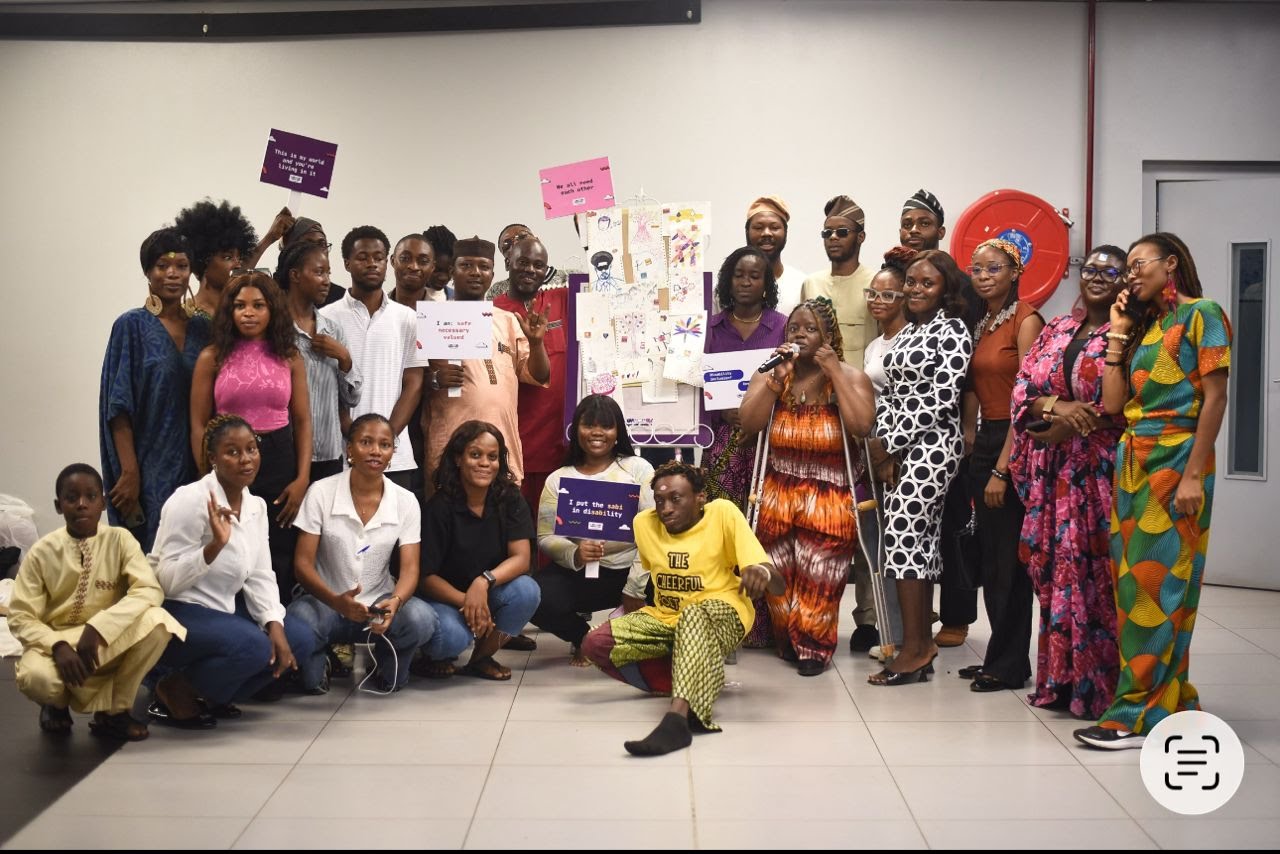
Speaking during an inclusion-focused event that brought together young people with and without disabilities, Nyajo painted a troubling picture of a society where PWDs are still largely treated as “an afterthought” in governance, infrastructure, and social systems.
The event, held on the sidelines of a broader advocacy engagement, used art, storytelling, and interactive activities as tools to promote social inclusion and dismantle long-standing stereotypes about disability. For Nyajo, the initiative goes beyond awareness—it is about reshaping mindsets and building a generation that understands inclusion as a shared responsibility.
According to her, Movement Beyond Walls was established as a creative platform to bridge the deep-rooted divide between persons with disabilities and the wider society, particularly among young Nigerians.
“A lot of people do not understand disability inclusion. It feels foreign to them, and many still see disability as a taboo. What we are doing is creating allies—people who understand inclusion—and empowering persons with disabilities to believe in themselves,” she said.
Nyajo stressed that while Nigeria has made progress on paper, particularly with the enactment of the Discrimination Against Persons with Disabilities (Prohibition) Act, real change remains elusive due to weak implementation and lack of political will.
She noted that despite the existence of legal frameworks, the lived reality of many PWDs tells a different story—one marked by inaccessible infrastructure, exclusion from policymaking, and limited economic opportunities.
“Persons with disabilities are not fully considered, even in national budgeting or government priorities. Public buildings, recreational centres, and even basic facilities like bathrooms are not designed with accessibility in mind. Wheelchair users, for example, are consistently excluded,” she added.
Beyond physical barriers, Nyajo highlighted societal attitudes as a major obstacle to inclusion. According to her, prejudice, stigma, and deeply ingrained ableism continue to undermine the dignity and potential of persons with disabilities.
She called for a shift in approach—from tokenistic gestures and short-term palliative measures to sustainable systems that promote independence, dignity, and equal participation.
“It’s not just about giving out aid. We need structures that guarantee independence. Accessibility, representation, and grassroots inclusion must become national priorities,” she emphasised.
Also lending her voice to the conversation was disability inclusion advocate and visual archivist, Eva Chukwunelo, who described the gathering as a vital platform for fostering empathy and mutual understanding.
According to Chukwunelo, true inclusion begins when people interact meaningfully and begin to see beyond physical differences.
“This kind of space creates a bridge where people can understand and relate with each other better. Inclusion starts with understanding,” she noted.
She, however, echoed concerns about the slow pace of progress since the passage of the Disability Act, urging authorities to move beyond rhetoric and take decisive action.
“Since 2018, we’ve talked about the Disability Act, but institutions are still largely inaccessible. It’s time to move from paper to action,” she said.
In her remarks, development activist Maureen Alor described the event as a rare and powerful example of what a truly inclusive society should look like—a “safe space” where individuals can connect freely without fear of judgment or discrimination.
“I’ve found a sense of belonging here. This is what a real safe space should be—where people are allowed to be themselves and build genuine connections,” she said.
The event not only celebrated diversity but also reinforced a critical message: inclusion is not charity—it is a right.
As Nigeria continues to grapple with issues of inequality and social justice, stakeholders at the event unanimously called for stronger advocacy, deliberate policy implementation, and a collective commitment to building a society where no one is left behind.
For many participants, the gathering served as both a wake-up call and a beacon of hope—proof that with intentional effort, inclusive communities are not just possible, but achievable.
The message was clear: until accessibility, representation, and inclusion become embedded in every layer of society, the vision of equality for persons with disabilities in Nigeria will remain incomplete.
Click the link below to join our WhatsApp channel


