

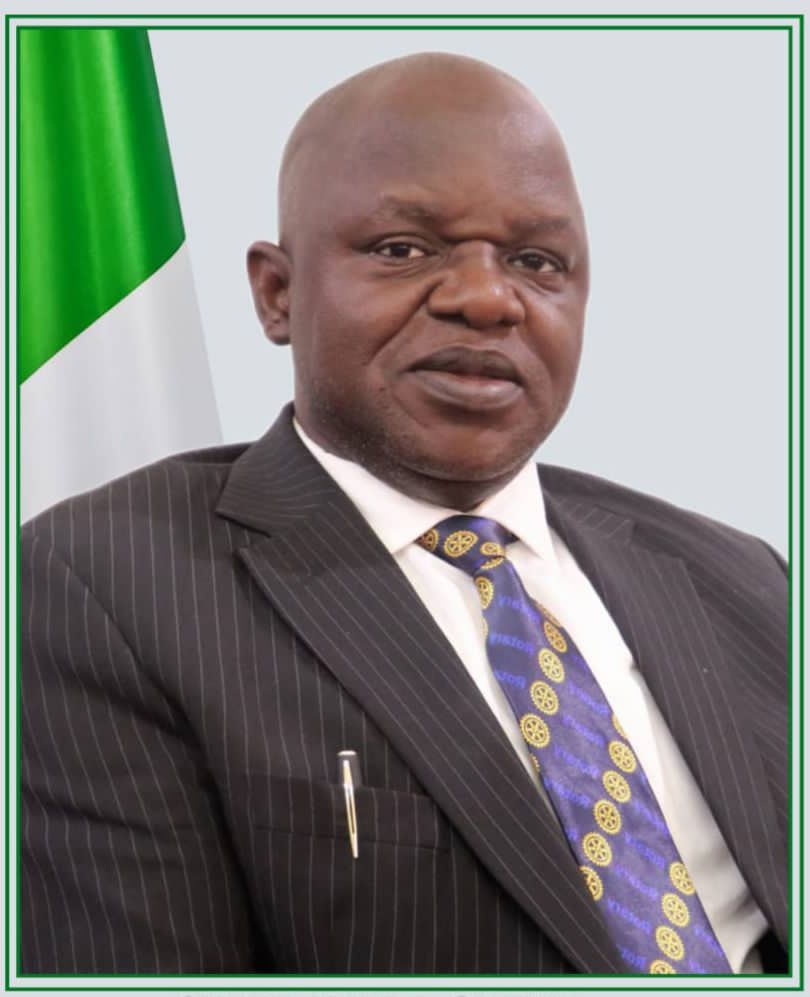
The National Commission for Persons with Disabilities (NCPWD) has praised the Plateau State Library Board for its pivotal role in the successful hosting of the Jos Book Fair 2026, describing the initiative as a bold and timely step toward advancing inclusive literacy and equitable access to knowledge for persons with disabilities across Nigeria.
The commendation was delivered by the Executive Secretary of the Commission, Hon. Ayuba Burki Gufwan, following the conclusion of the four-day literary event held from April 22 to 25, 2026, at the National Library of Nigeria in Jos. The fair, themed “Books as Influencers: When Words Shape Worlds,” brought together a diverse mix of authors, publishers, educators, students, and literary enthusiasts for a rich blend of book exhibitions, author engagements, workshops, and community outreach programmes.
Observers say the 2026 edition of the Jos Book Fair stood out not only for its scale and participation but also for its intentional focus on inclusivity—an aspect that resonated strongly with the NCPWD’s mandate.
In his remarks, Hon. Gufwan underscored the transformative power of reading in nation-building, emphasizing that literacy remains the bedrock of sustainable development. “A nation that reads is a nation that leads. When governments invest in reading culture, they are essentially laying the strongest foundation for progressive policymaking and national growth,” he said.
He further noted that the collaboration between the Plateau State Library Board and the Jos Book Fair organisers aligns seamlessly with the Federal Government’s broader agenda on education, human capital development, and community empowerment. According to him, such partnerships are critical in bridging existing gaps in access to information, particularly for vulnerable groups.
Beyond commendation, the NCPWD boss drew attention to the deeper implications of the fair’s objectives, highlighting their alignment with the provisions of the Discrimination Against Persons with Disabilities (Prohibition) Act, 2018. The Act mandates inclusive access to education, information, and public services for persons with disabilities—a vision the Commission says must be reflected in every sector, including the literary ecosystem.
“We are particularly encouraged by the Board’s efforts in strengthening community libraries, supporting mobile book tours, and distributing books to disadvantaged learners,” Gufwan stated. “These are not just activities—they are lifelines for inclusion. They ensure that children with disabilities, especially those in special schools and underserved communities, are not excluded from Nigeria’s growing knowledge economy.”
Stakeholders at the event also highlighted the importance of accessible formats in publishing, noting that millions of Nigerians with visual and print disabilities still face significant barriers in accessing books. In response, the NCPWD reaffirmed its commitment to promoting alternative reading formats such as braille, audiobooks, and other assistive technologies that make learning more inclusive.
Gufwan stressed that the journey toward inclusive literacy requires collective action. He called on authors, publishers, educators, and policymakers to mainstream accessibility in their work, ensuring that no Nigerian is left behind due to disability.
“There is no small partnership,” he added thoughtfully. “Every contribution writes a sentence in the story of someone’s future. What we are building together is not just a reading culture, but a society where knowledge is accessible to all, regardless of physical or sensory limitations.”
The Commission also pledged continued collaboration with the Plateau State Library Board and other stakeholders to ensure that future literary events across the country fully embody the principles of accessibility and inclusion. From venue design to content delivery, Gufwan emphasized that inclusion must move from being an afterthought to a standard practice.
As conversations around education reform and social inclusion gain momentum in Nigeria, the Jos Book Fair 2026 is being hailed as a model for what is possible when intentional partnerships meet visionary leadership.
For many participants—especially persons with disabilities—the event was more than a fair; it was a statement that their right to read, learn, and participate fully in society is not negotiable, but essential.
With renewed commitments and growing awareness, stakeholders say the path toward inclusive literacy in Nigeria is becoming clearer—one book, one reader, and one inclusive policy at a time.
Click the link below to join our WhatsApp channel


