

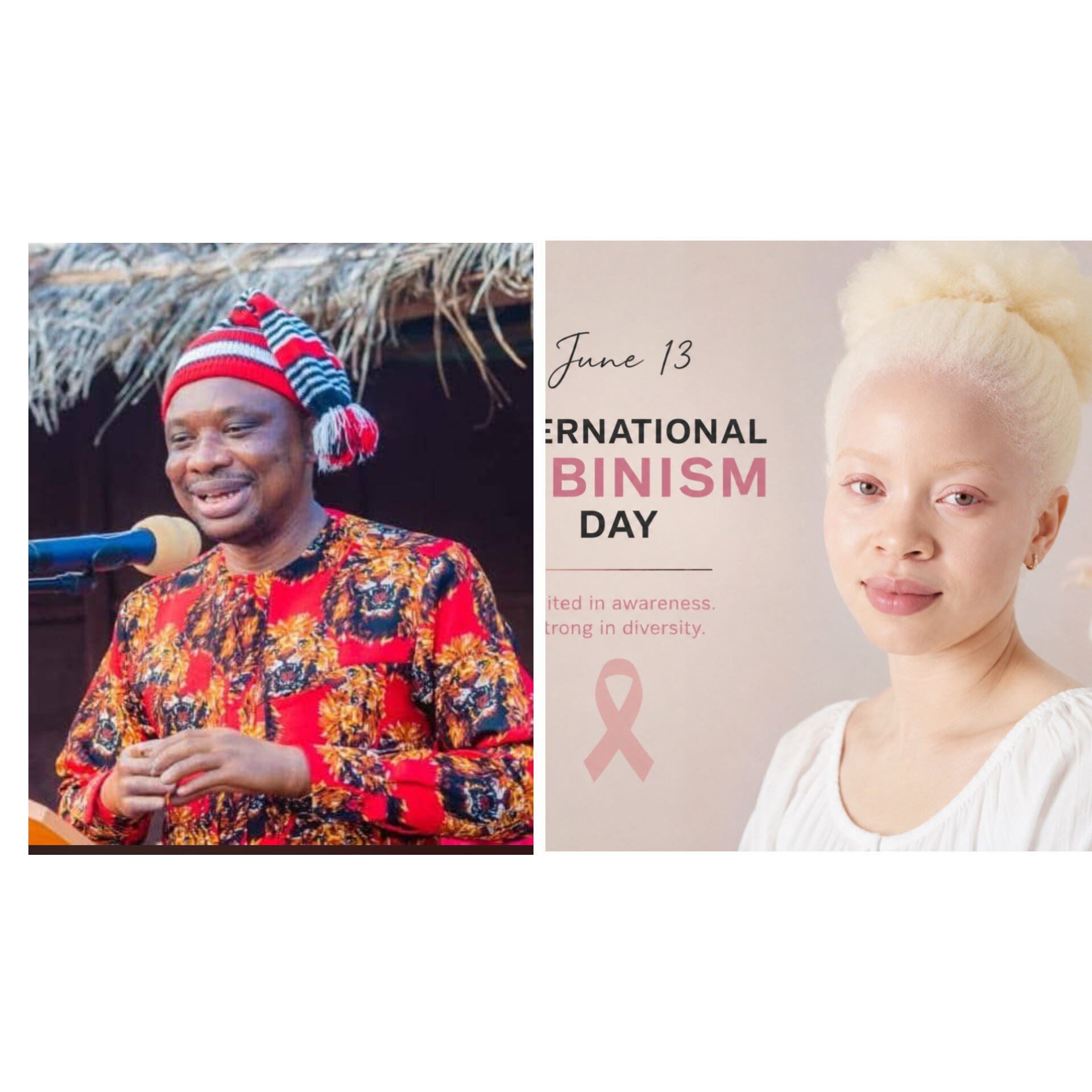
As the world commemorates the 2026 International Albinism Awareness Day, the Chairman of the Abia State Commission for the Welfare of Disabled Persons, Dr. David Obinna Anyaele, has called for stronger commitments toward inclusion, equal opportunities, and the protection of the rights of persons with albinism.
Anyaele made the passionate appeal in a goodwill message marking the annual observance celebrated globally on June 13, urging governments, communities, civil society organizations, and development partners to intensify efforts aimed at eliminating discrimination, harmful stereotypes, and social exclusion faced by persons with albinism.
Speaking on the significance of this year’s theme, “Proudly in My Skin: Celebrating All Skin Tones,” the renowned disability rights advocate described the occasion as an opportunity to promote acceptance, celebrate diversity, and reinforce the principles of dignity, equality, and respect for all individuals regardless of their skin colour or disability status.
According to him, persons with albinism have continued to demonstrate resilience, excellence, and remarkable contributions to society despite enduring numerous challenges, including health complications, prejudice, discrimination, social isolation, and misconceptions rooted in ignorance.
“International Albinism Awareness Day serves as a reminder that every individual deserves to be valued, respected, and given equal opportunities to thrive. Persons with albinism are not defined by their skin condition but by their talents, aspirations, and contributions to society,” Anyaele stated.
The commission chairman noted that while significant progress has been made in promoting the rights of persons with disabilities, individuals living with albinism still face unique barriers that require urgent and sustained attention from all sectors of society.
Highlighting the efforts of the Abia State Government in supporting persons with albinism, Anyaele revealed that the state, through the Commission for the Welfare of Disabled Persons, has implemented several initiatives aimed at improving their well-being and quality of life.
He disclosed that the commission has consistently distributed over 300 sunscreen kits to persons with albinism across the state to help address skin-related health challenges associated with prolonged exposure to sunlight. He further noted that financial support has also been provided to the Abia State chapter of the Albinism Association of Nigeria, alongside assistance for advocacy programmes and public enlightenment campaigns designed to combat misconceptions about albinism.
According to him, these interventions underscore the government’s commitment to ensuring that persons with albinism are not left behind in the state’s development agenda.
Anyaele reaffirmed the commission’s determination to build an inclusive society where every citizen, irrespective of disability or skin tone, can access opportunities, realize their full potential, and participate meaningfully in social, economic, and political activities.
He emphasized that achieving genuine inclusion requires collective responsibility and sustained action from all stakeholders.
The disability rights advocate therefore called on government agencies, educational institutions, religious bodies, traditional rulers, families, media organizations, and civil society groups to strengthen awareness campaigns that challenge myths and harmful beliefs surrounding albinism.
He stressed that misinformation and prejudice continue to fuel discrimination against persons with albinism in many communities, limiting their access to education, employment, healthcare, and other essential services.
“Ending stigma begins with education and awareness. Society must recognize that persons with albinism are entitled to the same rights, opportunities, and protections as every other citizen. We must work together to create communities where diversity is celebrated and human dignity is upheld,” he said.
Anyaele further underscored the importance of protecting the human rights of persons with albinism and ensuring their full participation in all aspects of national development. He maintained that inclusion is not merely a moral obligation but a fundamental human rights issue that should be prioritized at every level of governance.
As the world celebrates International Albinism Awareness Day, he congratulated persons with albinism in Abia State, across Nigeria, and around the globe for their courage, resilience, and achievements despite prevailing challenges.
He encouraged them to remain confident, embrace their identity with pride, and continue making valuable contributions to the growth and development of their communities and nations.
The International Albinism Awareness Day, observed annually on June 13, seeks to raise awareness about albinism, promote the rights of persons with albinism, and combat the stigma, discrimination, and misconceptions they often face worldwide. This year’s celebration serves as a powerful call for greater acceptance, inclusion, and recognition of the beauty and diversity of all skin tones.
Click the link below to join our WhatsApp channel


