

Disability Federation Demands Full Inclusion of Women and Girls with Disabilities in Implementation
ACCRA, GHANA — The Ghana Federation of Disability Organisations (GFD) has welcomed Ghana’s ratification of the African Union Convention on Ending Violence Against Women and Girls (AUCEVAWG), describing the development as a historic milestone while warning that its success will depend largely on whether women and girls with disabilities are fully included in its implementation.
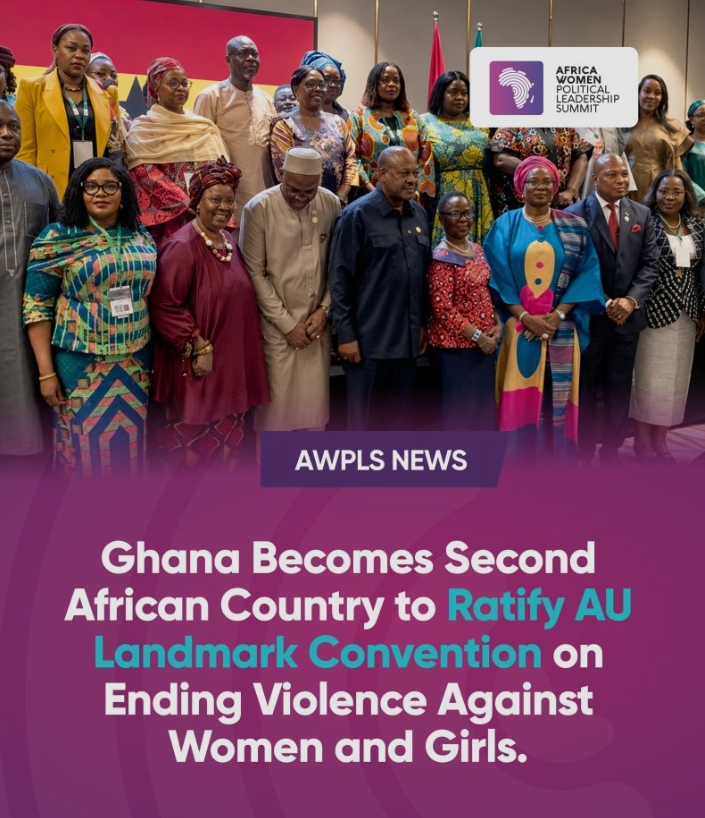
Ghana became the second African Union Member State, after The Gambia, to ratify the Convention following parliamentary approval on July 30, 2026, according to the federation.
While applauding the development, the GFD said ratification must go beyond a symbolic milestone and translate into concrete action capable of protecting women and girls who face heightened risks of violence and discrimination.
‘Ratification Must Translate Into Action’
In a statement shared on social media, the federation stressed that women and girls with disabilities frequently experience multiple and intersecting forms of discrimination, which can increase their vulnerability to violence while simultaneously making it more difficult for them to seek help.
According to the GFD, inaccessible services, stigma, communication barriers and limited access to information can prevent women and girls with disabilities from reporting abuse, accessing justice and obtaining appropriate support.
The federation therefore called for disability inclusion to be deliberately integrated into every stage of Ghana’s implementation of the AUCEVAWG—from policy development and programming to monitoring and evaluation.
“Ratification must translate into concrete measures,” the federation’s position suggests, particularly for women and girls who are often excluded from mainstream protection and response systems.
Women With Disabilities Must Have a Seat at the Table
The GFD urged the Ghanaian government, development partners, civil society organisations and other stakeholders to ensure the meaningful participation of women and girls with disabilities and their representative organisations in implementing the Convention.
It argued that women with disabilities should not merely be consulted after policies have been developed.
Rather, they should be involved in determining what policies are developed, how programmes are delivered and how their effectiveness is measured.
The federation emphasised that their lived experiences and expertise are critical to developing effective measures to prevent and respond to violence.
UN Review Raised Concerns
The GFD also drew attention to concerns raised by the United Nations Committee on the Rights of Persons with Disabilities during its 2024 review of Ghana.
According to the federation, the review highlighted gaps affecting women and girls with disabilities, reinforcing the need for stronger measures to protect them from violence, discrimination and exclusion.
The federation’s call comes against the backdrop of concerns that conventional systems for addressing violence against women may fail to adequately account for the particular barriers experienced by women with disabilities.
Make Justice and Support Services Accessible
The GFD called on authorities to ensure that services covering violence prevention, reporting, referral, justice and survivor support are fully accessible.
This, it said, should include the provision of reasonable accommodation and accessible information to ensure that women with different disabilities can report violence and obtain assistance without facing additional barriers.
The federation also urged stakeholders to pay particular attention to the experiences of women and girls with intellectual, psychosocial, sensory and physical disabilities, noting that the nature and forms of violence they experience can differ significantly.
Disability Data Needed to Fight Violence
Another major demand from the federation is improved collection and use of disability-disaggregated data on violence against women and girls.
The GFD argued that without reliable data showing how violence affects women and girls with disabilities, governments and service providers may struggle to develop effective policies and interventions.
It called for data systems that capture disability alongside other relevant factors, enabling policymakers to identify gaps, measure progress and direct resources where they are most needed.
Frontline Workers Must Be Prepared
The federation also stressed the importance of strengthening the capacity of frontline personnel who are often the first point of contact for survivors.
It called for adequate training and resources for police officers, health workers, social workers, justice-sector personnel and other service providers to enable them to identify, prevent and appropriately respond to violence against women and girls with disabilities.
According to the GFD, training should go beyond general awareness of disability and equip frontline actors with practical knowledge on communication, reasonable accommodation, safeguarding and referral mechanisms.
Shelters Must Not Become Another Barrier
The federation further called for shelters, survivor support programmes and other response mechanisms to be made accessible to women and girls with different types of disabilities.
It warned that a woman fleeing violence should not encounter another barrier simply because the shelter she needs cannot accommodate her disability.
Accessibility, it stressed, must therefore be incorporated into the design and operation of shelters, helplines, reporting centres, healthcare facilities and other support services.
A Historic Opportunity for Ghana
The GFD described Ghana’s ratification of the AUCEVAWG as an important opportunity to strengthen national efforts to prevent and eliminate violence against women and girls.
However, it emphasised that the Convention will only achieve its intended impact if its implementation reaches women and girls who are often excluded from mainstream interventions.
For the disability community, the message is clear:
Ratification is the beginning—not the end.
The real test will be whether women and girls with disabilities can report violence safely, access justice equally, receive appropriate support and live free from discrimination and abuse.
As Ghana moves toward implementing the Convention, the GFD is urging government and its partners to ensure that disability inclusion is embedded in every aspect of the process.
No woman or girl should be left behind because of disability.
And for women and girls with disabilities, inclusion must mean more than being counted.
It must mean being heard, protected, believed, supported and given equal access to justice.


