

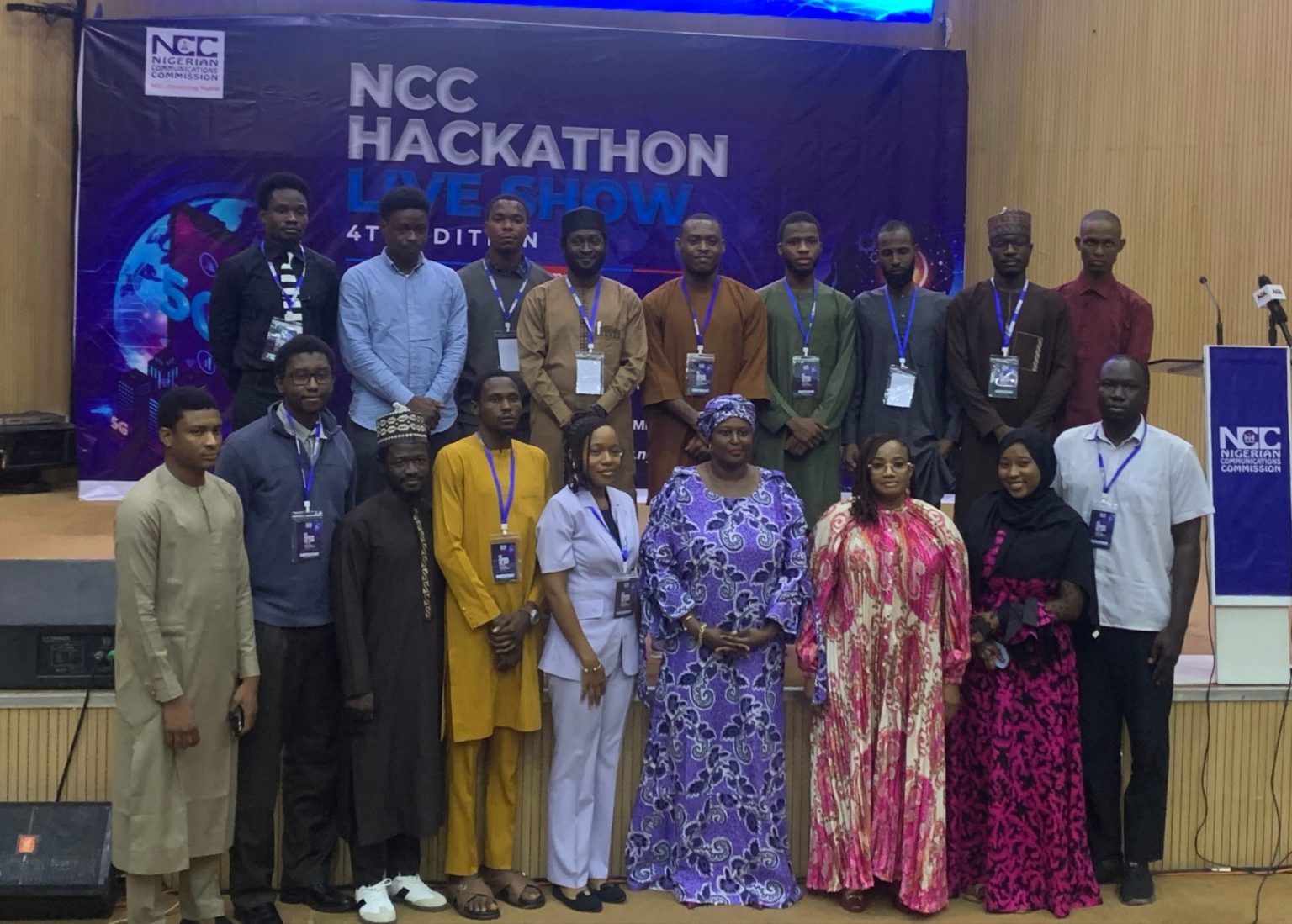
Sora wins NCC Hackathon with platform designed to connect Persons with Disabilities to inclusive employers, adaptive skills and new opportunities
For millions of Nigerians with disabilities, the search for employment can begin with a barrier before an application is even submitted.
A recruitment platform may not be accessible. An online application may not accommodate a person’s disability. A qualified candidate may never get the opportunity to demonstrate their skills. And even where government policies provide for the inclusion of Persons with Disabilities (PWDs), implementation often remains a major challenge.
Now, a new generation of Nigerian innovators is attempting to change that reality—not with another policy document, but with technology.
At the centre of that emerging effort is Sora, an inclusive digital job-matching and adaptive skills platform designed specifically for verified Persons with Disabilities in Nigeria.
The platform emerged as the winner of the fourth edition of the Nigerian Communications Commission (NCC) Hackathon Live Show, earning a N3 million prize and placing disability inclusion firmly at the centre of Nigeria’s technology and innovation conversation.
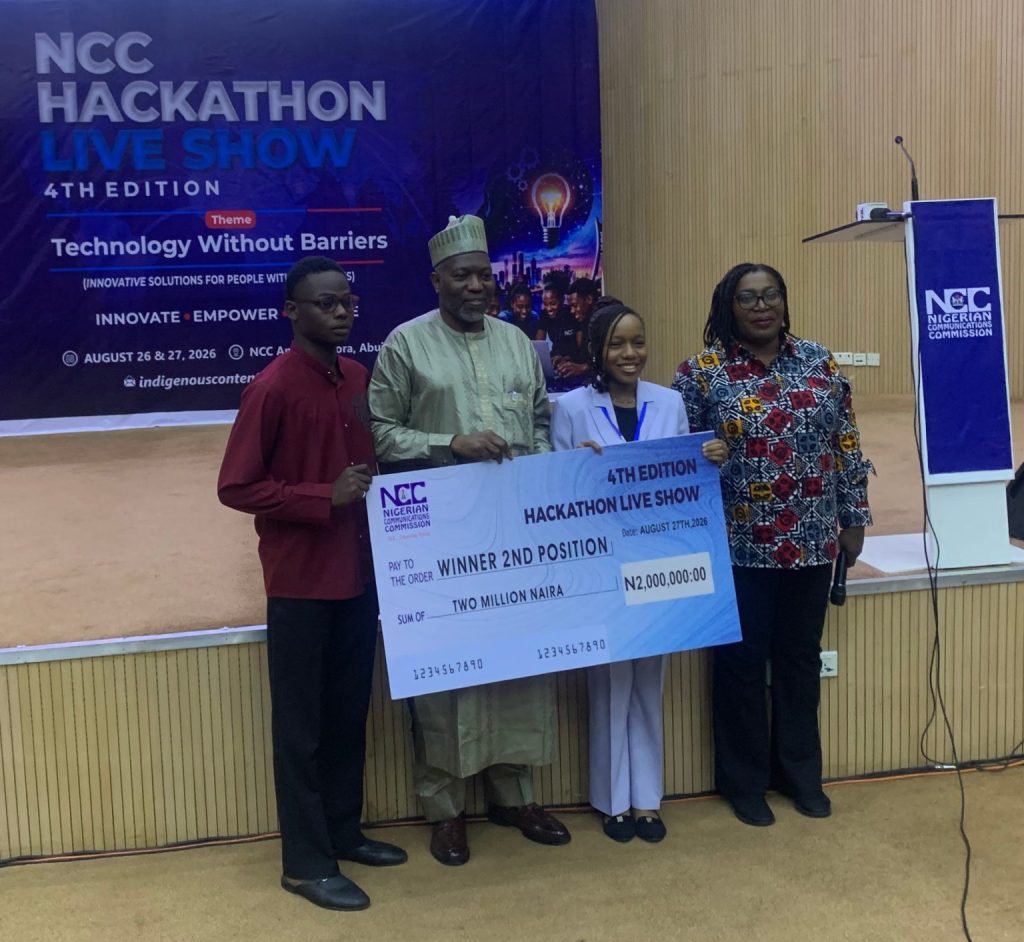
The NCC awarded a total of N6 million to three startups whose innovations focused on improving accessibility and inclusion for persons with disabilities.
Sora emerged first with N3 million, Clear Signal placed second with N2 million, while Ikor came third with N1 million.
A Hackathon With a Bigger Message
The competition, held in Abuja, was more than a contest among young technology entrepreneurs. It reflected an increasingly important question confronting Nigeria’s digital transformation:
Who gets to participate in the digital economy?
Speaking at the grand finale, the Executive Vice Chairman of the NCC, Dr. Aminu Maida, said Nigeria could not achieve its ambition of building a $1 trillion economy while leaving millions of citizens behind.
Maida, represented by the Executive Commissioner, Stakeholders Management, Rimini Makama, said true national progress would remain incomplete if some citizens continued to be excluded from the country’s digital transformation.
“True national progress is impossible if some of our citizens remain locked out.”
That message was particularly significant for persons with disabilities, who continue to encounter interconnected barriers in accessing technology, education, employment, healthcare and financial services.
Maida cited World Bank estimates that about 25 million Nigerians live with at least one form of disability, stressing the need for practical innovations that can remove barriers to participation.
According to him, the NCC Hackathon was created to encourage local innovators to develop solutions capable of addressing real-life challenges and ensuring that no one is left behind in Nigeria’s digital transformation.
From Policy to Opportunity
For Sora founder AbdulRazq Motolani Somoye, the problem is not simply that persons with disabilities need jobs.
It is that the systems through which people search for jobs are often not designed with them in mind.
Sora seeks to bridge that gap by connecting qualified persons with disabilities to government institutions and inclusive employers, while providing learning and skills-development opportunities adapted to different forms of disability.
The concept was partly inspired by the Federal Government’s policy requiring government organisations to allocate at least five per cent of their workforce to persons with disabilities.
But Somoye believes a policy is only as effective as the systems available to make it work.
He observed that many conventional recruitment platforms were not sufficiently inclusive, creating the need for a dedicated platform that considers the accessibility requirements of persons with different disabilities.
Sora is therefore positioning itself not merely as another job-search website, but as a digital bridge between disability, skills and employment opportunity.
The Verification Challenge
One of the biggest questions facing any disability-focused digital platform is verification.
Who qualifies as a Person with a Disability? How can employers trust the information provided? And how can the platform reach millions of potential beneficiaries across Nigeria?
Sora says it is already taking steps to address these concerns.
Somoye disclosed that the team had engaged the Joint National Associations of Persons with Disabilities (JONAPWD) and was working towards a partnership to facilitate the verification of persons with disabilities, beginning in Abuja and eventually expanding across the country.
If successfully implemented, such a partnership could provide an important foundation for building a more credible database of job seekers with disabilities while connecting them to employers looking for qualified talent.
MTN, NCC Signal Willingness to Support
The initiative also attracted support from industry stakeholders.
Speaking at the event, Chinyelu Chikwendu, Senior Manager, Strategy and Innovation at MTN Nigeria, commended the NCC for supporting innovation beyond its regulatory mandate.
She described the focus on persons with disabilities as commendable and reaffirmed MTN Nigeria’s commitment to supporting startups and innovators working towards a more inclusive digital ecosystem.
The NCC’s Director of Digital Economy, Hellen Obi, also promised to pursue further collaboration around the innovations developed through the hackathon.
She disclosed that the commission would engage the Central Bank of Nigeria (CBN), the Federal Ministry of Innovation, Science and Technology, and MTN Nigeria, which had expressed interest in supporting the young innovators and exploring the potential of their solutions.
More Than N6 Million
For the winners, the real prize may ultimately be worth far more than the N6 million distributed at the event.
The bigger opportunity is whether these innovations can move from a hackathon stage into functioning platforms capable of changing lives.
For a qualified graduate with a disability who has repeatedly encountered inaccessible recruitment systems, a platform like Sora could mean the difference between being overlooked and being seen.
For an employer willing to hire inclusively, it could provide access to a pool of qualified candidates who might otherwise remain invisible.
And for government, it could offer a technology-driven mechanism for translating disability employment policies into measurable outcomes.
Nigeria’s digital transformation is gathering momentum. But the success of that transformation should not be measured only by the number of startups created, apps launched or investments attracted.
It should also be measured by who is gaining access to opportunity.
The NCC Hackathon has put an important question on the table:
Can technology become the bridge that finally closes the gap between Nigeria’s disability inclusion policies and the everyday realities of millions of Persons with Disabilities?
Sora’s journey may provide part of the answer.
For now, the N3 million prize is a recognition of an idea.
The real test begins when that idea meets the lives of the people it was created to serve.


