

Coalition says over 1.8 million FCT residents with disabilities need a strong institutional framework to guarantee inclusion, rights and access
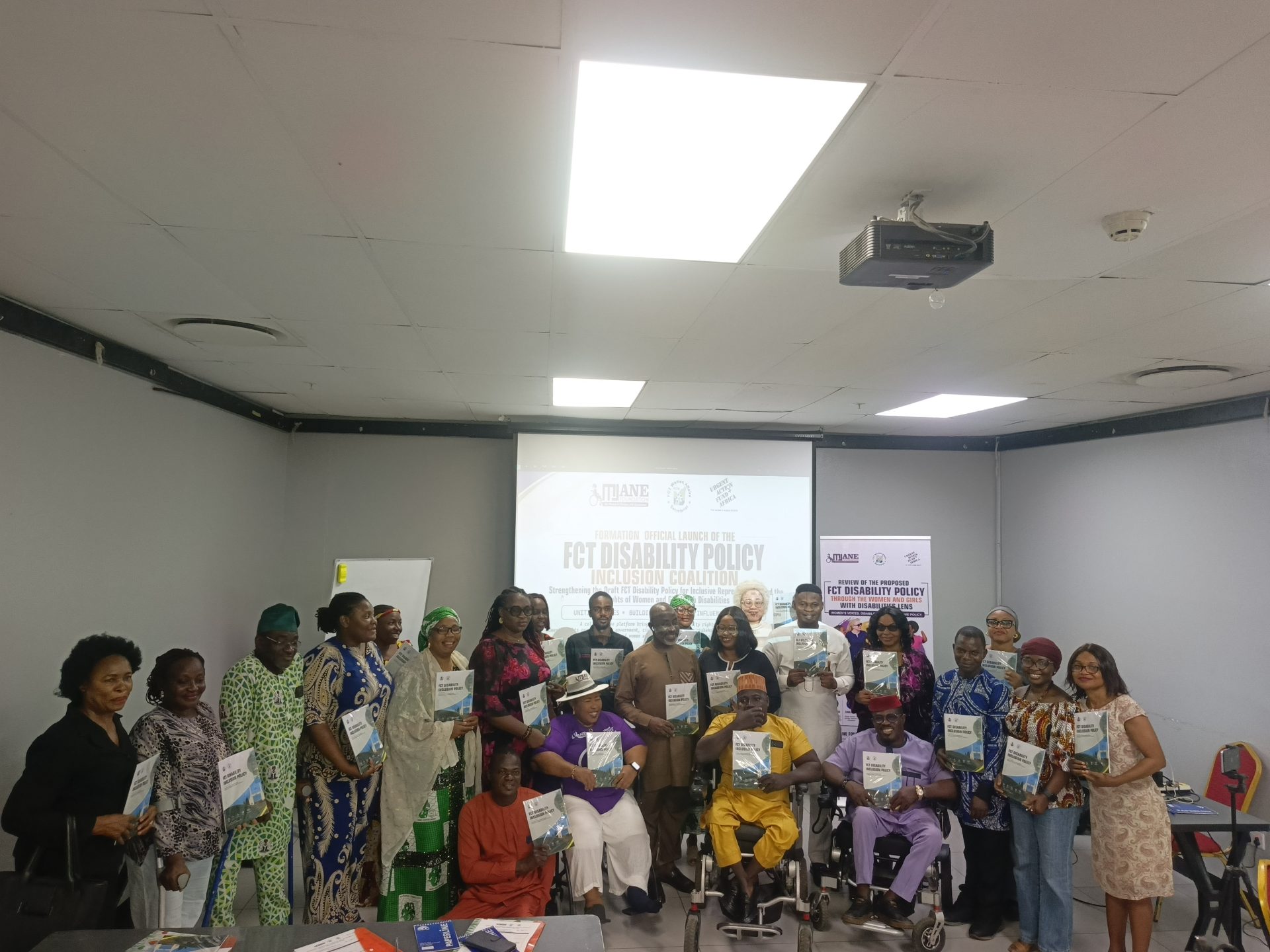
ABUJA — The Mimijane Foundation for Women and Children with Disabilities has brought together Civil Society Organisations (CSOs), Organisations of Persons with Disabilities (OPDs) and other stakeholders in Abuja for the launch of the Draft FCT Disability Policy, with a strong call for its immediate adoption and the establishment of a dedicated FCT Disability Agency.
The stakeholder engagement, held on Wednesday in Abuja, provided an opportunity for participants to examine the proposed policy, identify gaps and make recommendations aimed at strengthening its promotion and ensuring effective implementation across the Federal Capital Territory.
The policy was developed by the Women Affairs Mandate Secretariat of the Federal Capital Territory Administration (FCTA), through its Disability Unit, with support from the World Bank and CBM International.
The event was sponsored by Urgent Action Fund.
Following the formal launch, Dr. Adebukola Adebayo took participants through the key contents of the draft policy, highlighting its provisions and the expected role of stakeholders in ensuring that disability inclusion becomes an integral part of governance and development in the FCT.
Participants subsequently engaged in discussions and made recommendations on how the policy could be effectively promoted, implemented, monitored and translated into tangible improvements in the lives of persons with disabilities.
Coalition Demands Policy Assent, Disability Agency
One of the major highlights of the event was the presentation of an Advocacy Brief on the FCT Disability Policy and the Establishment of the FCT Disability Agency by Chidiebere Eya, Esq., Legal Officer of Mimijane Foundation, on behalf of the Foundation’s Executive Director, Amb. Beatrice Awala Mube.
The advocacy brief, presented on behalf of the Coalition of Persons with Disabilities in the FCT, outlined two major demands directed at the FCT Minister.
The first is for the assent to the validated Draft FCT Disability Policy, which the coalition said would provide the necessary policy framework for advancing disability inclusion across different sectors of the FCT.
The second is for the immediate establishment of the FCT Disability Agency, which would be responsible for coordinating implementation, monitoring, enforcement and service delivery in line with the provisions of the policy and established best practices in other parts of Nigeria.
‘The FCT Cannot Be Left Behind’
According to the advocacy brief, the development of the draft policy represents a significant step towards addressing the barriers confronting persons with disabilities in the nation’s capital.
The document noted that more than 1.8 million residents of the FCT live with one form of disability or another, stressing that without a clear policy and institutional framework, persons with disabilities would continue to face barriers in critical areas such as education, healthcare, employment, safety, justice and participation in public affairs.
The coalition further referenced the Discrimination Against Persons with Disabilities (Prohibition) Act, 2018, which provides a legal framework for disability inclusion and calls for implementation of disability rights at sub-national levels.
It noted that several states across Nigeria have already established disability agencies, arguing that the FCT should not be left behind.
“The FCT cannot be left behind,” the coalition declared.
Gender Lens Incorporated into the Policy
Stakeholders also highlighted the importance of the gender-responsive approach adopted during the policy development process.
According to the advocacy brief, the validation process deliberately incorporated a gender lens to address the specific needs and experiences of women and girls with disabilities in a positive and rights-based manner.
The policy development and validation process reportedly involved a broad range of stakeholders, including traditional chiefs, Area Council chairmen, faith-based organisations, security agencies, the National Commission for Persons with Disabilities (NCPWD), the Joint National Association of Persons with Disabilities (JONAPWD), OPDs, the FCDA, FCTA Legal Department, FEMA, the National Council for Women’s Societies (NCWS), Original Inhabitants with Disabilities and other CSOs.
The broad stakeholder participation was aimed at ensuring that the policy reflects the realities and priorities of persons with disabilities across the FCT.
Why an FCT Disability Agency Matters
The coalition argued that having a policy without a strong institutional structure to drive its implementation could limit its impact.
It therefore called for the establishment of a dedicated FCT Disability Agency that would coordinate disability-related programmes, monitor compliance, strengthen service delivery and ensure that disability inclusion is reflected in government planning and implementation.
The proposed agency is expected to provide an institutional mechanism for translating the policy from a document into practical action.
For the coalition, the agency would also strengthen accountability and create a central structure through which persons with disabilities can engage with the FCTA on issues affecting their rights and welfare.
Coalition Mobilises Persons with Disabilities Across Six Area Councils
The advocacy brief also outlined the role of the newly inaugurated Coalition of Persons with Disabilities in the FCT.
The coalition is expected to advocate for the assent and implementation of the policy, mobilise persons with disabilities across the six Area Councils of the FCT for inclusion programmes, and work in partnership with the FCTA to promote the principle of “Nothing About Us Without Us.”
The coalition is positioning itself as a platform for collective advocacy, ensuring that persons with disabilities are not merely beneficiaries of government programmes but active participants in decisions that affect their lives.
Expected Impact
Stakeholders believe that the adoption and effective implementation of the FCT Disability Policy, alongside the establishment of a dedicated disability agency, could significantly transform disability inclusion in the nation’s capital.
According to the coalition, the framework is expected to:
- Improve access to healthcare, education, employment, livelihoods and justice for persons with disabilities.
- Ensure that women and girls with disabilities have greater opportunities to participate, lead and thrive.
- Strengthen coordination and implementation of disability-related programmes across the FCT.
- Promote accountability and monitoring of disability inclusion initiatives.
- Position the FCT as a model for disability inclusion in Nigeria.
- Align FCT development with the Sustainable Development Goals (SDGs) and the UN Convention on the Rights of Persons with Disabilities (CRPD).
‘This Is More Than a Policy Document’
The engagement ended with a renewed appeal to the FCT Minister to give assent to the validated disability policy and approve the immediate establishment of the FCT Disability Agency.
For stakeholders, the demand goes beyond the adoption of another government document. They believe the policy could become a foundation for creating a more inclusive FCT where persons with disabilities can access opportunities, participate fully in society and exercise their rights without discrimination.
The coalition stressed that the success of the policy will ultimately be measured not by the document itself, but by the changes it brings to the everyday lives of persons with disabilities.
“This is not just a document — it is about dignity, rights, and the future of persons with disabilities in the FCT.”
As advocacy for the policy gathers momentum, stakeholders are urging the FCTA to take the next decisive step by moving from policy development to policy implementation, backed by a strong institutional structure.
For persons with disabilities in the FCT, the message from the engagement was unequivocal:
“Leave No One Behind. Nothing About Us Without Us.”
For further engagement:
Coalition of Persons with Disabilities, FCT
c/o Mimijane Foundation for Women and Children with Disabilities


