

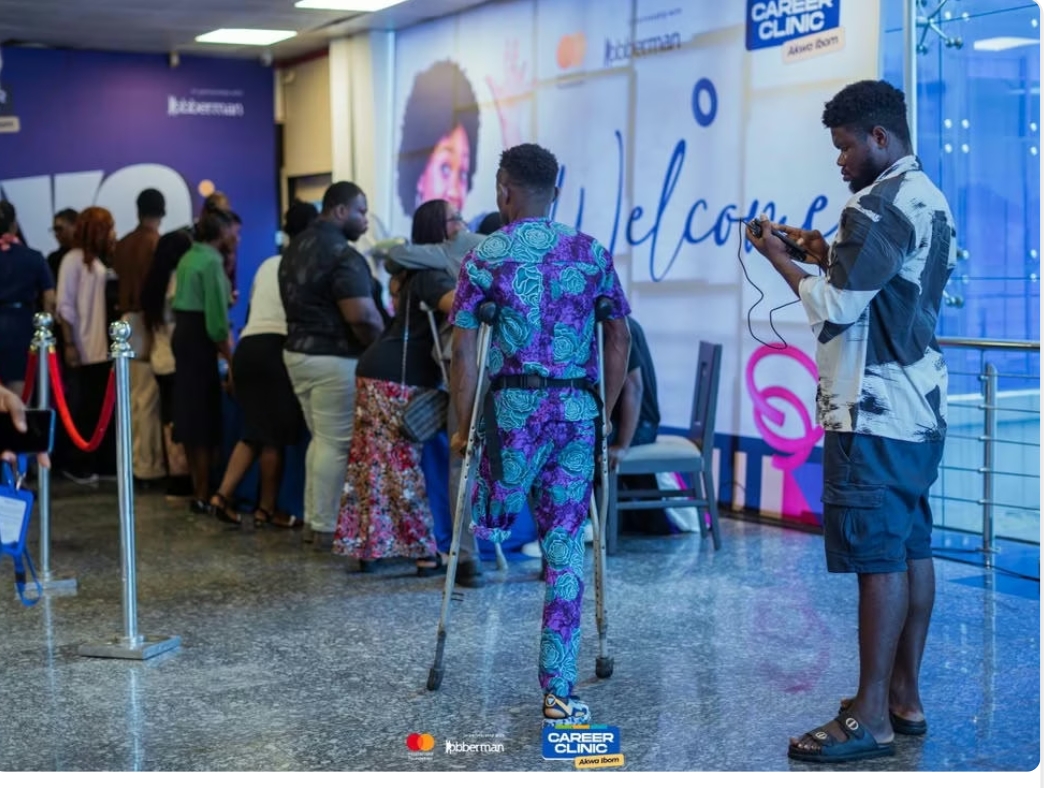
Employment is one of the most powerful tools for promoting dignity, independence, and economic empowerment. Beyond earning a living, meaningful work enables individuals to contribute their skills, achieve financial security, and participate fully in society. For employers, it offers an opportunity to attract, develop, and retain talented professionals with diverse experiences and perspectives.
Despite these benefits, many qualified persons with disabilities in Nigeria continue to face significant barriers to employment. These barriers are rarely about ability. Instead, they stem from inaccessible recruitment processes, discriminatory attitudes, limited workplace accommodations, and environments that fail to support inclusion.
According to the Joint National Association of Persons with Disabilities (JONAPWD), an estimated 35 million persons with disabilities live in Nigeria. The United Nations Convention on the Rights of Persons with Disabilities (UNCRPD) defines disability as the interaction between impairments and societal barriers that hinder full and effective participation in society. In essence, disability is not the obstacle—society’s failure to remove barriers is.
Nigeria has made notable progress by enacting the Discrimination Against Persons with Disabilities (Prohibition) Act, 2018, and establishing the National Commission for Persons with Disabilities (NCPWD) in 2020. However, implementation remains uneven. Jobberman’s 2025 Technology and Employment Inclusion in Marginalised Communities (TEIMC) report revealed that inaccessible recruitment systems, discriminatory hiring practices, and the high cost of assistive technologies continue to prevent many qualified persons with disabilities from securing decent employment, despite the legal requirement for a 5% employment quota in the public sector.
Educational inequality further compounds the challenge. Data from the Disability Data Initiative shows that more than half of adults with disabilities have less than primary education, while only 24 percent are in full-time employment. Many who are employed work in low-income or informal jobs with limited opportunities for career progression. The United Nations also reports that approximately 80 percent of persons with disabilities earn below the national minimum wage, while 87 percent experience multidimensional poverty. Although digital technology has created new opportunities for education and remote work, limited internet access and the high cost of digital devices continue to exclude many.
Why Disability Inclusion Makes Business Sense
Disability inclusion is not simply a moral obligation—it is a strategic business advantage.
Organisations that embrace inclusive employment benefit from greater innovation, stronger employee engagement, improved retention, and access to a broader talent pool. Many technologies now used by millions, including Google’s Live Caption and Live Transcribe, were originally developed to improve accessibility, demonstrating how inclusive thinking can drive innovation for everyone.
Employees with disabilities also bring unique insights that help organisations design better products, improve customer experiences, and reach more diverse markets. Inclusive hiring strengthens corporate governance, enhances organisational reputation, and ensures compliance with disability legislation.
Research consistently supports the business case for inclusion. McKinsey & Company found that organisations with greater diversity are significantly more likely to outperform their competitors financially. Likewise, Disability:IN and Accenture reported that companies leading in disability inclusion consistently achieve stronger revenue growth, higher productivity, and better profitability. As disability inclusion advocate Dolapo Agbede rightly observes, disability inclusion is no longer an act of charity—it is a standard of good governance and sustainable business practice.

Five Practical Steps Towards Inclusive Hiring
Creating an inclusive workforce requires intentional action throughout the employment lifecycle.
First, make recruitment accessible by using clear job descriptions, eliminating unnecessary requirements, advertising vacancies through accessible platforms, and ensuring online application systems are usable by everyone.
Second, provide reasonable accommodations during recruitment and employment. Flexible interview arrangements, assistive technologies, and workplace adjustments enable candidates to demonstrate their abilities without being disadvantaged by inaccessible processes.
Third, equip hiring managers with disability awareness and unconscious bias training so recruitment decisions are based on competence, merit, and potential rather than misconceptions.
Fourth, build workplaces that are physically, digitally, and socially accessible. Employers should also collaborate with the National Commission for Persons with Disabilities (NCPWD) and organisations of persons with disabilities to strengthen workplace inclusion.
Finally, monitor progress by collecting employee feedback, evaluating recruitment outcomes, tracking retention, and embracing flexible work arrangements such as remote work where appropriate.
Conclusion
Disability-inclusive employment is about ensuring that qualified individuals have equal opportunities to contribute, succeed, and thrive. Since 2020, Jobberman’s Young Nigeria Works programme has trained more than 62,000 persons with disabilities and supported over 5,000 into employment, proving that inclusive investment delivers measurable results.
Achieving lasting change will require sustained collaboration among government, employers, development partners, educational institutions, and disability organisations. By removing barriers instead of overlooking talent, Nigeria can unlock the enormous potential of millions of persons with disabilities, strengthen its workforce, drive innovation, and build a more prosperous and inclusive economy for all.


