

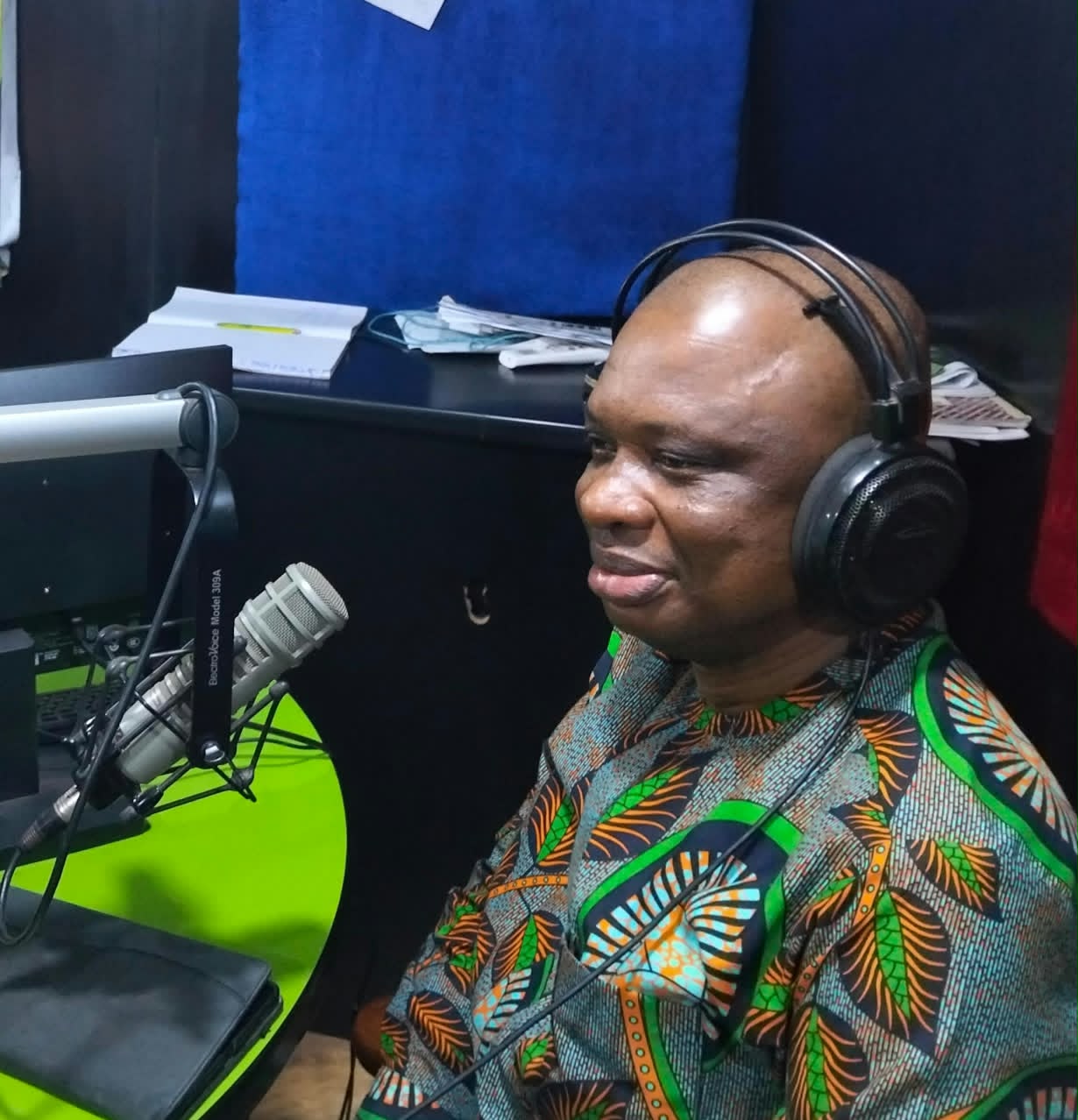
Dr David Anyaele says Abia’s disability agenda is focused on dismantling discrimination, expanding access and empowering persons with disabilities to participate fully in society.
The Chairman of the Abia State Disability Commission, Dr David Anyaele, has declared that the commission is moving beyond the traditional charity-based approach to disability by focusing on dismantling the barriers that prevent persons with disabilities (PWDs) from fully participating in society.
Anyaele made the declaration on Friday during a live interactive session on the “Good Governance” radio programme of the Broadcasting Corporation of Abia State (BCA), where he responded to questions from listeners and outlined the commission’s interventions since its establishment.
According to him, the commission’s responsibility is not simply to distribute financial assistance but to create an environment where persons with disabilities can access education, healthcare, employment, housing, justice and other opportunities on an equal basis with everyone else.
“Our primary role is to protect PWDs and ensure that they do not suffer from barriers.”
Beyond the Handout Mentality
Anyaele challenged the widespread perception that persons with disabilities are dependent on government assistance, stressing that many PWDs are successful entrepreneurs, professionals and contributors to the economy.
“Not every person with a disability needs a financial benefit. There are people with disabilities who are extremely flamboyant; they own companies and are actively contributing to society,” he said.
He explained that the commission serves people across different disability categories, including those with physical, sensory, intellectual and psychosocial disabilities.
“For the vulnerable, we assess their specific needs, whether it is skills acquisition or employment support,” he added.
Tackling Discrimination Head-On
The commission, according to Anyaele, is also taking a firm position against discrimination and harmful cultural stereotypes that have historically portrayed persons with disabilities as incapable or unproductive.
He cited a recent case involving a landlord who allegedly attempted to deny accommodation to a blind prospective tenant, saying the commission intervened because disability should never be a basis for denying a person their rights.
“Nobody has the right to discriminate.”
Anyaele said the commission intends to use such cases to send a strong message that discrimination against persons with disabilities will not be tolerated.
He also acknowledged the persistence of cultural attitudes that label PWDs as “non-performers”, stressing that sustained advocacy and public education are necessary to change these perceptions.
Abia’s Disability Agenda Takes a Broader Approach
The Chairman said the establishment of the Disability Commission and the appointment of its leadership, comprising persons with disabilities, were among the early actions taken by the state government and represented a significant development in Abia’s disability inclusion efforts.
He further highlighted ongoing upgrades at the State School for the Blind, including training for blind persons on the use of smartphones and assistive technologies.
According to him, the state has also invested significantly in para-sports, with the Ministry of Sports emerging as an important employer of persons with disabilities and Abia athletes winning international gold medals.
Taking Disability Inclusion to the Grassroots
In a move aimed at bringing services closer to persons with disabilities, Anyaele announced plans to decentralise the commission’s operations across the state.
He explained that disability inclusion cannot be treated as the responsibility of one ministry or agency because it cuts across virtually every sector of government.
“Disability is a cross-cutting issue that affects education, health, agriculture, technology and justice.”
He said the commission is therefore moving beyond the establishment of disability “desks” to creating fully-fledged local government offices.
The commission has already trained local government chairmen on disability inclusion and budgeting, while more than 850 education and healthcare officials across Abia’s 17 Local Government Areas have reportedly received training on disability issues, the state’s disability law and inclusive budgeting.
The objective, he said, is to ensure that schools, healthcare facilities and other public institutions become genuinely accessible to persons with disabilities.
‘No One Should Be Left Behind’
Anyaele urged persons with disabilities who require support, skills acquisition or other forms of intervention to formally approach the commission with their requests.
The commission’s current office is located at the Political Block, Government House, Umuahia.
He assured persons with disabilities across the state that the commission remains committed to responding to their needs and ensuring that disability inclusion becomes an integral part of Abia State’s development agenda.
For Anyaele, the message is clear: disability inclusion must move from charity to rights, from handouts to empowerment, and from promises to the removal of barriers.
TQM Take
The significance of Abia’s emerging disability agenda will ultimately be measured not by the number of interventions announced, but by whether persons with disabilities can walk into schools, hospitals, workplaces, government offices and communities without encountering the barriers that have historically excluded them.
True inclusion begins when society stops asking, “What can we give them?” and starts asking, “What barriers must we remove?”


