

By Ishaq Dan-Imam, Lokoja
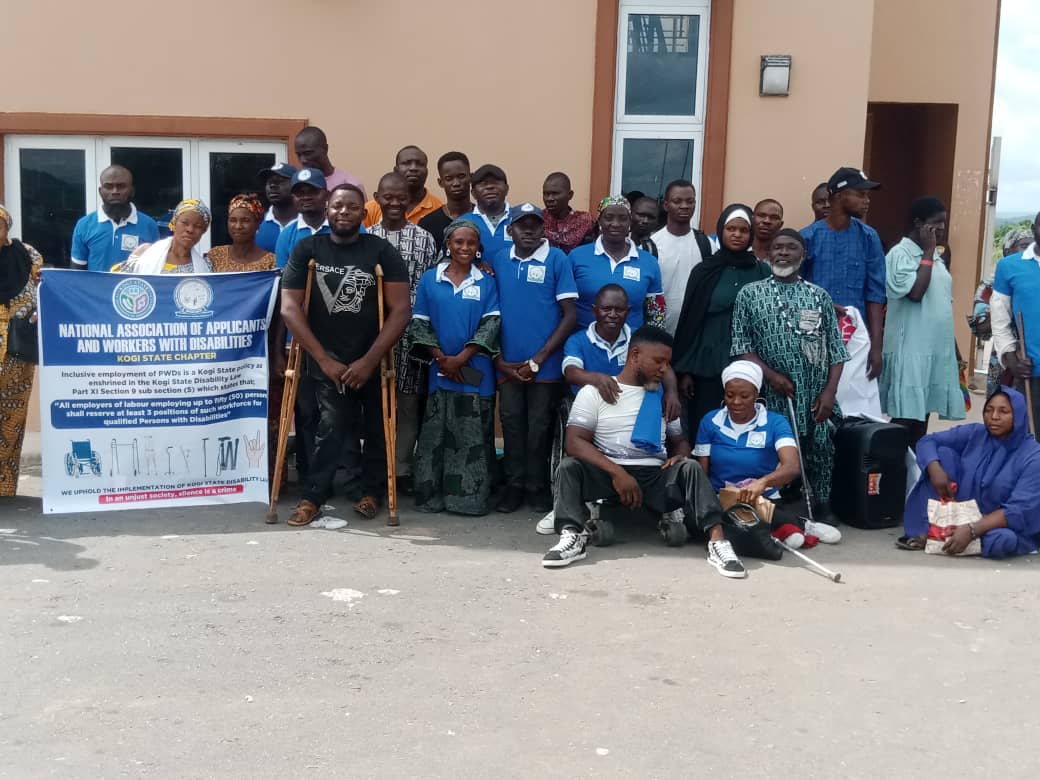
Unemployment continues to frustrate qualified graduates with disabilities in Kogi State, as affected applicants have appealed to Governor Ahmed Usman Ododo to direct their recruitment into the state civil service, accusing government Ministries, Departments and Agencies (MDAs) of failing to implement the 6 per cent employment quota provided for under the state’s Disability Law.
The group, operating under the umbrella of Applicants/Workers with Disabilities, Kogi State, said the failure to enforce the provision has left many qualified graduates stranded despite years of academic struggle and the financial sacrifices required to obtain their certificates.
In an open appeal signed by its President, Comrade Samuel Mark, the group lamented that the law, which was expected to open doors to employment and economic independence for persons with disabilities (PWDs), has yet to translate into meaningful opportunities for its members.
‘The Law Exists, But We Are Still Unemployed’
Mark said the group’s hope for a better future was rekindled when Kogi State enacted its Disability Law, which provides for six per cent of recruitment opportunities to be reserved for persons with disabilities.
However, he expressed disappointment that the provision had not been effectively enforced, leaving qualified applicants without jobs while the statutory employment quota remains largely unrealised.
“Our hope was revived when Kogi State passed its Disability Law allocating 6% of all recruitments to Persons with Disabilities. Unfortunately, till date, there has not been any intentional step to compel Heads of MDAs to implement this provision. The law exists, but applicants with disabilities are still left on the streets with certificates and no job,” he said.
The group called on Governor Ododo to demonstrate the political will needed to ensure that the employment provision moves beyond legislation to practical implementation across government institutions.
Education Without Employment: A Double Disadvantage
The applicants described unemployment as particularly devastating for persons with disabilities, who often face additional financial and physical barriers in pursuing education and seeking work.
According to the group, inaccessible classrooms, the cost of personal guides, assistive devices and transportation make acquiring educational qualifications more expensive for many students with disabilities.
Despite these challenges, they said, many persevered through their studies with the expectation that their qualifications would eventually provide access to decent employment and financial independence.
“Many of our members have First Class, Second Class Upper, NCE, ND and Masters degrees but are still at home, depending on family and charity. Without a job, we cannot even afford to maintain our wheelchairs, buy white canes, hearing aids, or drugs,” Mark lamented.
He added that unemployment places additional pressure on persons with disabilities who may encounter barriers to accessing informal jobs, travelling long distances or engaging in physically demanding work.
The group noted that the consequences extend beyond a lack of income, affecting personal dignity, independence and the ability to meet disability-related expenses.
‘We Are Asking for Opportunity, Not Sympathy’
Emphasising that their demand was rooted in equal opportunity rather than charity, the applicants appealed directly to Governor Ododo to approve and facilitate a special recruitment exercise for qualified persons with disabilities into the Kogi State Civil Service.
They described the governor as a listening father and urged him to ensure that the state’s commitment to disability inclusion is reflected in its employment practices.
“We are passionately appealing for a special approval and directive for the recruitment of persons with disabilities into the Kogi State Civil Service. Give us jobs, and you will give us dignity. Give us jobs, and government will no longer need to buy wheelchairs or give us palliative cash, because we will have the financial capability to take care of ourselves,” the statement added.
The applicants argued that gainful employment would enable them to meet their personal needs, maintain assistive devices and contribute productively to their families and the state’s economy.
A Test of Kogi State’s Commitment to Disability Inclusion
The appeal has renewed attention on the gap between disability rights legislation and its implementation, particularly in employment, where access to decent work remains essential to economic empowerment and social inclusion.
For the unemployed graduates, the immediate concern is not the absence of academic qualifications but the lack of opportunities to put those qualifications to use.
They want the Kogi State Government to translate the six per cent employment provision into a concrete recruitment policy, with clear implementation measures that compel MDAs to comply.
As the applicants await the governor’s response, their message remains clear: disability should not be a reason for qualified citizens to be excluded from public employment.
For them, enforcing the employment quota would represent more than securing jobs. It would be a practical demonstration that the state’s disability law is designed to protect rights, expand opportunities and promote independence—not merely exist on paper.


