

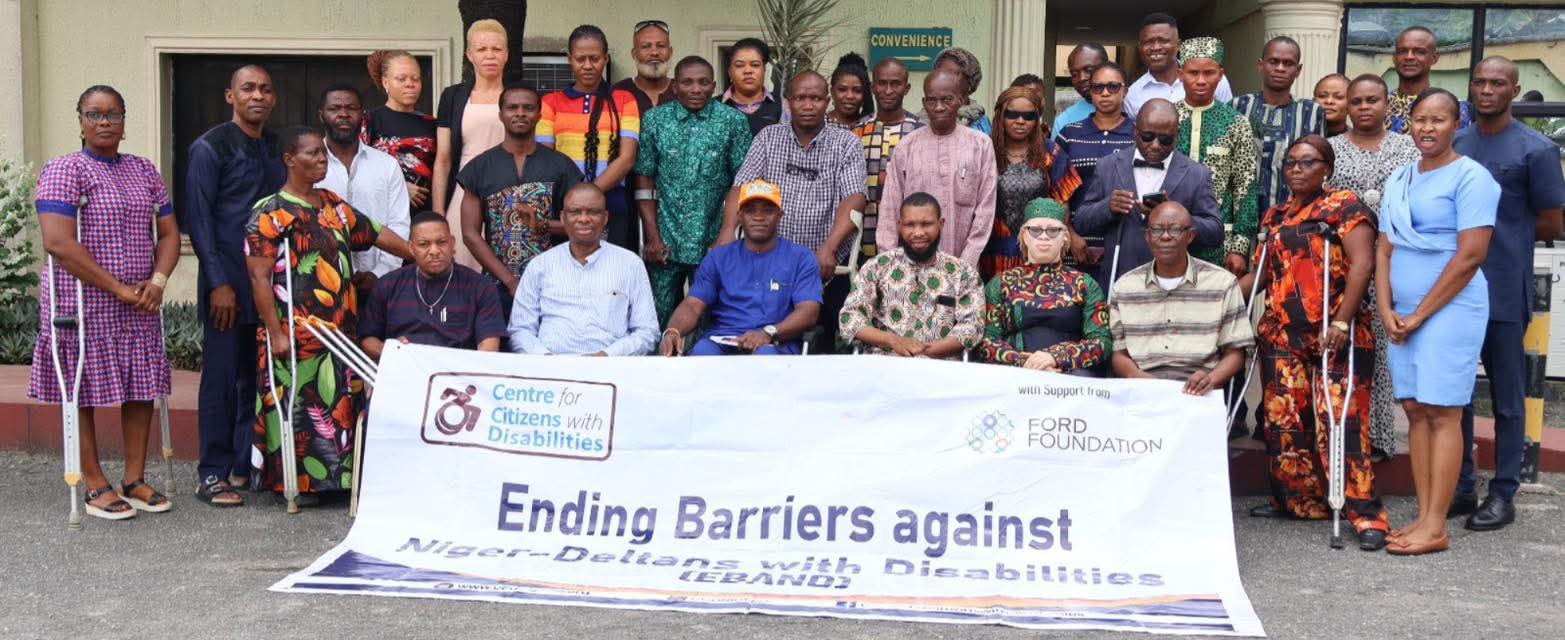
In a bold and strategic move to advance disability inclusion in Nigeria’s oil-rich region, the Centre for Citizens with Disabilities (CCD) has successfully concluded a transformative two-day capacity-building workshop in Akwa Ibom State. The training, held under its project “Ending Barriers Against Niger-Deltans with Disabilities,” brought renewed hope and practical direction to persons with disabilities (PWDs) seeking equitable participation in the benefits of the Petroleum Industry Act 2021 (PIA).
The workshop convened a diverse mix of stakeholders—including PWDs from oil-producing communities, government officials, Organisations of Persons with Disabilities (OPDs), and members of the media—creating a vibrant platform for dialogue, learning, and strategy development. At its core was a shared mission: to dismantle systemic barriers and ensure that PWDs are not left behind in the governance and benefit-sharing structures of the Niger Delta.
Welcoming participants, CCD’s Acting Director, Mr. Godwin Unumeri, set the tone with a powerful message on equity and inclusion. He underscored the paradox of the Niger Delta—a region that significantly contributes to Nigeria’s economic growth, yet continues to marginalize one of its most vulnerable populations. According to him, the training was not just timely but necessary, urging participants to seize the opportunity to amplify their voices and sharpen their advocacy skills for meaningful engagement within PIA structures.
Adding weight to the conversation, CCD’s Founding Executive Director and Chairman of the Abia State Commission for the Welfare of Disabled Persons, Hon. David O. Anyaele, reaffirmed the organisation’s unwavering commitment to empowering PWDs. He challenged participants to move beyond passive participation, encouraging them to actively interrogate systems, ask critical questions, and translate knowledge into action. He further assured them of CCD’s continued technical support as they navigate advocacy challenges in their respective communities.
The Akwa Ibom State Government also signaled its support through the Personal Assistant to the Governor on Disability Matters, Mr. Ubong Ikpe. He commended CCD for championing inclusion and urged participants to maximize the training. Importantly, he reaffirmed the state’s readiness to collaborate with the disability community in advancing inclusive policies and practices.
Building Advocates, Strengthening Voices
Day One of the workshop laid a solid foundation in advocacy, equipping participants with essential knowledge on its concepts, principles, and strategic approaches. Through engaging sessions and interactive role-plays, participants explored how to design effective advocacy campaigns, build alliances, and communicate their demands with clarity and confidence.
A key highlight was the emphasis on transitioning PWDs from passive observers to active decision-makers within the Host Community Development Trust (HCDT) structures established under the PIA. Participants shared real-life experiences, exposing persistent barriers such as exclusion from community decision-making, societal stigma, and lack of follow-through in advocacy efforts. Facilitators stressed the importance of persistence, strategic engagement, and challenging negative perceptions that continue to hinder inclusion.
Deepening Understanding, Driving Action
Day Two shifted focus to the broader Niger Delta context, unpacking the provisions of the PIA and examining how its benefit structures can—and must—include persons with disabilities. Discussions revealed how environmental degradation and socio-economic challenges disproportionately affect PWDs, making their inclusion in HCDT structures not just necessary, but urgent.
Sessions also delved into disability rights frameworks, models of disability, and the legal instruments that support inclusion. Participants were introduced to rights-based advocacy approaches, emphasizing unity within the disability community and strategic engagement with key stakeholders such as traditional rulers, government agencies, oil companies, and the media.
Throughout the training, participants demonstrated remarkable enthusiasm, actively contributing to discussions and reflecting on actionable strategies. They highlighted the need for proper data collection, community needs assessments, and the development of clear, measurable advocacy goals. A recurring message was clear: effective advocacy requires knowledge, preparation, collaboration, and resilience.
From Learning to Impact
One of the most inspiring moments came as participants shared success stories from previous CCD trainings. Some revealed that their advocacy efforts had already begun yielding results, with members of the disability community gaining inclusion in PIA benefit structures—a significant milestone in a region where exclusion has long been the norm.
Buoyed by these successes, participants expressed renewed confidence and a collective determination to sustain the momentum. They pledged to cascade the knowledge gained to others, strengthen networks within the disability community, and intensify engagement with stakeholders to ensure their voices are heard loud and clear.
A Step Toward Inclusive Development
As the workshop drew to a close, it became evident that CCD’s intervention is more than just a training—it is a catalyst for change. By equipping PWDs with the tools, knowledge, and confidence to advocate for their rights, the initiative is fostering a new generation of leaders ready to challenge exclusion and drive inclusive development.
For Akwa Ibom State and the wider Niger Delta, this represents a critical step toward building a society where no one is left behind—where persons with disabilities are not just beneficiaries, but active contributors to the region’s growth and governance.
The message from the workshop is unmistakable: inclusion is not a privilege—it is a right, and the time to claim it is now.


