

KNOW YOUR RIGHTS • RECOGNISE ABUSE • SPEAK OUT • SEEK JUSTICE
Sexual and Gender-Based Violence (SGBV) is a serious human rights violation in Nigeria. It affects women, men, girls and boys, including persons with disabilities.
However, persons with disabilities may face additional risks because of discrimination, poverty, communication barriers, dependence on caregivers, social isolation and limited access to protection and justice.
In some situations, perpetrators exploit these circumstances to abuse, intimidate, manipulate or silence persons with disabilities.
As a person with a disability in Nigeria, here are 15 things you must know about SGBV.
1. Your disability does not give anyone the right to abuse you.
Nobody has the right to sexually exploit, assault, harass or intimidate you because you have a disability.
2. Consent is your fundamental right.
Being married, dating, receiving assistance or living with someone does not automatically give that person the right to your body. Consent must be voluntary and freely given.
3. Your caregiver can also be a perpetrator.
A personal assistant, domestic worker, relative, caregiver or support provider can abuse you. Do not assume that someone who assists you cannot harm you.
4. Do not exchange sexual favours for basic needs.
Nobody should demand sex in exchange for food, accommodation, financial assistance, medication, mobility support or other essential services.
5. You have the right to say NO.
Your physical disability, communication difficulty or dependence on another person does not remove your right to refuse unwanted sexual contact.
6. Abuse is not limited to rape.
Sexual harassment, inappropriate touching, forced marriage, sexual exploitation, intimidation, coercion, trafficking and non-consensual sharing of intimate images are also serious forms of abuse.
7. Women and girls with disabilities deserve special attention.
They may face multiple layers of discrimination, including gender discrimination, disability discrimination, economic exclusion and social isolation.
8. Men and boys with disabilities are not excluded.
Male survivors of sexual violence also deserve protection, support and justice. Being a man does not make you immune to SGBV.
9. Deaf persons have the right to sign language interpretation.
If you are Deaf and need to report abuse, you should have access to appropriate communication support. Do not allow anyone to use your inability to communicate orally to silence you.
10. Intellectual and psychosocial disabilities do not invalidate your experiences.
Your complaint deserves to be heard and properly investigated. Do not allow anyone to dismiss your experience simply because of your disability.
11. You have legal protection under Nigerian law.
There are important laws you should know:
- Violence Against Persons (Prohibition) Act, 2015 (VAPP Act): Prohibits various forms of violence, including rape, physical, psychological and domestic violence. It applies in the FCT and states that have adopted or enacted it. nigeriarights.gov.ng +1
- Discrimination Against Persons with Disabilities (Prohibition) Act, 2018: Protects the rights of persons with disabilities against discrimination and supports their access to public facilities and services.
- Child Rights Act, 2003: Provides protection for children, including children with disabilities, against abuse and exploitation, subject to state-level adoption and implementation.
Knowing these laws can help you understand your rights and demand protection.
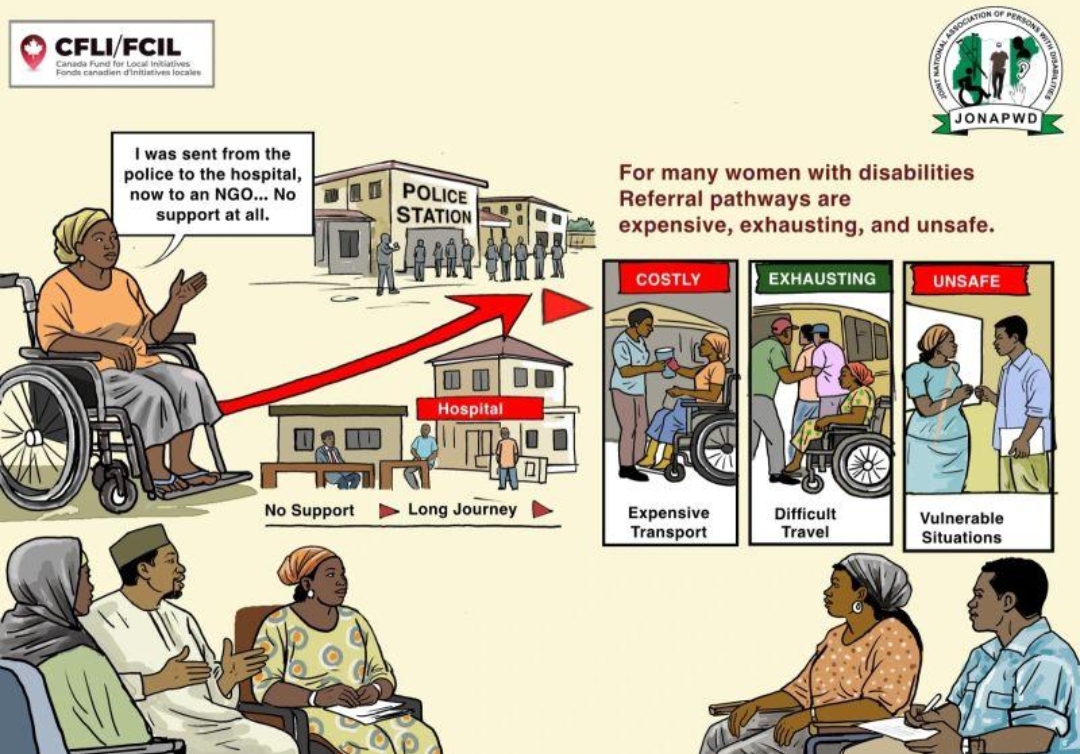
12. You can report abuse to the appropriate authorities.
In Nigeria, you can seek assistance from:
- Nigeria Police Force, particularly Gender Units or Family Support Units where available.
- National Agency for the Prohibition of Trafficking in Persons (NAPTIP).
- National Human Rights Commission (NHRC).
- State Ministries of Women Affairs and relevant SGBV response agencies.
- Recognised Sexual Assault Referral Centres (SARCs).
You do not have to handle an abuse situation alone. Federal Ministry of Justice +1
13. Medical attention should not be delayed.
If you experience sexual assault, seek medical attention immediately. You may need treatment for injuries, emergency contraception, HIV post-exposure prophylaxis (PEP), testing and other appropriate care.
Do not allow fear, shame or stigma to prevent you from seeking medical assistance.
14. Preserve evidence where possible.
If you intend to report sexual assault, preserve relevant messages, call records, photographs and other evidence where safe to do so. If possible, avoid washing or discarding clothing worn during the incident before receiving medical advice. However, even if you have already washed or changed clothes, you can still seek help and report the incident.
15. Your disability should never become a barrier to justice.
When reporting SGBV, you may require:
- Sign language interpretation.
- Accessible police stations and reporting centres.
- Easy-to-understand communication.
- Assistance from a trusted person of your choice.
- Accessible medical facilities.
- Respectful treatment without discrimination or humiliation.
A person with a disability should not be denied access to justice because of communication, mobility, intellectual or psychosocial barriers.
EndSGBV #DisabilityInclusion #DisabilityRights #StopSexualViolence # #SGBVAwareness #ESGBVMediaCorps
#InternationalIDEA


