

Persons with disabilities face a heightened risk of sexual and gender-based violence (SGBV), yet the barriers they encounter often do not end when the violence occurs.
For many women and girls with disabilities, the struggle can continue through discrimination, disbelief, communication barriers, inaccessible reporting systems and limited access to justice.
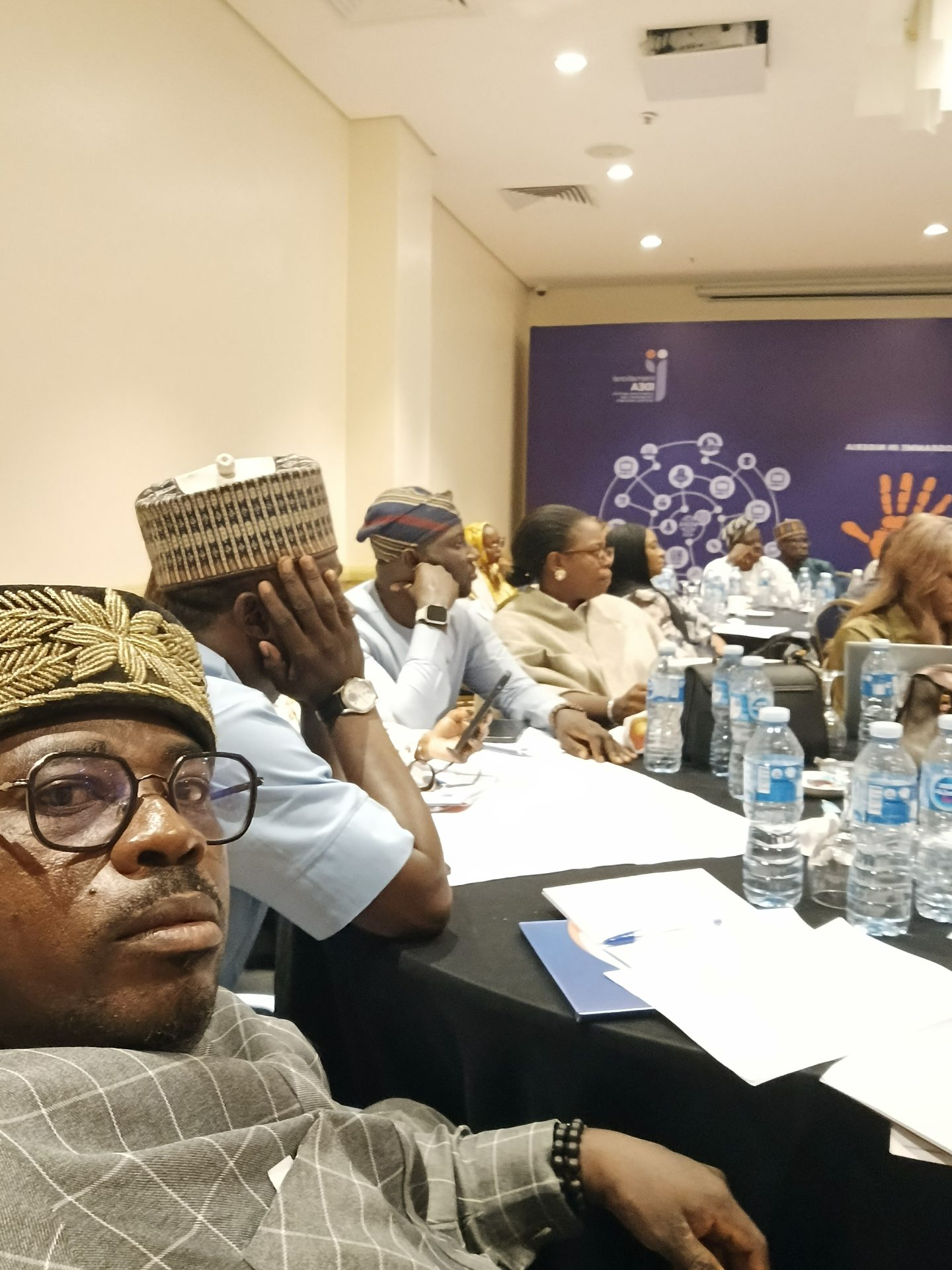
This was the concern raised by Comrade Chris Agbo, Publisher of The Qualitative Magazine and a disability inclusion advocate, during a Sexual and Gender-Based Violence (SGBV) Media Corps Workshop organised by the National Agency for the Prohibition of Trafficking in Persons (NAPTIP) with support from the European Union Support to End Sexual and Gender-Based Violence (ESGBV) Programme, implemented by International IDEA.
Speaking during the workshop, Agbo described the experience of women with disabilities as a form of “double jeopardy” because they may face discrimination both as women and as persons with disabilities.
“A woman with disability first of all faces discrimination as a woman, then again as a person with disability. So she is faced with double jeopardy.”
According to him, this heightened vulnerability can make persons with disabilities easier targets for perpetrators while simultaneously making it more difficult for survivors to report abuse and obtain justice.
When the Survivor Cannot Identify the Perpetrator
Agbo highlighted the particular challenges faced by blind survivors of sexual violence.
He recalled a case involving a blind woman who was allegedly raped by a man who deliberately refused to speak during the assault, apparently making it difficult for her to identify him by his voice.
For a blind survivor who relies heavily on sound and voice recognition, such circumstances can create serious evidentiary challenges.
The case, he said, illustrates how perpetrators can exploit a person’s disability to commit violence while making subsequent identification and prosecution more difficult.
Communication Barriers Can Silence Deaf Survivors
For deaf persons with disabilities, the barriers can be different but equally serious.
Agbo pointed to the lack of sign language interpreters in some police stations as a major obstacle to reporting SGBV.
A deaf survivor may know exactly what happened but still struggle to communicate the experience to police officers who do not understand sign language.
“When they go to the police, there’s no sign language interpreter to actually enhance that communication between a deaf person and the police officers,” he explained.
The result can be delayed reporting, incomplete statements, frustration and, in some cases, abandonment of the pursuit of justice.
“Are You Sure?” — When Survivors Are Not Believed
Beyond physical and communication barriers, Agbo identified another damaging obstacle: disbelief.
He said persons with disabilities who report sexual violence may encounter attitudes that question the credibility of their accounts or minimise the possibility that they could have been targeted by perpetrators.
Such reactions can be deeply discouraging.
When a survivor who has already experienced violence is met with suspicion, insensitive questions or victim-blaming, the reporting process can become another traumatic experience.
For many survivors, the message becomes clear: speaking out may expose them to another layer of humiliation.
Intellectual Disabilities: A Hidden Vulnerability
Agbo also drew attention to persons with intellectual disabilities and others who may have difficulties communicating or understanding what is happening to them.
He warned that perpetrators can deliberately exploit these vulnerabilities because they believe their victims may struggle to report the abuse or be believed.
He cited cases involving women and girls with disabilities who have allegedly been sexually abused by people within their own families or communities.
Such cases, he said, demonstrate why SGBV prevention and response programmes must deliberately include persons with disabilities rather than treating disability inclusion as an afterthought.
The Justice System Must Become Disability-Inclusive
The concerns raised at the workshop point to a larger systemic question: Can survivors with disabilities access justice on equal terms?
For Agbo, the answer requires significant improvement in the capacity of frontline institutions.
Police stations, hospitals, courts and other SGBV response centres need to become more accessible to persons with different disabilities.
This includes access to sign language interpreters, physically accessible facilities, appropriate communication methods, trained personnel and procedures that recognise the specific challenges faced by persons with disabilities.
Without these measures, survivors may technically have the right to report violence but lack the practical means to exercise that right.
Media Has a Role to Play
The workshop also challenged journalists to rethink how SGBV involving persons with disabilities is reported.
Rather than presenting persons with disabilities solely as helpless victims, journalists were encouraged to adopt survivor-centred and ethical approaches that protect dignity and privacy while exposing systemic barriers.
The media can also investigate why survivors struggle to report cases, why prosecutions fail, whether police stations have appropriate accessibility measures and whether survivors can access medical, psychosocial and legal support.
Such reporting can move the conversation beyond individual incidents to the systems and social norms that allow violence to continue.
A Call for Inclusion in the SGBV Response
The participation of persons with disabilities in the SGBV Media Corps training signals an important shift: disability cannot remain outside conversations about gender-based violence.
If SGBV policies, media campaigns and justice mechanisms are designed without considering disability, some of the people most vulnerable to abuse will remain invisible.
For Agbo, the priority should be to ensure that persons with disabilities can report violence safely, communicate their experiences effectively and receive justice without facing additional discrimination.
The fight against SGBV, therefore, cannot simply be about stopping violence.
It must also be about dismantling the barriers that prevent survivors from being heard.
For persons with disabilities, that means confronting the double jeopardy of gender and disability discrimination—and ensuring that their disability never becomes a pathway to silence, impunity or denied justice.
Follow the The Qualitative Magazine channel on WhatsApp:


