

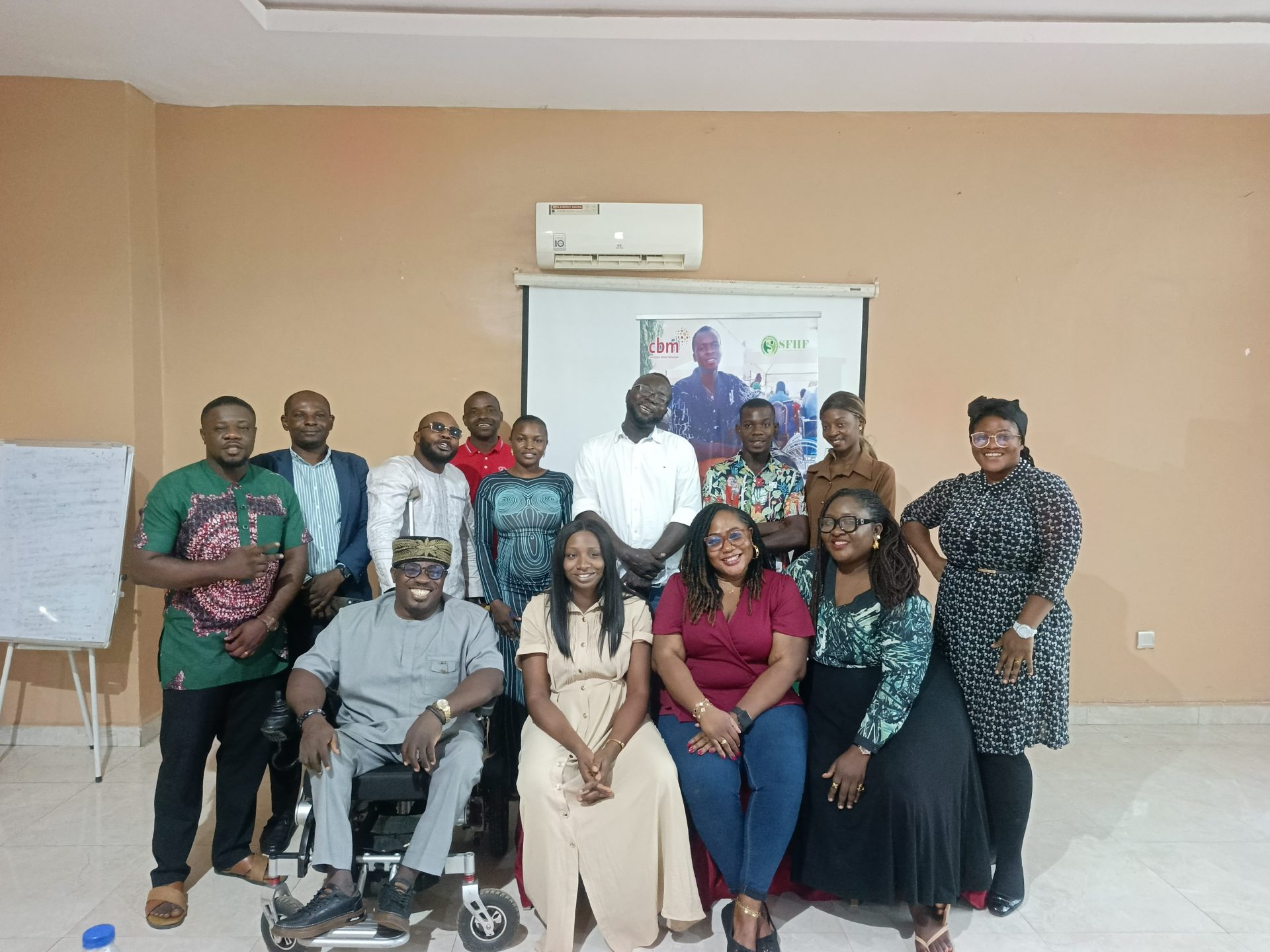
ABUJA – Media professionals in Nigeria have been challenged to move beyond narratives of pity and embrace a rights-based approach to disability reporting that promotes dignity, inclusion and equal opportunities for persons with disabilities.
The charge came during a media engagement on “Disability Inclusion and Responsible Reporting,” organised by the Sustainable Family Healthcare Foundation (SFHF) with support from Christian Blind Mission (CBM) in Abuja.
Speakers at the event stressed that the media has a powerful role in shaping public perception and influencing policies. They argued that the way disability is reported can either reinforce harmful stereotypes or help dismantle barriers that continue to exclude millions of Nigerians with disabilities from fully participating in society.
Delivering a presentation at the workshop, disability inclusion expert and facilitator, Musa Muazu Musa, urged journalists to abandon stories designed to evoke sympathy and instead focus on exposing systemic barriers while highlighting practical solutions that promote inclusion.
According to him, disability reporting should be rooted in respect for human dignity and the recognition of the rights of persons with disabilities, rather than portraying them as objects of charity.
“The point of reporting disability issues should come from dignity, not sympathy. Journalists should report because there is an issue that requires attention and action, not because they want to attract pity,” Musa said.
He explained that responsible journalism has the potential to challenge long-standing misconceptions about disability by presenting persons with disabilities as professionals, entrepreneurs, policymakers, innovators, community leaders and active contributors to national development.
Musa further noted that disability inclusion goes beyond treating everyone the same. Instead, he said, genuine inclusion requires recognising the unique needs of different individuals and providing the necessary support that enables everyone to participate on an equal basis.
He reminded participants that the disability community is not a single, uniform group, as different disability clusters experience different barriers and require different forms of support.
“Disability is not homogeneous. Every disability comes with its own realities and challenges. When discussing disability, journalists must amplify these diverse voices rather than presenting only one category of disability,” he said.
He also criticised the common practice of using only persons with physical disabilities as representatives of the entire disability community, urging media organisations to deliberately include persons with visual, hearing, intellectual, psychosocial and other disabilities in their reports and programmes.
Speaking further, Musa encouraged journalists and media organisations to recognise the professional expertise of persons with disabilities beyond disability-related discussions.
“I am an accountant by profession. I should also be invited to discuss economic issues, not only disability. Persons with disabilities are professionals in different fields, and their expertise should be recognised,” he stated.
He added that quality disability reporting should contribute to policy reforms that improve access to education, healthcare, employment, transportation, accessible infrastructure and social protection.
According to him, what most persons with disabilities seek is not preferential treatment but equal access to opportunities, services and participation in every aspect of national life.
Also speaking at the event, disability rights advocate and media practitioner Agbo Christian Obiora underscored the importance of ensuring that persons with disabilities are actively involved in decision-making processes that affect their lives.
He maintained that inclusion cannot be achieved when policies and programmes are designed without the meaningful participation of those they are intended to serve.
Obiora identified widespread discrimination, prejudice and entrenched societal stereotypes as major obstacles preventing persons with disabilities from participating fully in politics and public service.
He lamented that despite possessing the qualifications and competence required for leadership positions, many persons with disabilities are routinely overlooked by political parties because they are wrongly perceived as unelectable.
According to him, these misconceptions continue to deny the country the valuable contributions that qualified persons with disabilities can make in governance and national development.
He therefore called for sustained public enlightenment campaigns aimed at changing societal attitudes and encouraging greater political participation by persons with disabilities.
Obiora further urged government at all levels to strengthen the implementation of disability laws and review existing policies to adequately address the needs of persons with sensory disabilities and other disability groups.
He appealed to Nigerians to embrace persons with disabilities as equal partners in nation-building and to reject attitudes that reinforce exclusion.
Addressing journalists directly, he emphasised the importance of using respectful, accurate and person-centred language when reporting disability issues, warning that insensitive expressions can perpetuate stigma and discrimination.
Earlier in her remarks, the Project Coordinator of the Sustainable Family Healthcare Foundation, Mary Sunday, explained that the engagement was organised to deepen journalists’ understanding of Nigeria’s disability law and strengthen the media’s capacity to promote its effective implementation.
She expressed optimism that equipping media practitioners with knowledge of disability inclusion would improve the quality of reporting on disability issues, raise public awareness and accelerate the implementation of policies designed to protect and promote the rights of persons with disabilities.
According to her, the media remains one of the most influential institutions in shaping public opinion and driving positive social change.
She noted that balanced, accurate and inclusive reporting can help break down stereotypes, foster greater understanding and encourage government institutions to fulfil their obligations under Nigeria’s disability laws.
The workshop brought together journalists, disability rights advocates, civil society organisations and development partners to explore practical strategies for improving disability reporting and promoting inclusive storytelling.
Participants agreed that the media must move beyond portraying persons with disabilities as beneficiaries of charity and instead highlight their achievements, capabilities, leadership and contributions to society.
They also emphasised that responsible journalism should serve as a catalyst for policy reforms, accountability and the removal of barriers that continue to hinder the full inclusion of persons with disabilities in Nigeria.
The Sustainable Family Healthcare Foundation (SFHF) is an indigenous humanitarian non-governmental organisation committed to advancing the sexual and reproductive health and rights of women, girls and families while advocating for a fistula-free generation across Nigeria. Through partnerships and advocacy initiatives, the organisation continues to promote inclusive development and equitable access to opportunities for vulnerable populations, including persons with disabilities.


