

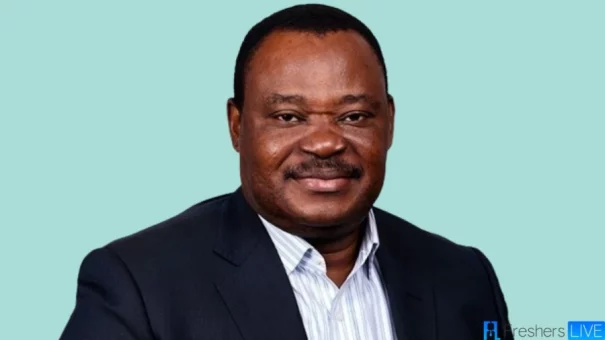
Ambassador Jimoh Ibrahim Demands Transparency on Employment of Persons With Disabilities Within UN System
By Our Correspondent
Nigeria’s Permanent Representative to the United Nations, Ambassador Jimoh Ibrahim, has challenged the United Nations to demonstrate stronger leadership on disability inclusion by publicly disclosing the level of representation of persons with disabilities within its institutions, insisting that the global body must lead by example in promoting the rights, dignity, and inclusion of one of the world’s largest yet most marginalized populations.
Ambassador Ibrahim made the call during the 19th Session of the Conference of States Parties to the Convention on the Rights of Persons with Disabilities (CRPD), held at the United Nations Headquarters in New York, where world leaders, policymakers, disability advocates, and development partners gathered to assess global progress in advancing disability rights.
The conference, themed “Celebrating and Consolidating Achievements and Shaping the Next Phase of Implementation in a Changing World,” focused on reviewing commitments made under the Convention on the Rights of Persons with Disabilities and identifying strategies for accelerating inclusion across member states.
Addressing delegates at the high-level gathering, the Nigerian envoy expressed concern over what he described as the persistent underrepresentation and marginalisation of persons with disabilities within international institutions despite decades of advocacy, policy commitments, and global declarations aimed at promoting equality and inclusion.
According to him, the gap between global promises and actual outcomes remains alarmingly wide.
“1.3 Billion People Cannot Remain Invisible”
Highlighting the scale of the issue, Ibrahim noted that persons with disabilities constitute one of the largest minority groups in the world.
He explained that out of the estimated global population of eight billion people, approximately 1.3 billion are persons with disabilities, representing nearly one-fifth of humanity.
Despite these staggering numbers, he argued that persons with disabilities continue to receive only a tiny fraction of global attention, investment, and development resources.
The ambassador described the situation as deeply troubling and fundamentally unfair.
“Nearly 20 percent of the world’s population are persons with disabilities, yet they receive less than 0.1 percent of global GDP attention and allocation. This imbalance is not only disproportionate but unjust,” he said.
His remarks drew attention to growing concerns among disability rights advocates who have long argued that persons with disabilities remain largely excluded from development planning, economic opportunities, leadership positions, and decision-making processes across the world.
UN Must Lead by Example
While acknowledging the efforts made by the United Nations over the years to advance disability rights, Ibrahim argued that more must be done to ensure that inclusion is reflected not only in policy documents but also in institutional practice.
He noted that the UN began multilateral engagement on disability inclusion approximately two decades ago and has since championed numerous initiatives aimed at protecting and promoting the rights of persons with disabilities.
However, he maintained that progress has been too slow and insufficient to address the everyday realities faced by millions of people with disabilities globally.
According to him, the credibility of the global disability inclusion agenda depends largely on the willingness of international institutions to hold themselves accountable.
He therefore called on the United Nations to publish comprehensive and verifiable data showing the percentage of persons with disabilities employed across its agencies, departments, programmes, and affiliated institutions.
The Nigerian envoy argued that the absence of such information raises important questions about transparency and accountability.
“If the United Nations expects governments around the world to embrace disability inclusion, it must demonstrate that commitment within its own system,” he stressed.
He maintained that making such data publicly available would help strengthen trust, encourage institutional reforms, and provide a measurable benchmark for assessing progress.
Nigeria Raises Concerns Over Global Treatment of Persons With Disabilities
Speaking further, Ibrahim said Nigeria remains deeply concerned about the continued challenges faced by persons with disabilities around the world.
He noted that despite significant advances in disability rights legislation in many countries, discrimination, exclusion, inaccessible infrastructure, unemployment, poverty, and social stigma continue to limit opportunities for millions of people.
According to him, there is a growing perception that persons with disabilities are still being denied equal access to opportunities and representation both nationally and internationally.
He warned that unless deliberate action is taken to address these inequalities, the world risks leaving behind a significant portion of its population.
The ambassador emphasized that inclusion should not be viewed as an act of charity but as a matter of human rights, justice, and sustainable development.
“In Every Disability, There Is Ability”
Reaffirming Nigeria’s commitment to disability inclusion, Ibrahim reiterated a message that has become a rallying cry for disability advocates worldwide.
“In every disability, there is ability,” he declared.
He stressed that societies often focus on limitations rather than the immense talents, skills, and contributions that persons with disabilities bring to their communities and nations.
According to him, governments and institutions must move beyond stereotypes and create environments where persons with disabilities can thrive and contribute meaningfully to national and global development.
He noted that inclusive societies are stronger, more innovative, and more resilient because they harness the talents of all citizens regardless of physical, sensory, intellectual, or psychosocial differences.
Call for Stronger Legal Frameworks
The Nigerian delegation also called on member states to strengthen disability-inclusive governance by integrating disability rights into national development frameworks and public policies.
Ibrahim emphasized the importance of backing inclusion efforts with robust legal and institutional mechanisms capable of guaranteeing equal opportunities and protecting the rights of persons with disabilities.
He urged governments to move beyond symbolic commitments and adopt practical measures that improve access to education, healthcare, employment, transportation, technology, political participation, and social protection.
According to him, legal frameworks must be accompanied by effective implementation, monitoring, and accountability mechanisms to ensure meaningful impact.
Inclusion Must Remain a Global Priority
As deliberations continued at the Conference of States Parties, Nigeria maintained that disability inclusion must remain at the forefront of international development efforts.
The delegation stressed that achieving the goals of the Convention on the Rights of Persons with Disabilities requires collective action from governments, international organisations, civil society groups, and the private sector.
For Nigeria, the message was clear: meaningful inclusion cannot exist without representation, transparency, and accountability.
As the world navigates an increasingly complex and rapidly changing landscape, Ibrahim urged the international community to ensure that persons with disabilities are not treated as an afterthought but as equal partners in shaping the future.
His intervention served as a reminder that nearly two decades after the adoption of the CRPD, the struggle for full inclusion remains far from over.
For the Nigerian envoy, the challenge before the world is not whether disability inclusion is necessary, but whether global institutions are prepared to match their commitments with concrete action.
And in that regard, he insisted, the United Nations must be willing to lead from the front.
Click the link below to join our WhatsApp channel


