

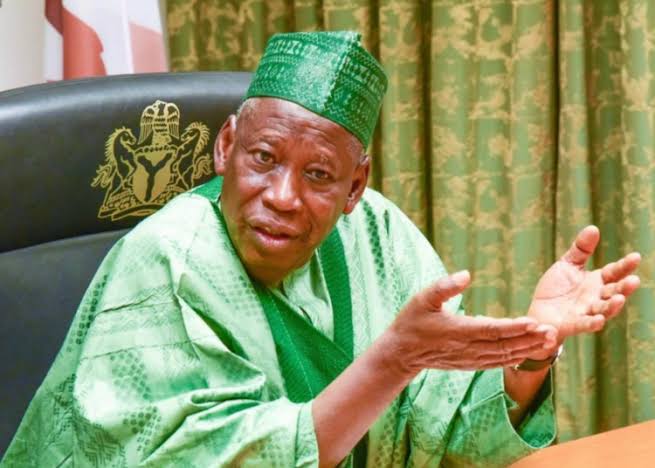
Abuja, Nigeria — Former Kano State Governor, Abdullahi Ganduje, has shed light on the deep-rooted causes of street begging among Persons With Disabilities (PWDs) in northern Nigeria, attributing the trend largely to systemic neglect, lack of access to education, and limited investment in assistive technologies.
Ganduje made these remarks on Friday in Abuja during the premiere marking the 10th anniversary of Let’s Talk Humanity (LTH), a non-governmental organisation dedicated to supporting the educational needs of persons who are Deaf and Blind.
Speaking at the event, the former governor painted a sobering picture of the lived realities of many PWDs in the northern region, describing a cycle of exclusion that has pushed thousands into street begging as a means of survival.
“For the northern part of this country, people with disabilities are relegated to the background,” Ganduje stated. “They are neglected simply because of their physical condition. This neglect has affected their psyche and motivation to the extent that many no longer see themselves as equal members of society.”
His remarks underscore a broader societal failure, where stigma and marginalisation have combined to strip many PWDs of dignity, opportunity, and hope. According to Ganduje, this reality explains the visible presence of persons with disabilities on the streets—begging day and night, with some forced to sleep under bridges or by the roadside.
But beyond highlighting the problem, Ganduje pointed to a pathway forward—one rooted in deliberate investment and inclusive policies. He emphasized the transformative power of education and assistive technology, noting that when properly equipped, persons with disabilities can become economically independent and socially empowered.
“With the right investment in technological gadgets and education, people with special needs can become productive and useful—not only to themselves but to society at large,” he said.
The former National Chairman of the All Progressives Congress (APC) also issued a strong call to action, urging government agencies, development partners, and private sector stakeholders to intensify efforts toward disability inclusion.
“This is a sorry story,” Ganduje admitted, “but what we have seen today shows that there is a silent revolution taking place.”
That “silent revolution” was evident in the work showcased by Let’s Talk Humanity, whose decade-long commitment to inclusive education is gradually changing narratives and opening doors for Deaf and Blind individuals across Nigeria. Through targeted interventions, advocacy, and capacity building, the organisation continues to challenge stereotypes and demonstrate that disability is not inability.
Observers at the event noted that Ganduje’s comments reflect a growing recognition among policymakers of the urgent need to address structural barriers facing PWDs. However, they also stressed that beyond rhetoric, sustained action, inclusive budgeting, and enforcement of disability laws remain critical to achieving meaningful change.
As Nigeria continues its journey toward inclusivity, stakeholders agree on one key message: empowering persons with disabilities is not an act of charity—it is a matter of rights, dignity, and national development.
For many PWDs across northern Nigeria, the hope is that this renewed attention will translate into real opportunities—where the streets are no longer their only option, and their potential is fully realised.
Click the link below to join our WhatsApp channel


