

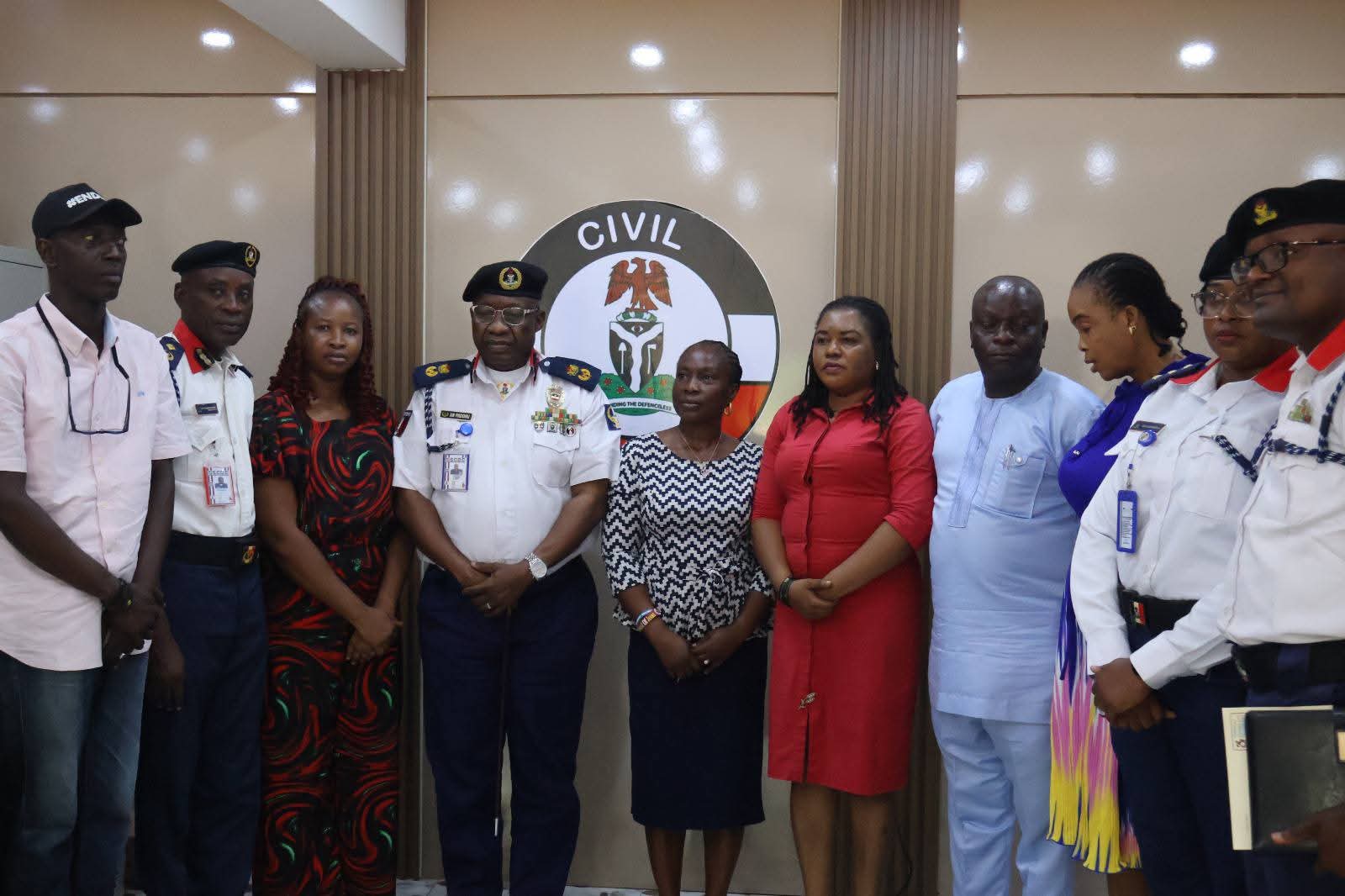
In a significant move to advance disability inclusion within Nigeria’s security architecture, the Centre for Citizens with Disabilities (CCD), with support from the Fund for Global Human Rights and the Action Group on Free Civic Space, has secured firm commitments from the Nigeria Security and Civil Defence Corps (NSCDC), Oyo State Command, to strengthen protection for persons with disabilities (PWDs) in civic spaces.
The high-level advocacy visit, which took place on March 17, 2026, in Ibadan, brought together disability leaders, cluster heads, and members of the media in a strategic dialogue aimed at addressing systemic barriers faced by civic actors with disabilities.
At the heart of the engagement was a shared goal: ensuring that persons with disabilities can freely and safely participate in civic life without fear of harassment, intimidation, or exclusion.
Breaking Barriers in Civic Participation
Setting the tone for the meeting, CCD’s Project Officer, Christiana Njoku, outlined the purpose of the visit—raising awareness on civic space rights for PWDs and advocating for disability-inclusive protection mechanisms within the state’s security framework.
Building on this, Senior Programme Officer, Florence Attah, delivered a compelling presentation of findings from the Expanding Civic Space Rights project. She painted a stark picture of the realities faced by civic actors with disabilities—ranging from communication barriers and systemic discrimination to limited access to justice and protection when their rights are violated.
Her message was clear and urgent: without deliberate inclusion, civic space remains inaccessible for a significant segment of the population.
Call for Practical Reforms
CCD did not stop at highlighting challenges. The organization presented actionable recommendations to the NSCDC, urging the command to adopt inclusive practices that would transform service delivery.
Key proposals included:
- Establishing dedicated reporting channels tailored to persons with disabilities
- Ensuring accessibility of offices and services
- Engaging sign language interpreters
- Training officers on disability inclusion and civic rights
- Adopting disability-sensitive approaches in security operations and crowd control
These measures, according to CCD, are critical to building trust and ensuring that PWDs are not left behind in civic processes.
NSCDC Makes Bold Commitments
In a response that signaled openness and readiness for reform, the State Commandant, Mr. Augustine Padonu, welcomed the recommendations and made far-reaching commitments.
He assured stakeholders that the command would work towards establishing dedicated desk offices across the State Command, 11 Area Commands, and 76 Divisional Offices to specifically address disability-related concerns. Notably, he emphasized that these offices would be located on the ground floor to enhance accessibility.
Beyond infrastructure, the Commandant expressed willingness to deepen collaboration with CCD, particularly in training officers on disability rights, inclusion, and sign language communication—steps expected to significantly improve interactions between security personnel and PWDs.
He also revealed plans to escalate critical issues to national leadership, including the employment of persons with disabilities within the Corps as Desk Officers and advocating for priority voting for PWDs through engagement with electoral authorities.
Disability Community Speaks Out
The meeting was far from a one-sided conversation. Representatives from disability clusters, including members of the Joint National Association of Persons with Disabilities (JONAPWD), actively participated, voicing concerns and reinforcing the need for inclusive reforms.
They called for:
- Improved physical accessibility across public institutions
- Structured sign language training for officers
- Priority voting mechanisms for PWDs
- Full inclusion in all civic and democratic processes
Their contributions added urgency and authenticity to the dialogue, grounding policy discussions in lived experiences.
Strengthening Partnerships for Impact
Also speaking at the event, CCD’s Finance and Admin Manager, Mrs. Florence Austin, commended the NSCDC for its prompt response and willingness to engage. She highlighted the Corps’ track record of collaboration, referencing positive engagements with the Lagos State Command.
Reaffirming CCD’s commitment, she pledged continued support to the Oyo State Command, particularly in capacity building and training initiatives aimed at embedding disability inclusion within security operations.
A Step Toward Inclusive Security
The advocacy visit marks a critical step toward building a more inclusive and responsive security system—one where persons with disabilities are not only protected but empowered to participate fully in civic life.
As commitments transition into action, stakeholders remain cautiously optimistic. For many, this engagement represents more than a meeting—it is a potential turning point in the quest for equal rights, dignity, and inclusion.
With sustained collaboration and accountability, the vision of a civic space free from discrimination and accessible to all may finally be within reach.
Click the link below to join our WhatsApp channel


