

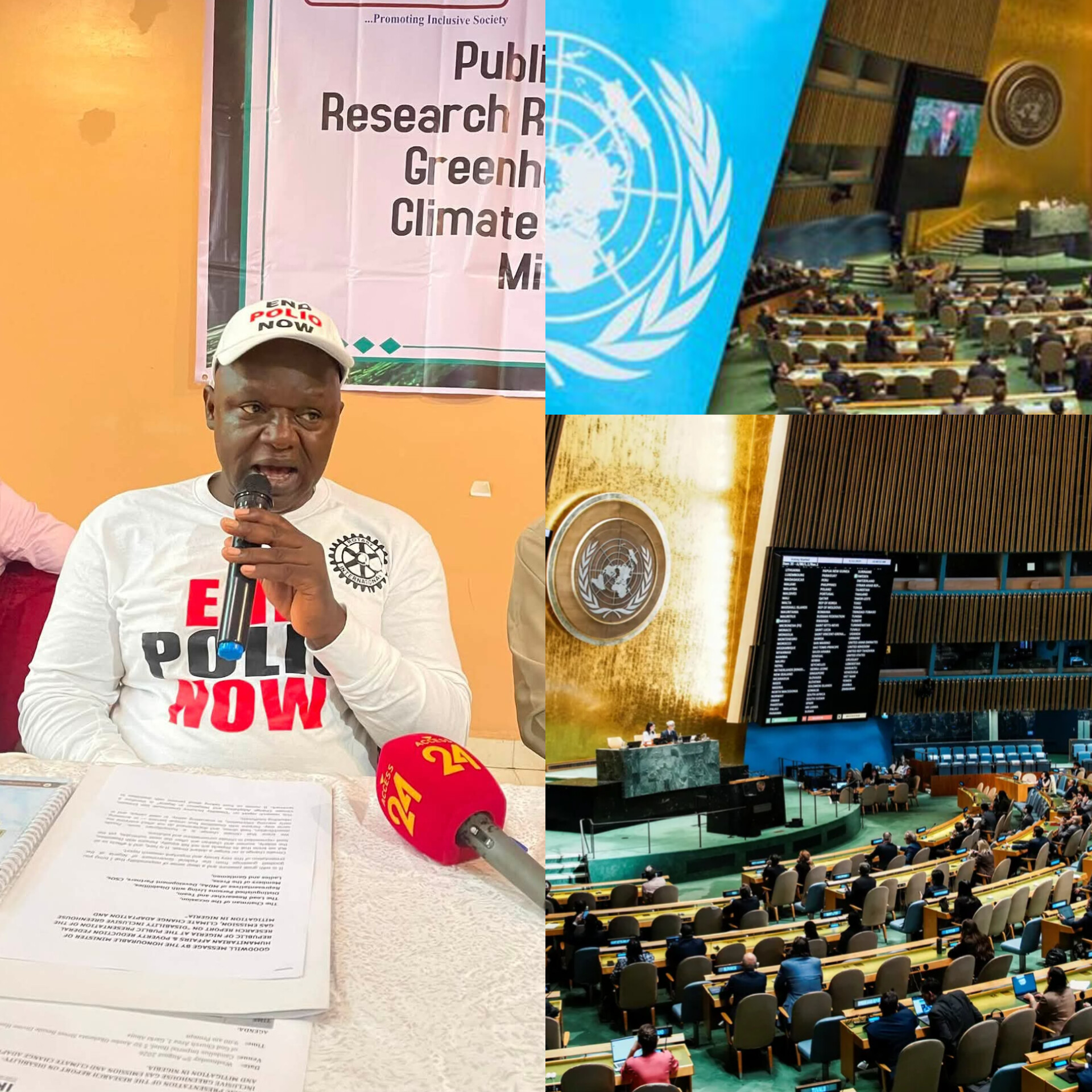
The National Commission for Persons with Disabilities (NCPWD) has welcomed the adoption of a landmark United Nations General Assembly resolution on access to assistive technology, describing it as a major step toward advancing inclusion, independence and equal opportunities for persons with disabilities and older persons worldwide.
The resolution, presented by Pakistan and co-sponsored by more than 40 UN Member States, was adopted by consensus on 2 September 2026, signalling growing international recognition of assistive technology as a critical component of sustainable development, universal health coverage and the realization of human rights.
For millions of persons with disabilities who depend on wheelchairs, hearing aids, prostheses, screen readers and other assistive products to participate fully in society, the resolution carries a powerful message: assistive technology should not be treated as a privilege reserved for those who can afford it.
‘Assistive Technology Is Not a Luxury’
Reacting to the development, the Executive Secretary of NCPWD, Hon. Ayuba Gufwan, described assistive technology as an essential enabler of participation and independent living.
“Assistive technology is not a luxury. It is an essential enabler of participation and independent living.”
According to Gufwan, assistive products can determine whether a person with a disability is able to attend school, secure employment, access healthcare, communicate effectively or participate in community life.
He noted that from wheelchairs and hearing aids to screen readers and prosthetics, appropriate assistive technology can remove barriers that often push persons with disabilities into poverty, isolation and social exclusion.
A Critical Issue for Nigeria
The NCPWD Executive Secretary said the UN resolution is particularly significant for Nigeria, where access to affordable, appropriate and quality-assured assistive technology remains a major concern for many persons with disabilities.
For many Nigerians with disabilities, acquiring an appropriate assistive device can be financially overwhelming. Even when a device is obtained, challenges surrounding maintenance, repairs, replacement parts, technical support and availability of trained professionals can make sustainable use difficult.
Gufwan therefore emphasized the need for Nigeria to move beyond simply providing assistive devices and develop a comprehensive system that supports the entire assistive-technology ecosystem.
Beyond Distribution: Financing, Production and Skilled Personnel
The NCPWD welcomed the UN’s emphasis on integrating assistive technology into health, education, labour and social protection systems.
According to the Commission, Nigeria needs sustainable financing mechanisms, local production, innovation, appropriate training and efficient supply chains if assistive technology is to reach the people who need it most.
This means that access should not depend solely on occasional donations or intervention programmes.
Instead, assistive technology should increasingly become part of mainstream public policy and service delivery, ensuring that a person who needs a wheelchair, hearing aid, prosthetic limb, white cane, communication device or digital accessibility tool can obtain appropriate support without facing unnecessary barriers.
Data and Innovation Also Critical
Gufwan also stressed the importance of strengthening data collection, research and innovation to enable evidence-based planning.
Without reliable information about who needs assistive products, what types of devices they require, where the gaps exist and what barriers prevent access, government interventions may continue to fall short.
Better data, he noted, would help policymakers understand the scale and nature of assistive-technology needs across Nigeria and develop interventions capable of reaching persons with disabilities across the 36 states and the Federal Capital Territory.
NCPWD Pledges Wider Collaboration
The Commission reaffirmed its commitment to working with development partners, universities, manufacturers, rehabilitation professionals, Organisations of Persons with Disabilities (OPDs) and other stakeholders to expand access to assistive technology nationwide.
Such collaboration will be crucial in developing solutions that are not only affordable but also appropriate to the needs and environments of Nigerian users.
Importantly, the involvement of OPDs can ensure that persons with disabilities are not merely recipients of assistive technology but are actively involved in determining what products, services and policies work for them.
‘No Nigerian Should Be Left Behind’
Gufwan described the UN resolution as providing renewed momentum for Nigeria’s efforts to improve access to assistive technology.
“This UN resolution gives us renewed momentum.”
He reaffirmed that NCPWD would continue to champion policies, partnerships and programmes aimed at ensuring that Nigerians are not excluded from education, employment, healthcare, communication and community life because they lack access to appropriate assistive devices.
The development has therefore opened another important conversation for Nigeria: Will the country translate this international commitment into concrete action at home?
For persons with disabilities, the real measure of success will not simply be the adoption of a UN resolution. It will be whether a child with a disability can access the device needed to attend school, whether a wheelchair user can obtain a suitable wheelchair, whether a Deaf person can access communication technology, and whether a person with a visual impairment can obtain the technology required to work and live independently.
Assistive technology is not a luxury. It is a pathway to independence, dignity, participation and equal opportunity—and access to it should be treated as a matter of rights, not charity.


