

By TQM News,
UMUAHIA, Abia State — The Chairman of the Abia State Disability Commission, Dr. David Anyaele, has reaffirmed the commitment of the Abia State Government to promoting the inclusion, empowerment and socio-economic advancement of Deaf women and other persons with disabilities across the state.
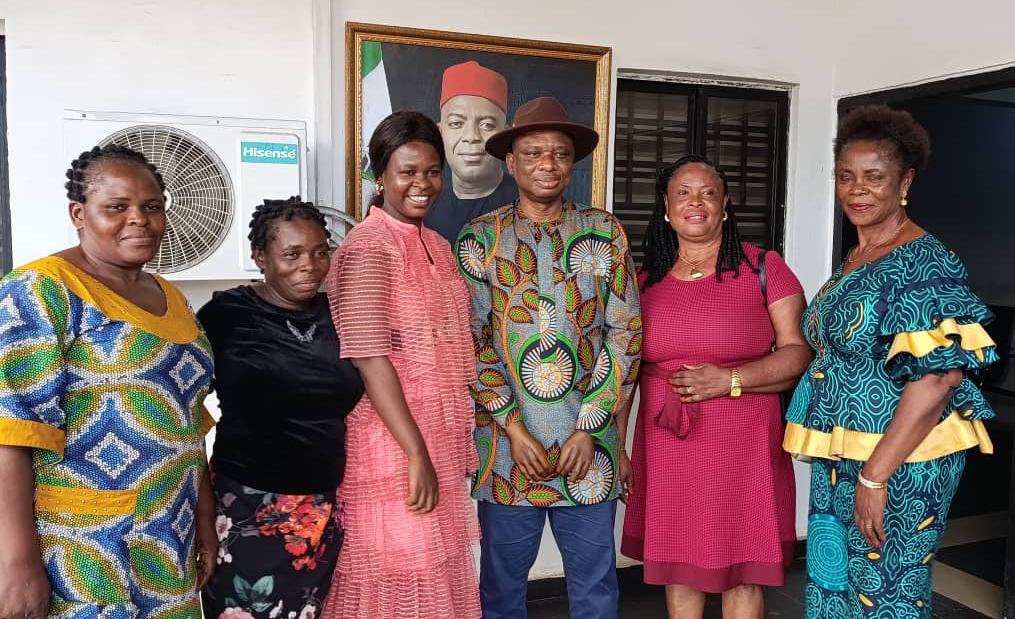
Anyaele gave the assurance when members of the South East Deaf Women Association (SEOWA), alongside representatives of the Abia State Deaf Elders, paid a courtesy visit to his office at the Government House, Umuahia, on Friday.
The meeting provided an opportunity for the Deaf women to present some of the challenges confronting Deaf persons in the state while also exploring areas of collaboration with the Commission to improve access to employment, education, economic empowerment and other opportunities.
‘Deaf Persons Are an Important Part of the Disability Community’
Speaking during the engagement, Dr. Anyaele described Deaf persons as an important part of the disability community, stressing that the Commission would continue to engage with them in identifying opportunities capable of improving their livelihoods and strengthening their participation in the socio-economic development of Abia State.
He assured the delegation that the Commission would work toward ensuring that Deaf persons are not left behind in government programmes and interventions designed to improve the lives of persons with disabilities.
According to him, inclusion must go beyond policies and promises; it must translate into tangible opportunities that enable persons with disabilities to become economically independent and active contributors to society.
Otti Administration Commended for Disability Inclusion
The Commission Chairman also highlighted what he described as the deliberate commitment of the Abia State Governor, Dr. Alex C. Otti, OFR, to improving the quality of life of persons with disabilities.
He pointed to the recruitment of several Deaf women into the state government workforce as an indication of the administration’s willingness to create employment opportunities for persons with disabilities.
Anyaele further assured that qualified persons with disabilities would continue to be considered when employment opportunities arise, emphasizing that disability should not be a barrier to accessing decent work when an individual possesses the required qualifications and competence.
Deaf Persons to Benefit From Government Interventions
The Chairman disclosed that Deaf persons had also benefited from various government interventions targeted at persons with disabilities, including initiatives supported by the wife of the Governor, Her Excellency, Lady Priscilla C. Otti.
He said the Commission would continue to pursue inclusive implementation of government programmes so that Deaf persons could access opportunities on an equal basis with other members of the disability community.
For the Deaf community, such inclusion is particularly significant because communication barriers can often determine whether a person is able to access information, apply for opportunities, receive services or participate meaningfully in public life.
Abia to Improve School for Deaf Students
Another major issue highlighted by Dr. Anyaele was education.
He disclosed that Abia State has a secondary school for Deaf students and said the government was committed to progressively improving the institution.
According to him, plans include the provision of hostel facilities for both male and female students, an intervention expected to improve access to education for Deaf children who may otherwise face difficulties travelling long distances to school.
He also expressed the Commission’s interest in increasing public awareness about the needs, rights and contributions of Deaf persons in Abia State.
Commission Moves to Strengthen Sign-Language Interpretation
In a development that could significantly improve communication between government institutions and Deaf citizens, Anyaele disclosed that the Commission was seeking to recruit qualified sign-language interpreters to strengthen its services.
He therefore called on qualified sign-language interpreters within the state to make themselves available.
The availability of competent interpreters remains crucial to ensuring that Deaf persons can effectively communicate with government agencies and access public services without unnecessary barriers.
SEOWA Calls for More Economic Opportunities for Deaf Women
Earlier, the South-East Zonal Women Leader of SEOWA, Mrs. Maria Chidimma Alufo-Ekpo, explained that the delegation visited the Commission to draw attention to challenges affecting Deaf persons in Abia, particularly women and children.
She appealed for greater inclusion of Deaf women in government-supported livelihood and empowerment programmes, particularly in agriculture, small businesses and other income-generating activities.
According to her, providing Deaf women with access to economic opportunities would strengthen their independence, improve their livelihoods and enhance their ability to contribute to their families and communities.
Her appeal underscores a broader concern within the disability community: empowerment programmes cannot be described as inclusive if the people they are designed to serve cannot access them because of communication, information or institutional barriers.
Call for Unity Within the Deaf Community
Beyond government intervention, Alufo-Ekpo also appealed to the Chairman to intervene in efforts to restore peace and unity within the Deaf community in Abia State.
She expressed concern that internal disagreements and divisions could undermine the progress already being made and negatively affect the public image and collective advocacy of Deaf persons in the state.
She therefore called for dialogue, unity and collaboration among stakeholders, stressing that a united Deaf community would be better positioned to engage government and advocate effectively for its rights and development.
A New Opportunity for Meaningful Inclusion
The engagement between the Abia State Disability Commission and SEOWA comes at a time when the conversation around disability inclusion is increasingly shifting from charity to rights, participation, empowerment and equal opportunity.
For Deaf women, meaningful inclusion must translate into access to education, employment, entrepreneurship, healthcare, political participation, information and decision-making.
The assurances by the Commission therefore present an opportunity for the government and Deaf community to move beyond dialogue and develop measurable actions, timelines and programmes that can produce lasting improvements in the lives of Deaf women, children and the wider Deaf community.
As the engagement continues, stakeholders will be watching to see how these assurances translate into employment opportunities, accessible education, sign-language interpretation, economic empowerment and stronger representation of Deaf persons in government programmes and decision-making spaces.
For many Deaf women in Abia, the message is clear: inclusion should not merely mean being invited to the table—it should mean having the communication access, opportunities and support needed to participate fully once they get there.


