

By TQM News Desk
Nigeria could unlock an estimated US$2.45 billion in economic benefits by 2030 if the country significantly increases investment in eye care, Sightsavers has said.
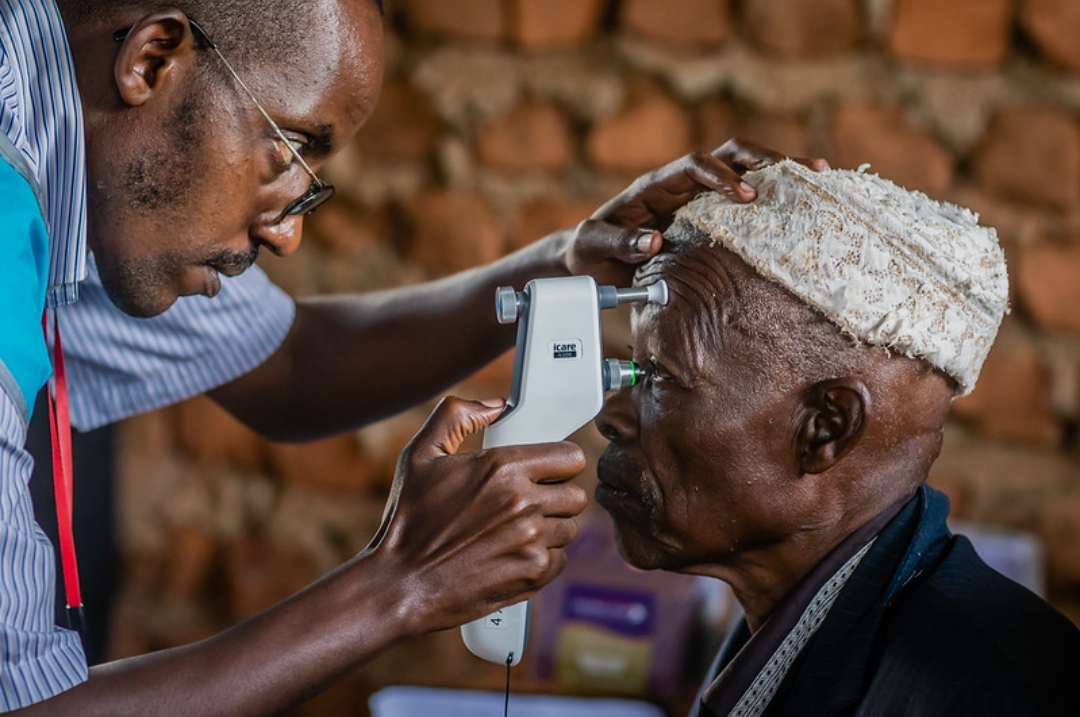
The international development organisation made the call as the world marks World Sight Day on October 8, urging the Nigerian government, donors, private sector and other stakeholders to make eye health a stronger priority within the country’s health and development agenda.
According to Sightsavers, more than 24.2 million people in Nigeria were living with vision impairment in 2020, highlighting the scale of a problem that continues to affect education, employment, household income and participation in society.
Eye care is more than a health issue
Sightsavers stressed that investing in eye care should not be viewed merely as a health-sector intervention but as an economic investment capable of improving productivity and people’s quality of life.
Simple interventions such as glasses and cataract surgery can dramatically change lives, enabling children to learn more effectively, helping adults access employment opportunities and allowing people to participate more fully in their communities.
Research by the International Agency for the Prevention of Blindness (IAPB), Seva Foundation and Fred Hollows Foundation estimates that increased investment in eye care in Nigeria could generate US$2.45 billion in economic benefits by 2030.
IAPB data further indicates that early intervention for childhood vision impairment in Nigeria could increase a child’s lifetime earnings by 49 per cent.
A pair of glasses changed Favour’s life
The difference access to eye care can make is illustrated by the experience of Favour, a schoolgirl from Kebbi State, who struggled to see the board in class.
During an eye-health screening supported by Sightsavers, Favour was diagnosed with a refractive error and provided with glasses.
The intervention transformed her ability to learn.
“She’s seeing clearly, and now she can identify letters. I was very, very happy knowing that now… she can study very well,” Favour’s mother said.
Her experience underscores how what may appear to be a simple intervention can have a profound impact on a child’s education and future opportunities.
Millions remain excluded from eye care
Despite the significant social and economic benefits of accessible eye care, Sightsavers said the sector remains overlooked in many health and development plans.
The organisation noted that more than 85 per cent of people with vision impairment globally live in low- and middle-income countries, while women and girls account for more than half of people living with visual impairment.
For people with disabilities, the barriers can be even greater when eye-health services, information, facilities and equipment are not designed to be inclusive and accessible.
Sightsavers calls for stronger government action
Prof. Joy Shu’aibu, Country Director at Sightsavers, said the solutions to many forms of avoidable vision impairment already exist, but millions of people still cannot access them.
“The solutions already exist. Glasses, cataract surgery and stronger eye care systems can transform lives, yet too many people still cannot access the support they need.”
She said the upcoming Global Summit for Eye Health provides an opportunity for governments, donors and private and public-sector actors to move beyond commitments and take concrete action.
The inaugural summit, scheduled for November, will be hosted by the Government of Antigua and Barbuda in collaboration with the World Health Organization (WHO) and IAPB.
The summit is expected to bring together global leaders to secure commitments aimed at addressing avoidable vision impairment, including conditions caused by cataracts and refractive errors.
Shu’aibu said Sightsavers would continue working with governments and partners to strengthen health systems, protect sight and enable more people to live full and independent lives.
She added that this would include supporting eye-health professionals, bringing services closer to communities and integrating vision and eye care into health, education, livelihood and road-safety programmes.
Nigeria already has eye-health interventions underway
Sightsavers is currently working with the Nigerian Government and other partners through initiatives including the “Focus on Clear Vision” project.
The project includes training health workers and teachers to conduct basic eye-health screening, community outreach, provision of glasses and equipment, as well as gender and disability inclusion training.
The organisation is also collaborating with the Kaduna, Zamfara and Sokoto State Governments to mark World Sight Day with free eye screenings designed to identify eye conditions early and connect people to appropriate treatment and care.
The message is clear: sight cannot wait
As global attention turns to eye health, Sightsavers is calling for a shift from treating eye care as an overlooked component of healthcare to recognising it as a fundamental investment in Nigeria’s human capital and economic future.
The organisation’s position aligns with the World Sight Day campaign of IAPB, which is calling for eye care that is accessible, available and affordable for everyone.
With millions of Nigerians affected by vision impairment and billions of dollars in potential economic benefits at stake, the message from Sightsavers is straightforward: investing in sight is investing in Nigeria’s future.


