

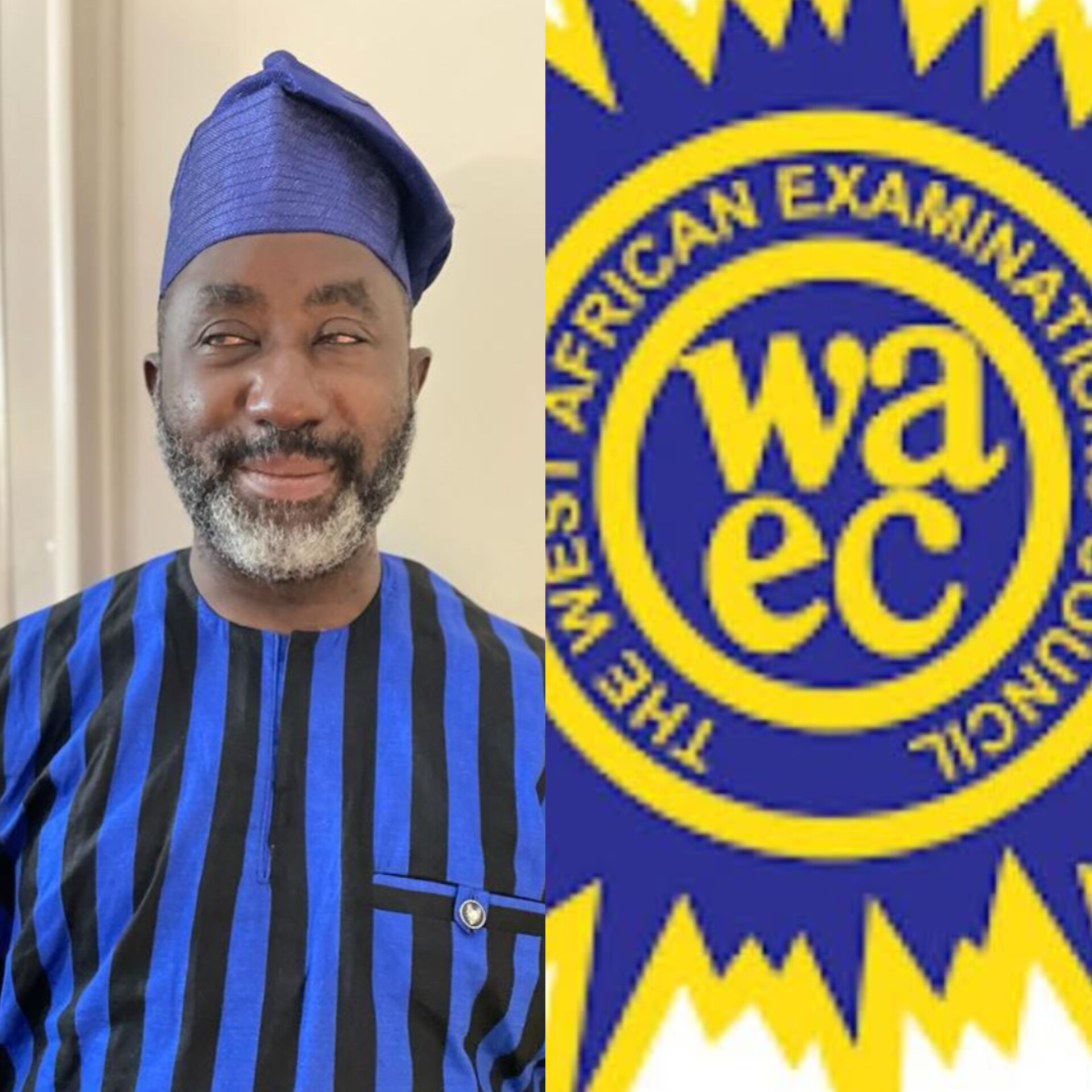
‘Justice delayed is justice denied’ — Disability advocate demands immediate release of May/June 2026 results
By Adebukola Adebayo
For thousands of Nigerian students, the release of WAEC results is a gateway to the next chapter of their lives. But for blind candidates who sat for the May/June 2026 examination, that gateway remains frustratingly closed.
Nearly two weeks after the results of sighted candidates were released, the results of blind candidates are reportedly still unavailable.
And time is running out.
Blind candidates who need their WAEC results to complete admission processes into universities, polytechnics, colleges of education and other tertiary institutions are now facing the possibility of losing admission opportunities through no fault of their own.
One of the clearest examples is the University of Ilorin, which was scheduled to close the uploading and verification of WAEC results on its admission portal by 3:00 p.m. on Friday, August 21, 2026.
For a blind candidate waiting for a result that has not been released, the deadline is not merely a date on a calendar. It could determine whether that candidate enters university this year—or waits another year.
A DELAY THAT HAS LASTED FOR DECADES
Dr. Adebukola Adebayo, a specialist in disability-inclusive development, governance and public policy, says the current situation is part of a much larger problem.
According to him, delays in releasing WAEC results for blind candidates have occurred repeatedly for decades.
The result?
Some blind candidates have reportedly missed admission opportunities because their results arrived too late to meet institutional deadlines.
The damage, Adebayo argues, is not only academic.
Repeated exclusion can produce frustration, psychological distress and discouragement, with some affected students struggling to continue their education and others losing the opportunity to obtain tertiary qualifications altogether.
THE QUESTION WAEC MUST ANSWER
Why should blind candidates who sat for the same examination at the same time as their sighted colleagues have to wait longer for their results?
That is the central question being raised by Adebayo.
He argues that whatever administrative or technical process is responsible for the delay cannot justify placing blind students at a disadvantage.
These are candidates who already confront accessibility barriers throughout their educational journey. Making them wait longer for their examination results, he said, effectively creates another barrier at the very point where they should be progressing to higher education.
“Justice delayed is justice denied,” Adebayo said.
MORE THAN A WAEC RESULT
The controversy also raises broader questions about Nigeria’s commitment to disability rights.
Adebayo argues that delaying the results of blind candidates in a manner that causes them to miss admission opportunities undermines the principle of equal educational opportunity.
He referenced the 1999 Constitution of the Federal Republic of Nigeria, the Discrimination Against Persons with Disabilities (Prohibition) Act, 2018, the National Policy on Inclusive Education, the National Policy on Education and other relevant frameworks protecting the rights of persons with disabilities.
For him, inclusion cannot stop at allowing a blind candidate into the examination hall.
Inclusion must continue until that candidate receives the result, secures admission and has an equal opportunity to progress.
WAEC URGED TO ACT NOW
Adebayo is calling on WAEC to immediately release the outstanding results of all blind candidates who participated in the May/June 2026 examination.
He is also urging the examination body to ensure that all scripts belonging to blind candidates are properly marked and graded, with appropriate safeguards to prevent errors.
At the same time, he appealed to WAEC to ensure that candidates are not victimised because they or their advocates have publicly demanded fairness, transparency and accountability.
FROM CRISIS TO PERMANENT SOLUTION
Adebayo believes that simply releasing the current results will not solve the underlying problem.
He is proposing a multi-stakeholder consultation involving WAEC, the Federal Ministry of Education, the National Commission for Persons with Disabilities, relevant state government institutions, special education experts, teachers, service providers, parents and organisations of persons with disabilities.
Among the organisations he wants involved are the Nigeria Association of the Blind (NAB) and the Joint National Association of Persons with Disabilities (JONAPWD).
The objective: find out why the delays keep happening and establish a system that prevents them from happening again.
STANDARD OPERATING PROCEDURES NEEDED
Adebayo is also calling for the development and implementation of Standard Operating Procedures for the Administration of Examinations for Candidates with Disabilities.
Such procedures, he said, should clearly define how examinations involving candidates with disabilities are administered, processed, marked and released—ensuring that disability-related examination arrangements never become a reason for delayed results.
‘WE CANNOT KEEP DOING THIS’
Adebayo described the continued delay as embarrassing and unacceptable in 21st-century Nigeria.
He called on organisations of persons with disabilities, disability rights advocates, human rights organisations, education practitioners, parents and members of the public to speak out.
He further warned that continued failure to release the results could lead to coordinated peaceful protests and other lawful legal actions to demand the rights of the affected candidates.
The message is clear: blind candidates should not have to pay the price for an administrative delay.
They sat for the examination. They completed their papers. They deserve their results.
And, most importantly, they deserve the same opportunity as every other Nigerian student to move forward with their education.
Dr. Adebukola Adebayo is a Specialist in Disability-Inclusive Development, Governance and Public Policy and the Founder and Chief Consultant at Inclusive Development Consults Limited, Nigeria.


