

Climate change is no longer a distant environmental concern; it is an everyday reality affecting millions of people across Nigeria. From devastating floods and prolonged heatwaves to destructive windstorms and unpredictable weather patterns, the impact is becoming increasingly severe. Yet, among the most vulnerable are women and girls with disabilities, who often face multiple barriers in accessing life-saving information, emergency services, and humanitarian assistance during disasters.
Recognising this growing challenge, the Advocacy for Women with Disabilities Initiative (AWWDI) has intensified efforts to ensure that women and girls with disabilities are equipped with the knowledge and practical skills needed to survive and respond effectively to climate-related emergencies.
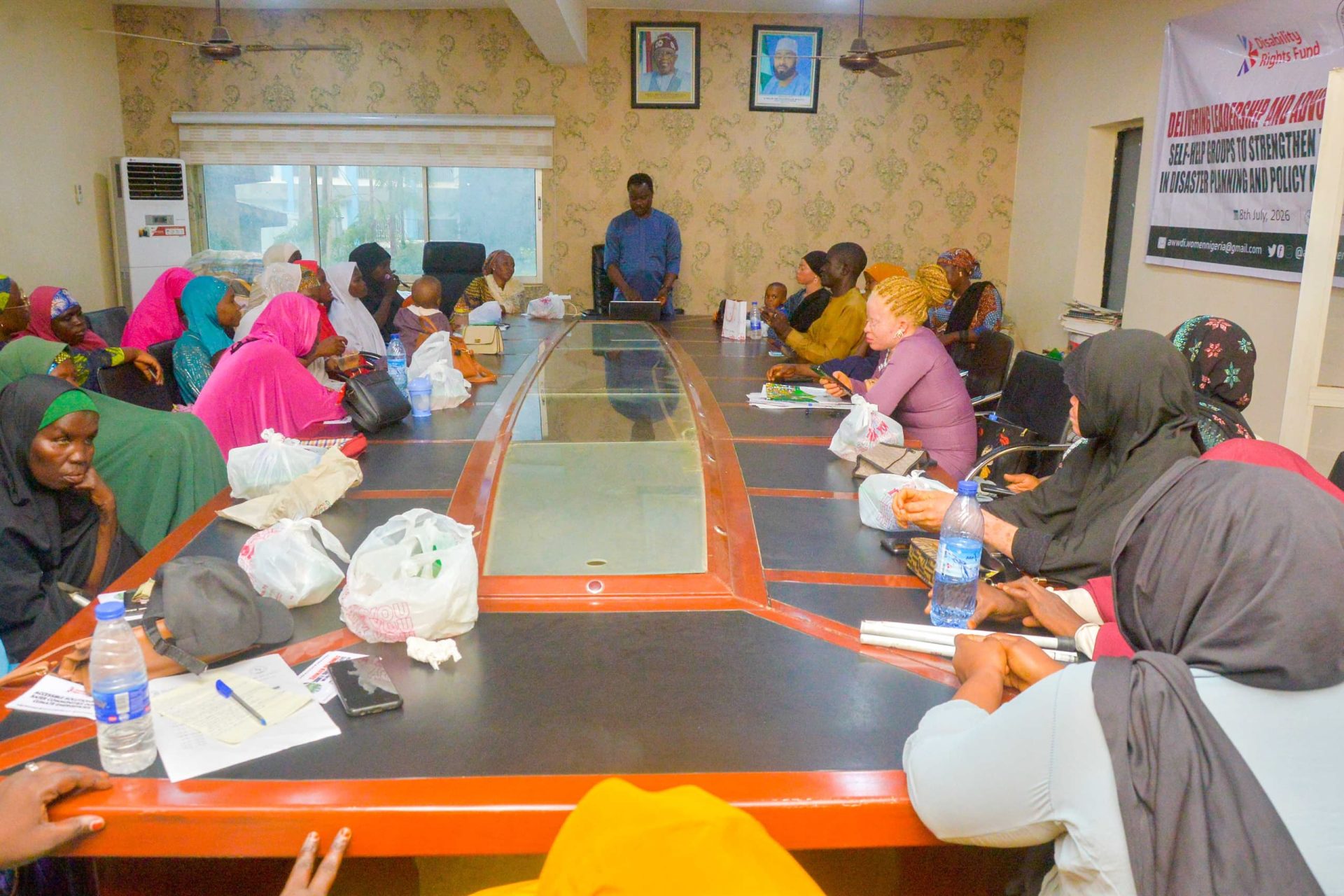
In a significant step towards promoting disability-inclusive climate action, AWWDI recently organized a grassroots climate change preparedness and awareness programme for women and girls with disabilities in Niger State. The initiative aimed to strengthen participants’ understanding of climate change while building their capacity to prepare for disasters before they occur, respond appropriately during emergencies, and recover safely afterwards.
Leading the intervention was the Executive Director of AWWDI, Mrs. Patience Ogolo Dickson, who underscored the urgent need to include persons with disabilities at the centre of climate adaptation and disaster risk reduction efforts.
Speaking during the programme, Mrs. Dickson observed that climate change disproportionately affects vulnerable populations, especially women and girls with disabilities, who frequently encounter exclusion from early warning systems, evacuation processes, emergency shelters, healthcare services, and humanitarian interventions.
According to her, while climate disasters affect entire communities, persons with disabilities often experience greater risks because emergency response mechanisms are rarely designed to meet their unique needs.
She stressed that disability inclusion must move beyond policy statements to practical action, ensuring that women and girls with disabilities receive timely information, accessible emergency services, and meaningful opportunities to contribute to climate resilience initiatives.
“Climate action cannot be truly effective if persons with disabilities are excluded. Their voices, experiences, and perspectives are essential in designing inclusive and sustainable solutions that protect everyone,” she emphasized.
Throughout the training, participants received practical lessons on understanding climate change and its effects on communities. They were introduced to common disaster risks such as flooding, extreme heat, severe storms, and other weather-related emergencies increasingly affecting many parts of Nigeria.
The facilitators also guided participants on how to identify early warning signs before disasters occur, prepare household emergency response plans, safeguard important documents, preserve essential medications, identify accessible evacuation routes, and seek assistance from emergency response agencies during crises.
Recognising that resilience extends beyond individual preparedness, the programme also encouraged participants to establish strong community support systems capable of providing assistance to persons with disabilities during emergencies. They were urged to actively engage in local climate adaptation initiatives and disaster risk reduction programmes within their communities.
Mrs. Dickson further challenged the participants to become advocates for climate resilience by sharing the knowledge they acquired with other women and girls with disabilities who could not attend the programme.
She noted that building resilient communities requires collective action, adding that empowering one woman with disability often translates into protecting entire families and communities during disasters.
The Executive Director also expressed appreciation to the Disability Rights Fund (DRF) for supporting the initiative, describing the partnership as an important contribution towards promoting disability-inclusive climate action across Nigeria.
Participants described the training as enlightening, practical, and timely.
Many said the programme had transformed their understanding of climate change and disaster preparedness while boosting their confidence to respond appropriately during emergencies.
They explained that beyond learning about environmental challenges, they had acquired practical life-saving skills that would help protect themselves, their families, and their communities whenever climate-related disasters occur.
Several participants pledged to replicate the knowledge within their local communities by educating other persons with disabilities, particularly women and girls who often lack access to such critical information.
The training forms part of AWWDI’s broader commitment to ensuring that women and girls with disabilities are fully included in climate action, disaster preparedness, humanitarian response, and sustainable development initiatives.
The organisation believes that strengthening the resilience of persons with disabilities is not only a matter of social justice but also a critical component of achieving safer, more inclusive, and climate-resilient communities.
As climate-related disasters continue to increase across Nigeria, experts have repeatedly warned that inclusive planning must become a priority. Without deliberate efforts to address the needs of persons with disabilities, thousands remain at greater risk during emergencies.
Through initiatives such as this, AWWDI is demonstrating that disability-inclusive climate action is both possible and necessary. By equipping women and girls with disabilities with practical knowledge, emergency preparedness skills, and opportunities for community leadership, the organisation is helping to bridge long-standing gaps in disaster preparedness while promoting equal participation in climate resilience efforts.
The programme was implemented with support from the Disability Rights Fund (DRF) as part of AWWDI’s ongoing commitment to advancing disability-inclusive climate action, strengthening community resilience, and amplifying the voices of women and girls with disabilities in climate adaptation and disaster risk reduction.
AWWDI also used the occasion to call on government institutions, humanitarian organisations, development partners, traditional rulers, community leaders, civil society organisations, and the private sector to integrate disability inclusion into climate change policies, disaster risk reduction strategies, emergency preparedness plans, and humanitarian response mechanisms.
According to the organisation, building a sustainable future requires ensuring that no one is left behind, particularly women and girls with disabilities, whose participation is essential in creating resilient communities capable of withstanding the growing impacts of climate change.


