

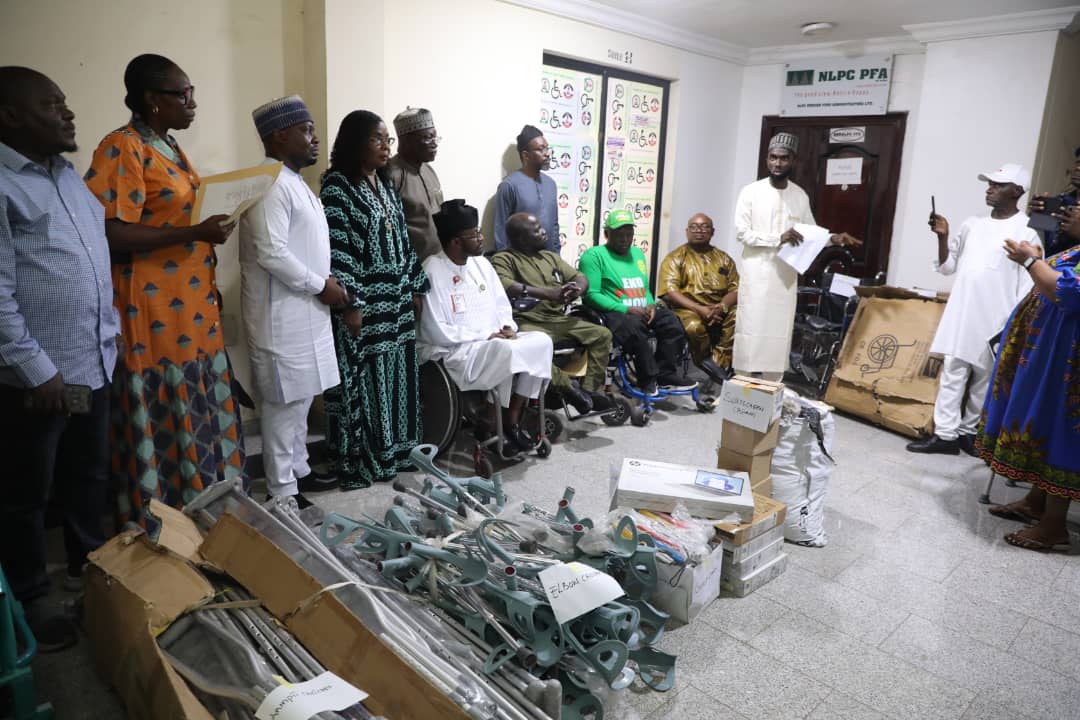
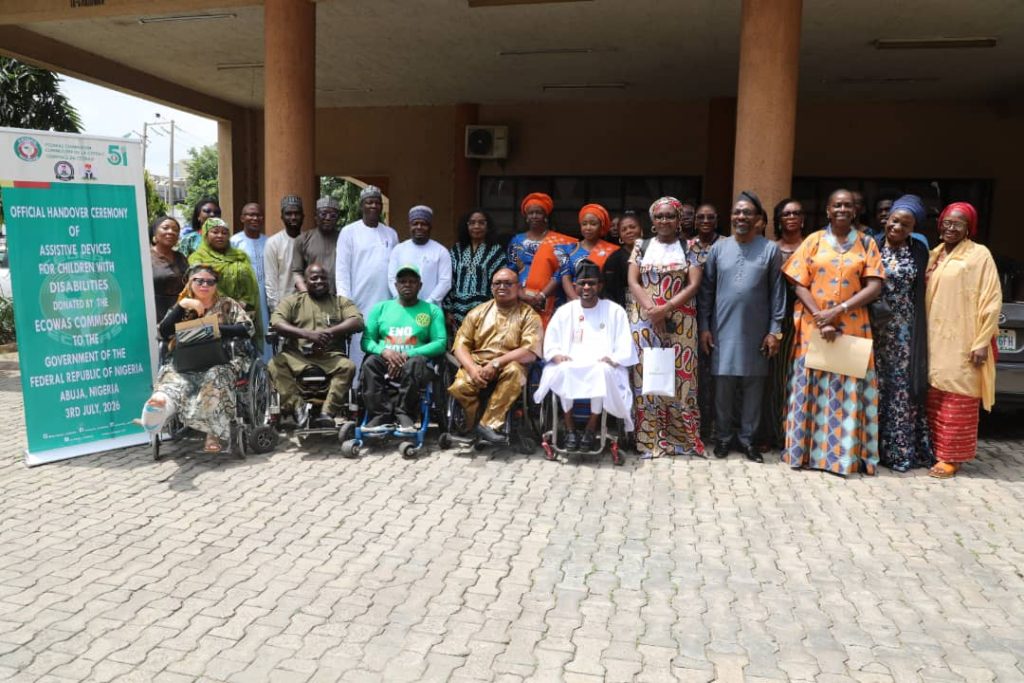
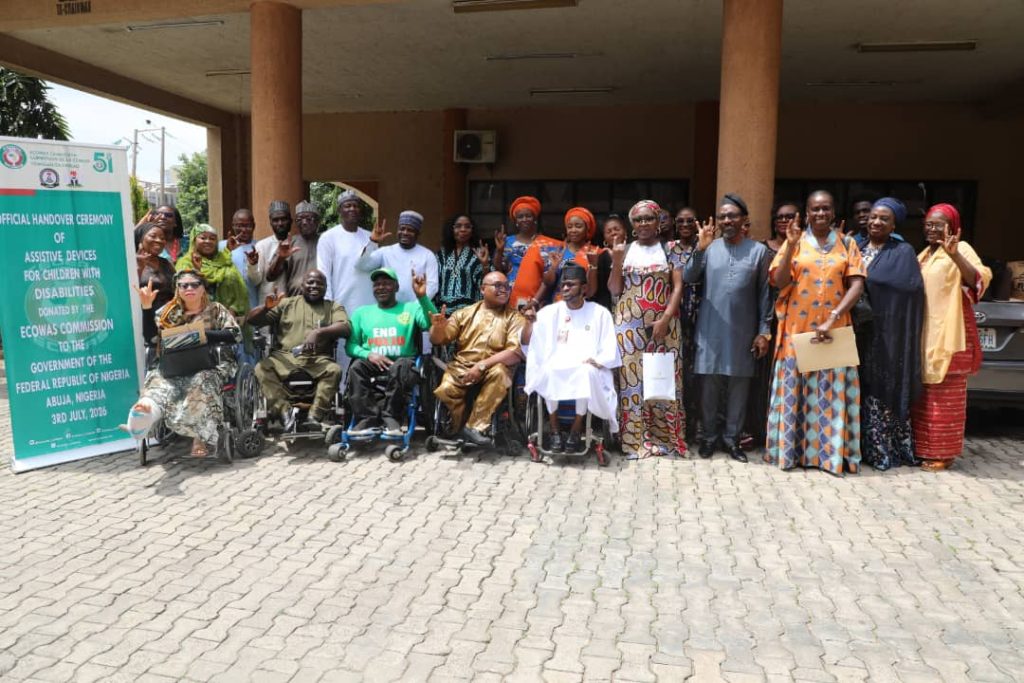
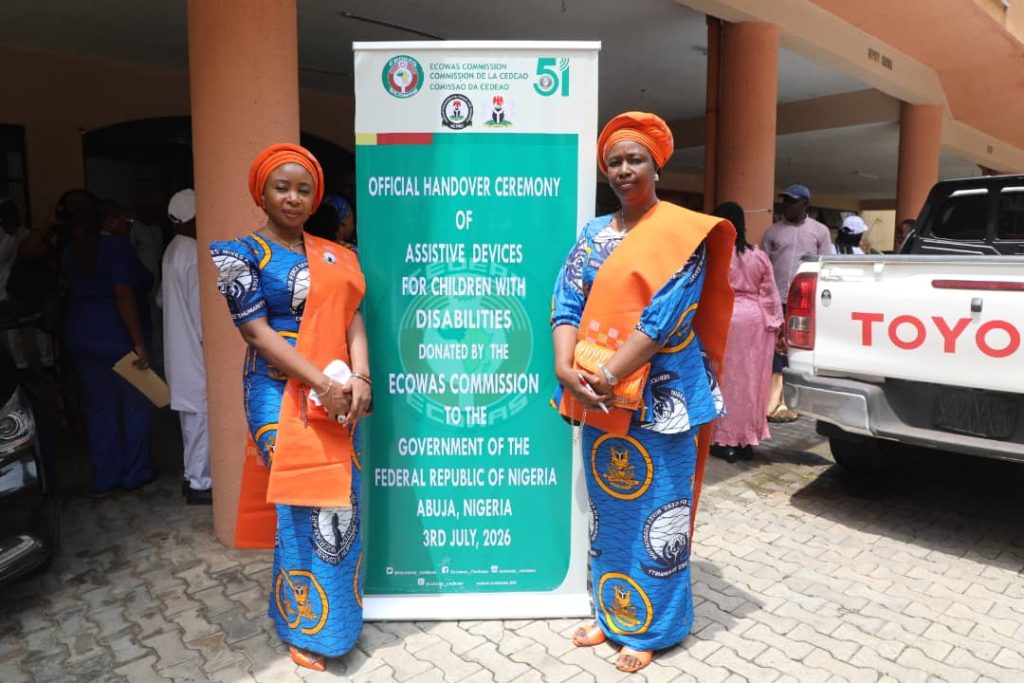
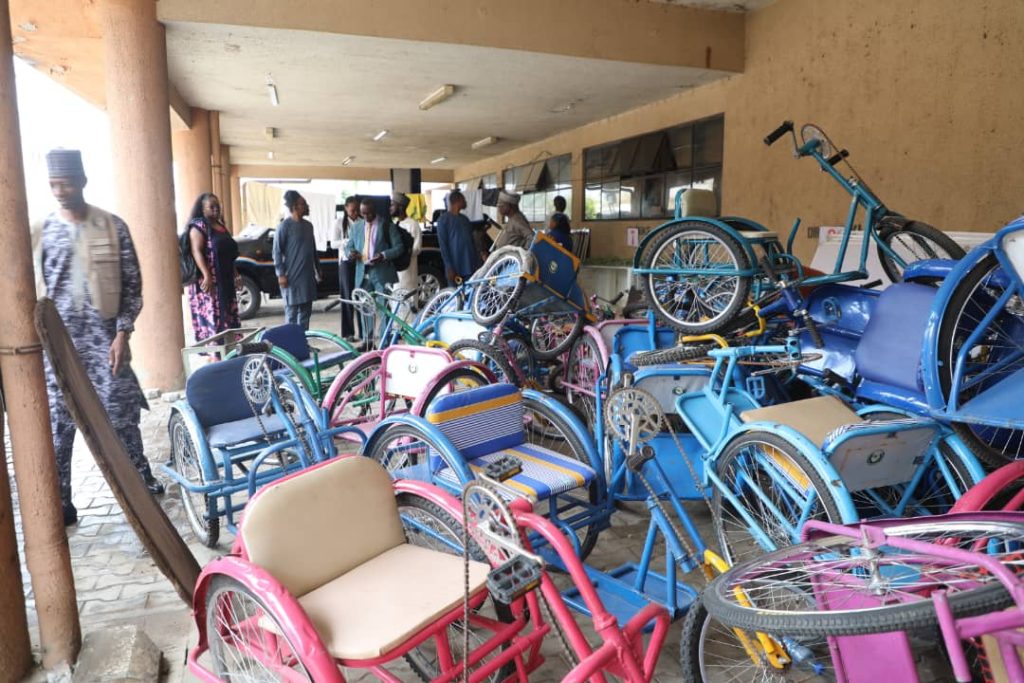
ABUJA – In a landmark demonstration of regional solidarity and commitment to disability inclusion, the Economic Community of West African States (ECOWAS) has officially handed over a wide range of assistive devices to the National Commission for Persons with Disabilities (NCPWD), providing renewed hope for children with disabilities across Nigeria.
The symbolic ceremony, held at the headquarters of the National Commission for Persons with Disabilities in Abuja, marked the implementation of the ECOWAS Regional Programme for the Provision of Assistive Devices to Children with Disabilities in West Africa, an initiative aimed at improving mobility, communication, education, and independent living for children with disabilities across the region.
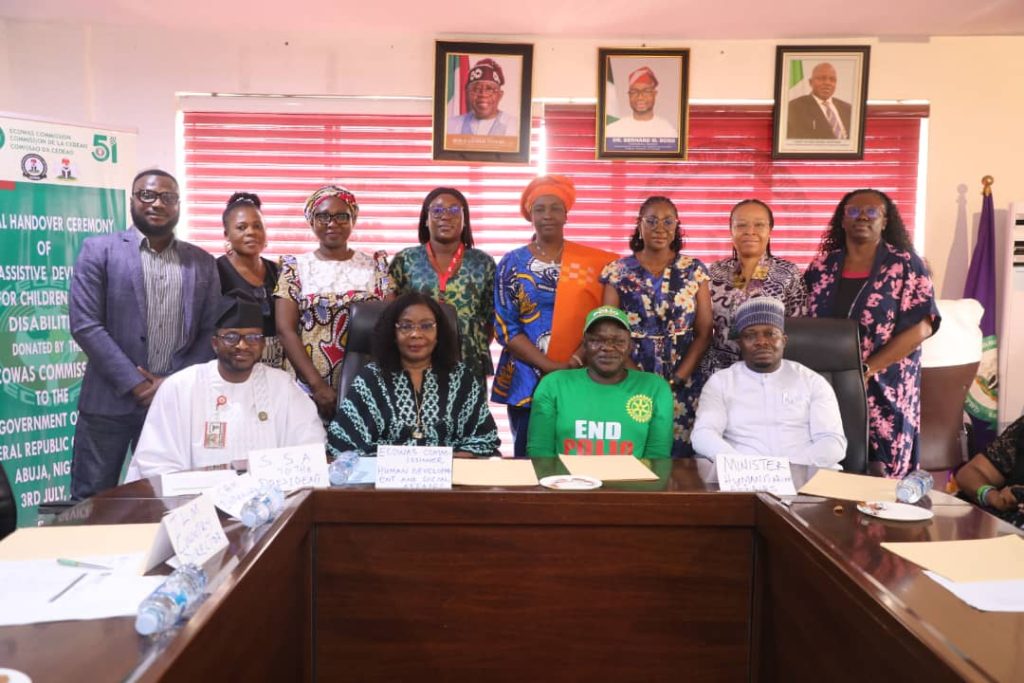
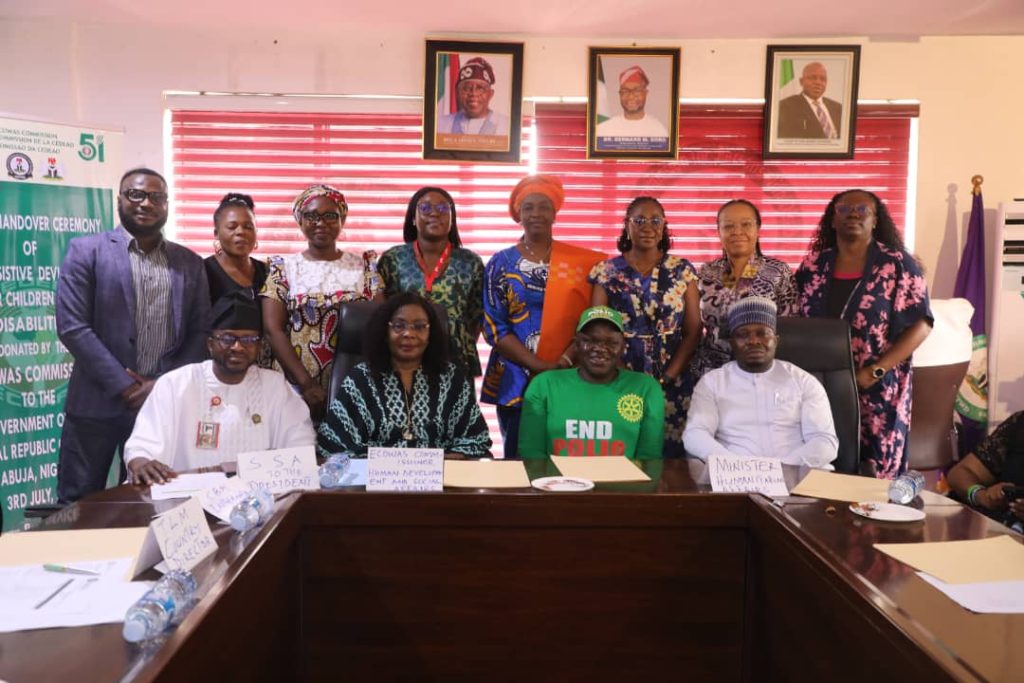
The event attracted senior government officials, development partners, representatives of Organizations of Persons with Disabilities (OPDs), healthcare professionals, rehabilitation experts, and disability advocates, all united by a shared commitment to ensuring that no child with a disability is left behind.
Receiving the donated assistive devices on behalf of the Federal Government, the Executive Secretary of the National Commission for Persons with Disabilities, Hon. Ayuba Burki Gufwan, described the occasion as far more than a ceremonial handover.
According to him, it represents a collective promise to restore hope, dignity, and opportunity to children with disabilities whose aspirations are often limited not by their impairments but by the absence of essential support.
“Today is a reaffirmation of our collective commitment to ensuring that no child with a disability is left behind,” Hon. Gufwan declared.
He expressed profound appreciation to the ECOWAS Commission for what he described as a visionary investment in disability inclusion, noting that the donation reflects the shared commitment of ECOWAS and the Federal Government of Nigeria to advancing equality, accessibility, participation, and human dignity for persons with disabilities.
Hon. Gufwan drew attention to the enormous unmet need for assistive technology, citing findings from the World Health Organization (WHO) and UNICEF Global Report on Assistive Technology, which revealed that nine out of every ten people worldwide who require assistive technology do not have access to it.
He noted that the situation in Nigeria remains equally challenging, with more than 26 million persons with disabilities requiring one form of assistive technology or another, while the available supply falls far short of existing demand.
For many children, he explained, access to assistive devices determines whether they attend school, participate in community life, or remain isolated.
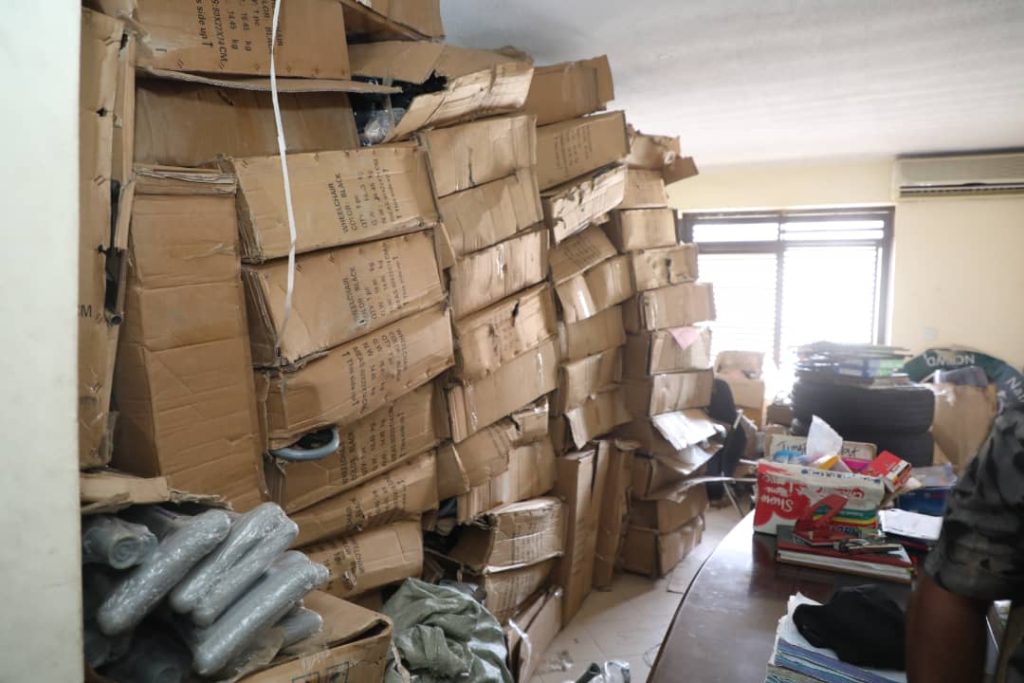
“Each wheelchair, walking aid, standing frame, communication device, and digital tool presented today carries the power to transform lives,” he said.
“For a child, an assistive device is not merely equipment—it is a gateway to education, independence, participation, confidence, dignity, and hope.”
The Executive Secretary emphasized that achieving meaningful disability inclusion requires collective responsibility beyond government intervention.
He therefore called on development partners, healthcare institutions, civil society organizations, the private sector, Organizations of Persons with Disabilities, caregivers, teachers, and rehabilitation professionals to work together to ensure proper distribution, maintenance, follow-up services, and sustainable access to assistive technology across Nigeria.
Representing the Honourable Minister of Humanitarian Affairs and Poverty Reduction, the Ministry’s Senior Technical Adviser on Humanitarian Affairs, Hon. Daniel Dung Dalyop, reaffirmed the Federal Government’s unwavering commitment to protecting the rights, welfare, and dignity of persons with disabilities.
He described the donation as more than a humanitarian gesture, explaining that it aligns with the Ministry’s integrated strategy that combines humanitarian response, social protection, poverty reduction, and inclusive development.
“Persons with disabilities often face barriers not because of their conditions, but because society fails to provide the support and opportunities they require,” Dalyop stated.
“This ceremony is more than a formal exchange of equipment. These assistive devices represent dignity restored, independence regained, opportunities reopened, and dreams revived.”
He commended ECOWAS for demonstrating practical regional solidarity and urged the National Commission for Persons with Disabilities to ensure transparent, accountable, and equitable distribution of the donated devices to beneficiaries across the country.
He further encouraged development partners to deepen investments in disability-inclusive programmes and expand support for assistive technology initiatives capable of improving the quality of life for millions of Nigerians living with disabilities.
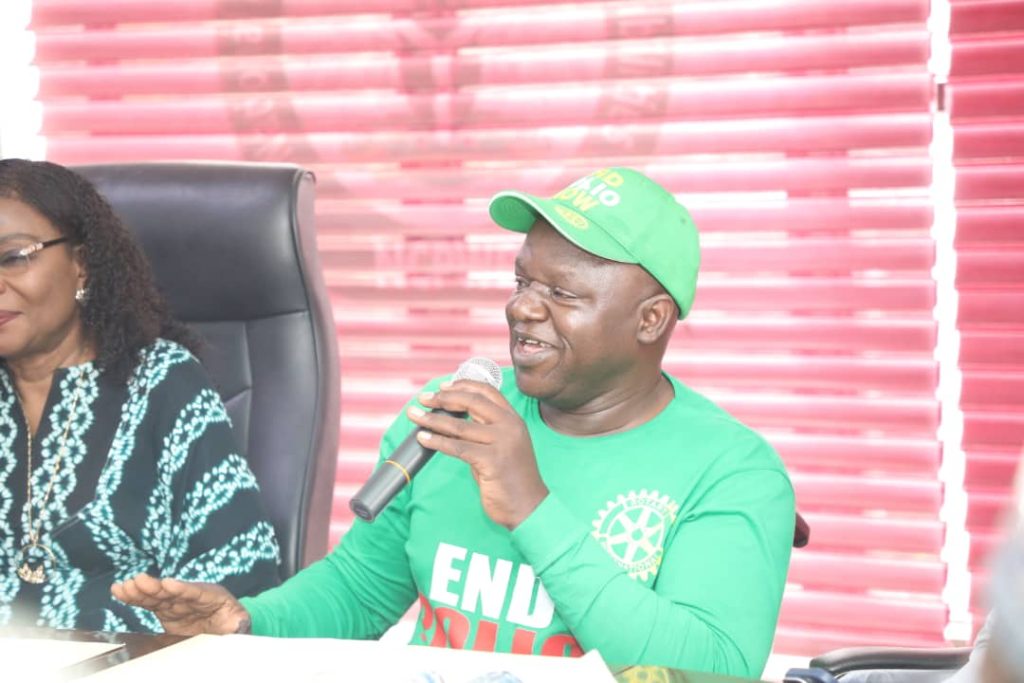
Speaking on behalf of ECOWAS, the Commissioner for Human Development and Social Affairs, Prof. Fatou Sow Sarr, disclosed that the regional programme emerged from a comprehensive disability inclusion study conducted across West Africa in 2024.
According to her, the assessment exposed alarming shortages in access to assistive technology, particularly among children with disabilities, many of whom remain excluded from education, healthcare, communication, and social participation due to the absence of appropriate devices.
She noted that globally, approximately 240 million children live with disabilities, while nearly 15 percent of children aged between 0 and 17 years in West and Central Africa have one form of disability, making targeted interventions both urgent and necessary.
Prof. Sarr explained that the ECOWAS initiative forms part of the broader ECOWAS Vision 2050, which seeks to build a peaceful, prosperous, and fully integrated West African community founded on inclusive development, respect for human rights, and strong institutions.
She further emphasized that the programme is anchored on the United Nations Convention on the Rights of Persons with Disabilities (UNCRPD), which recognizes accessibility as a fundamental human right and obliges governments to remove barriers preventing persons with disabilities from participating fully in society.
Providing additional insight into the programme, ECOWAS officials revealed that Nigeria and Togo were selected as the first beneficiary countries after extensive consultations with governments and organizations of persons with disabilities across the region.
They disclosed that future phases of the programme will focus on strengthening disability data systems to support evidence-based policymaking, promoting local production of affordable assistive technology through strategic partnerships, and expanding similar interventions to more ECOWAS member states.
Also lending his voice, the Senior Special Assistant to the President on Special Needs and Equal Opportunities, Hon. Mohammed Abba Isa, applauded ECOWAS for demonstrating unwavering commitment to empowering persons with disabilities in Nigeria.
He reaffirmed the commitment of President Bola Ahmed Tinubu’s administration to advancing disability rights through the effective implementation of the Discrimination Against Persons with Disabilities (Prohibition) Act, 2018, while commending the leadership of Hon. Ayuba Burki Gufwan for building strategic partnerships that continue to attract international support for disability inclusion.
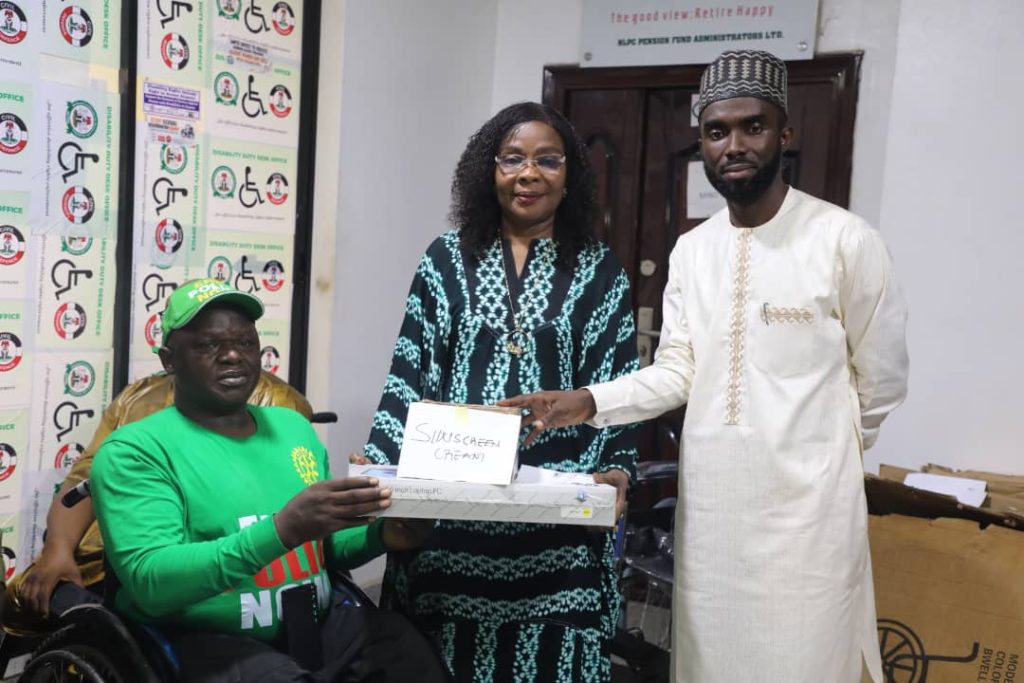
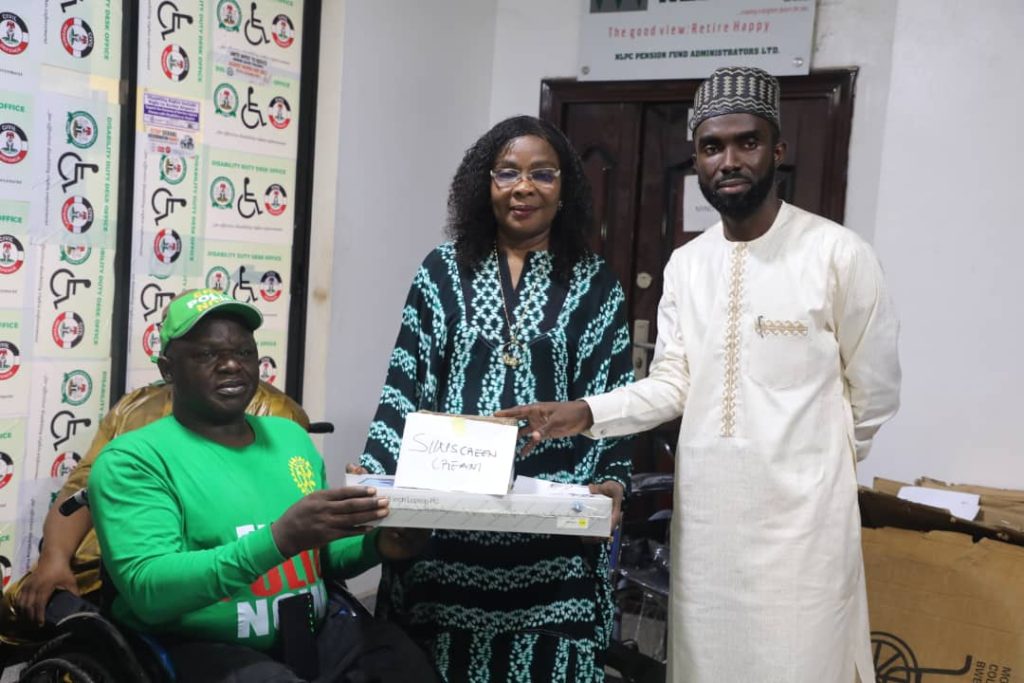
One of the high points of the ceremony was the formal presentation of the assistive devices by Prof. Fatou Sow Sarr to the National Commission for Persons with Disabilities, symbolizing ECOWAS’ commitment to promoting equal opportunities for children with disabilities across West Africa.
Participants also witnessed the presentation and inspection of the User Guide on Assistive Technology, led by Dr. Ismail Idris, Head of the Assistive Devices and Technology Unit of the NCPWD, who highlighted the importance of proper utilization, maintenance, and user education in maximizing the impact of assistive technology.
As Nigeria continues to pursue greater inclusion for persons with disabilities, stakeholders believe the ECOWAS-supported initiative represents a significant milestone in ensuring that children with disabilities are equipped not only with assistive devices but also with the opportunities, confidence, and independence they need to thrive.
For many families, the donated equipment symbolizes more than mobility or communication—it represents renewed hope, restored dignity, and a future where every child, regardless of disability, can participate fully in society and realize their full potential.
Click the link below to join our WhatsApp channel


