

By Our Correspondent
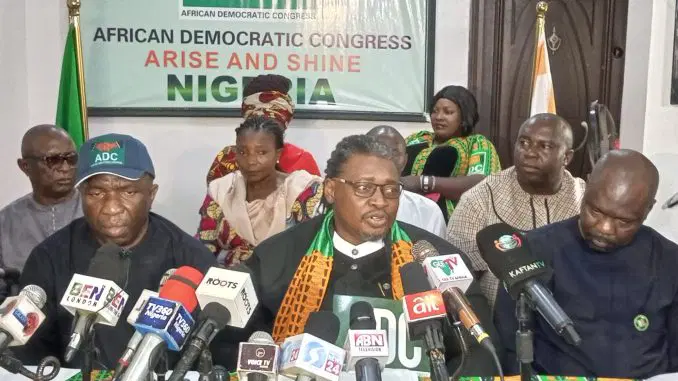
As Nigeria commemorates Democracy Day and reflects on three years of President Bola Ahmed Tinubu’s administration, the National Leader of Persons With Disabilities (PWDs) in the African Democratic Congress (ADC), Dr. Chike Okogwu, has delivered a powerful assessment of the state of disability inclusion in the country, declaring that democracy remains incomplete as long as millions of Nigerians living with disabilities continue to be excluded from the benefits of governance.
In a strongly worded Democracy Day statement titled “Democracy Without Access Is Democracy Denied,” Okogwu lamented what he described as the persistent marginalization of persons with disabilities despite years of democratic rule, warning that the true test of democracy is not measured by political speeches or election victories but by how effectively governments improve the lives of their most vulnerable citizens.
According to him, while Nigeria continues to celebrate democratic milestones, millions of persons with disabilities still encounter daily barriers in accessing public infrastructure, healthcare services, employment opportunities, transportation systems, quality education, and economic empowerment programmes.
“Democracy cannot be said to be thriving when a significant segment of the population remains excluded from participating fully in national life,” he stated.
He emphasized that accessibility remains one of the greatest indicators of whether democracy is working for ordinary citizens.
“If a wheelchair user cannot access a public building, democracy has failed. If a blind graduate cannot secure employment because of discrimination, democracy has failed. If a deaf woman cannot access healthcare because there is no interpreter, democracy has failed,” Okogwu declared.
Hunger, Inflation Hitting PWDs Harder
The ADC disability leader identified the rising cost of living and widespread hunger as among the gravest challenges confronting persons with disabilities across the country.
According to him, inflation and economic hardship have had a disproportionate impact on the disability community, many of whom rely on caregivers, family support, small-scale businesses, or limited social assistance programmes for survival.
He noted that increasing food prices, transportation costs, medical expenses, and the cost of assistive devices have pushed many persons with disabilities deeper into poverty.
“Many members of our community are struggling to survive. Some are forced to live on one meal a day because they simply cannot afford basic necessities,” he said.
Insecurity Deepens Vulnerability
Beyond economic hardship, Okogwu expressed concern over the worsening security situation in parts of the country, arguing that persons with disabilities often face unique and heightened risks during violent attacks, kidnappings, and displacement crises.
He noted that emergency response mechanisms frequently overlook the needs of persons with disabilities, while many internally displaced persons (IDP) camps remain inaccessible and ill-equipped to provide disability-inclusive services.
According to him, vulnerable citizens with mobility, visual, hearing, or intellectual impairments often face greater challenges escaping danger during emergencies and accessing humanitarian support afterwards.
“The Tragedy Is Wasted Potential”
Speaking on unemployment, Okogwu described the exclusion of qualified persons with disabilities from the labour market as a national tragedy.
He argued that discriminatory recruitment practices, inaccessible application processes, and societal prejudice continue to deny many competent Nigerians with disabilities the opportunity to contribute meaningfully to national development.
“The tragedy is not unemployment alone; the tragedy is wasted potential,” he stated.
He maintained that thousands of highly educated and skilled persons with disabilities remain unemployed, not because they lack qualifications, but because employers continue to view disability through the lens of limitation rather than capability.
Electricity Crisis Affecting Independence
The ADC chieftain also highlighted the impact of Nigeria’s persistent electricity challenges on persons with disabilities.
According to him, access to reliable power is not merely a convenience but a matter of independence, dignity, and survival for many people who rely on electric wheelchairs, assistive technologies, communication devices, and other essential medical equipment.
Without stable electricity, he said, many persons with disabilities are unable to work, communicate effectively, or live independently.
Healthcare Still Largely Inaccessible
Okogwu described healthcare as one of the most neglected sectors affecting persons with disabilities in Nigeria.
He pointed to inaccessible hospital facilities, inadequate rehabilitation services, high costs of assistive devices, shortages of sign language interpreters, and insufficient disability-sensitive healthcare policies as major barriers preventing many from receiving quality medical care.
He stressed that access to healthcare should never depend on whether a person has a disability.
Transportation and Aviation Accessibility Under Scrutiny
The ADC disability leader also criticized the state of transportation accessibility across the country, saying many persons with disabilities continue to face enormous challenges moving from one place to another.
He argued that inaccessible buses, poorly designed transport terminals, and inadequate support services continue to limit mobility and economic participation.
While acknowledging efforts by Aviation Minister Festus Keyamo and the Nigerian Civil Aviation Authority to improve accessibility within the aviation sector, he called on the Federal Airports Authority of Nigeria to accelerate the provision of disability-friendly infrastructure and services across airports nationwide.
Digital Revolution Must Not Leave PWDs Behind
As government services, commerce, education, and communication increasingly migrate online, Okogwu warned that Nigeria risks creating a new form of exclusion if digital accessibility is ignored.
He stressed the importance of ensuring that websites, mobile applications, digital learning platforms, and public online services are designed to accommodate persons with visual, hearing, and other disabilities.
“The digital future must be inclusive,” he said.
Disability Act Yet To Deliver Full Promise
Reflecting on concerns he raised in a 2022 article ahead of the 2023 general elections, Okogwu expressed disappointment that many disability-related issues remain unresolved years later.
Although he acknowledged the significance of the disability law as a landmark achievement, he argued that implementation remains slow and insufficient.
According to him, legislation alone cannot transform lives unless governments demonstrate the political will to enforce and implement its provisions.
“Laws are important when implementation is transformational. History does not remember governments for the laws they sign; it remembers governments for the lives they change,” he stated.
ADC Unveils Inclusion-Focused Policy Agenda
As part of what he described as the ADC’s Social Protection and Inclusion Agenda, Okogwu unveiled a series of policy proposals aimed at improving the welfare of persons with disabilities and other vulnerable Nigerians.
The proposals include the establishment of a National Social Protection Act, targeted disability grants, emergency food support programmes during economic crises, stronger enforcement of accessibility standards, disability-inclusive healthcare reforms, employment incentives for employers, accessible transportation systems, digital accessibility measures, and disability-sensitive security planning.
According to him, the ADC believes that national development cannot be achieved while millions of citizens remain excluded from opportunities and public services.
“We Are Demanding Justice, Not Charity”
Calling on government institutions, political parties, civil society organisations, and the private sector to move beyond symbolic commitments, Okogwu urged stakeholders to embrace policies that guarantee equal opportunities for all Nigerians.
He emphasized that persons with disabilities are not seeking sympathy but demanding their constitutional rights as citizens.
“The disability community is not asking for pity. We are demanding participation. We are not seeking charity. We are demanding justice. We are not requesting special treatment. We are demanding equal opportunity,” he said.
Okogwu maintained that Nigeria’s estimated 30 million persons with disabilities represent one of the country’s most underutilized human resources and could significantly contribute to economic growth, innovation, and national development if provided with the necessary support and opportunities.
As Nigeria celebrates another Democracy Day, he challenged leaders at all levels to ensure that democratic governance translates into meaningful improvements in the lives of vulnerable citizens.
“A nation is not judged by how it treats its strongest citizens. A nation is judged by how it treats its weakest,” he declared.
He concluded by insisting that until persons with disabilities are fully included in governance, development, and public life, Nigeria’s democratic journey remains unfinished and its democratic promise unfulfilled.
Click the link below to join our WhatsApp channel


