

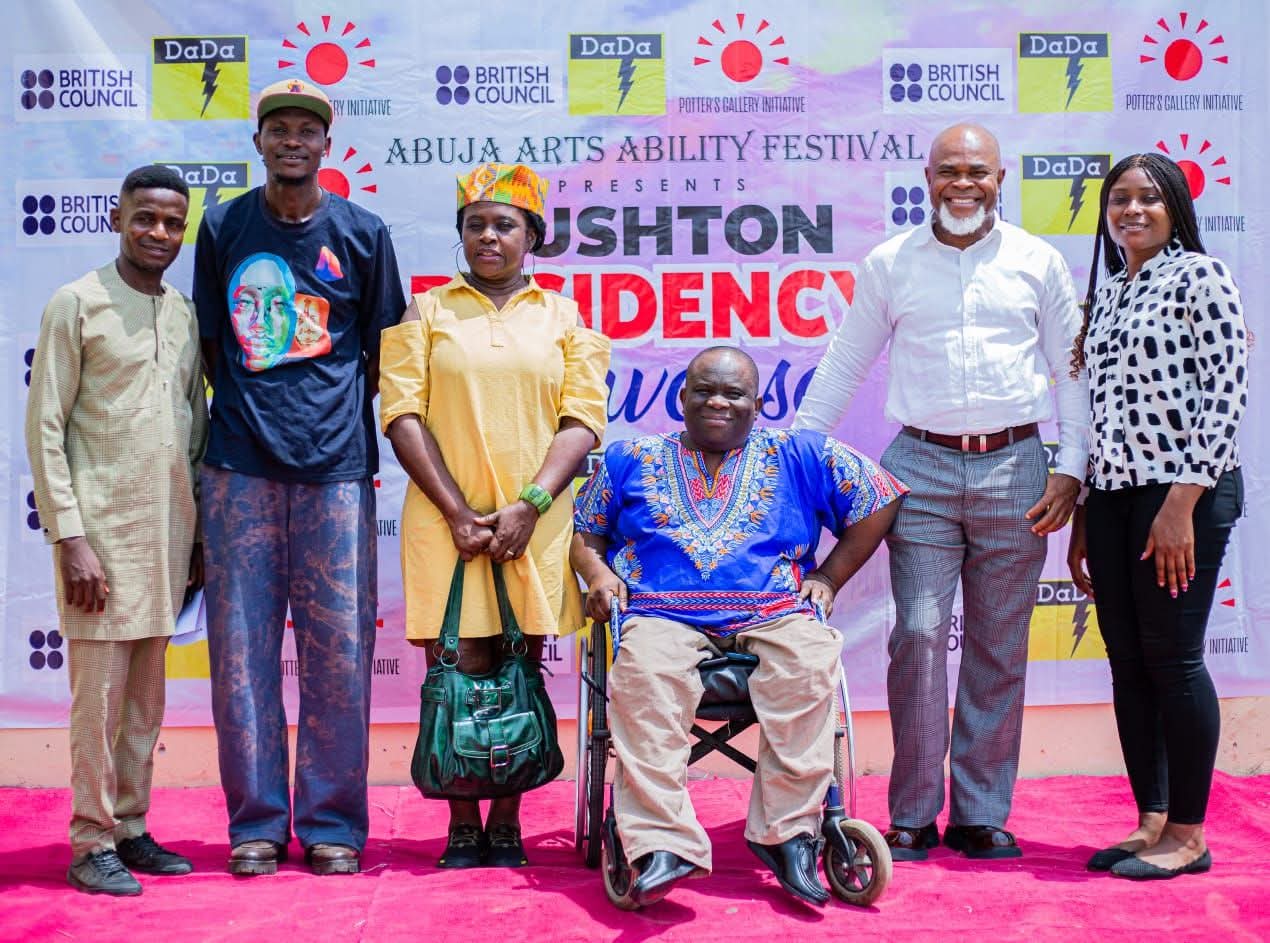
In a vibrant celebration of talent, resilience, and inclusion, the Potter’s Gallery Initiative on Monday lit up Abuja with an extraordinary exhibition featuring six remarkable artists with disabilities under its Rushton Residency Project.
The event, which drew art enthusiasts, stakeholders, and advocates, marked the grand finale of a months-long creative journey that began in late 2025. It stood as a powerful testament to the untapped potential within Nigeria’s disability community and the growing recognition of inclusive art spaces.
The Rushton Residency Project is a pioneering collaboration between Potter’s Gallery Initiative and the Dada Festival, supported by the British Council under its Festival Connect Strand. Designed as a cross-cultural exchange, the initiative brings together disability art spaces from Nigeria, Tanzania, and the United Kingdom to foster co-creation, learning, and global artistic dialogue.
Speaking to The Qualitative Magazine (TQM), the Executive Director of Potter’s Gallery Initiative, Donald Unanka, described the residency as a transformative platform that began last year with the aim of building bridges across continents.
According to him, six artists were carefully selected from Nigeria to participate in the program, engaging in months of intensive creative exploration, collaboration, and production.
“The goal is to learn from one another, share ideas and experiences, connect, partner, and collaborate to create meaningful art,” Unanka said.
The exhibition, which officially concluded on Monday, showcased a diverse range of artistic expressions developed by the participants since October 2025. From fashion design and choreography to spoken word and digital content creation, the event offered a rich tapestry of creativity that captivated audiences and sparked meaningful conversations.
Beyond the aesthetics, the exhibition underscored a deeper message—the urgent need to integrate persons with disabilities into Nigeria’s booming creative industry.
Unanka emphasized that the creative sector remains one of the largest contributors to Nigeria’s Gross Domestic Product (GDP), noting that inclusion of persons with disabilities is not just a moral imperative but an economic strategy.
“Engaging persons with disabilities in the creative industry is one of the surest ways to lift them out of poverty. It creates economic empowerment and ensures gainful employment,” he stated.
He further called on the government to invest deliberately in disability-inclusive creative initiatives, stressing that with the right support, Nigeria could produce more iconic figures like Cobhams Asuquo and Yinka Ayefele—both celebrated musicians who have thrived despite visual impairments.
“All they need is that little push from the government to expose their works to the world,” he added.
One of the standout voices at the exhibition was Eva Chisom Chukwuenyerem, a content creator who describes herself as a “virtual archivist.” Her work delves into cultural narratives surrounding disability across Nigeria’s diverse ethnic groups.
In her conversation with TQM, Eva explained that her current focus is on the Igbo culture, with plans to expand her research to other tribes. Through her project, she explores how persons with disabilities are perceived—and often excluded—within traditional societal frameworks.
She likened her concept to a “village square,” a central space for interaction, relationships, and community life.
“The village square is where everyone connects, builds relationships, and even finds love. But persons with disabilities are often excluded from this space,” she said.
Eva stressed that true inclusion must go beyond policies and be deeply rooted in cultural transformation.
“When disability inclusion is embedded in our culture, policies will become more effective and impactful,” she noted.
For fashion designer MaryJane Okeke, the residency served as a gateway to collaboration and growth. She highlighted how the program enabled her to connect with other creatives, including photographers who will now help amplify her work through visual storytelling.
Similarly, Jemima Angulu—a choreographer, dancer, teacher, and Director of The Krump Dance Studios and Dance for Impact Initiative—expressed excitement at witnessing the immense talent on display.
She particularly praised performances by Deaf dancers and other artists, describing them as “inspiring and exceptional.”
“This shows that talent knows no boundaries. Entertainers must intentionally include artists with disabilities in their productions,” Angulu urged.
She also called for more accessible venues and inclusive stages, stressing that physical barriers continue to limit participation for many artists with disabilities.
The event featured a dynamic lineup of performances and exhibitions, including a captivating Deaf dance presentation and a colorful fashion parade showcasing designs by MaryJane Okeke and other creatives.
As the curtains fell on the Rushton Residency exhibition, one message rang loud and clear: disability is not inability, and with the right platforms, artists with disabilities can redefine narratives, influence culture, and contribute significantly to national development.
The Potter’s Gallery Initiative, through this groundbreaking project, has not only showcased talent but has also ignited a broader conversation about inclusion, representation, and the future of Nigeria’s creative economy.
Click the link below to join our WhatsApp channel


