

By Chris Agbo,
Abuja — Despite remarkable progress in the fight against neglected tropical diseases (NTDs), the Federal Government has revealed that an estimated 165 million Nigerians still require preventive chemotherapy for at least one NTD, underscoring the enormous public health challenge facing the country.
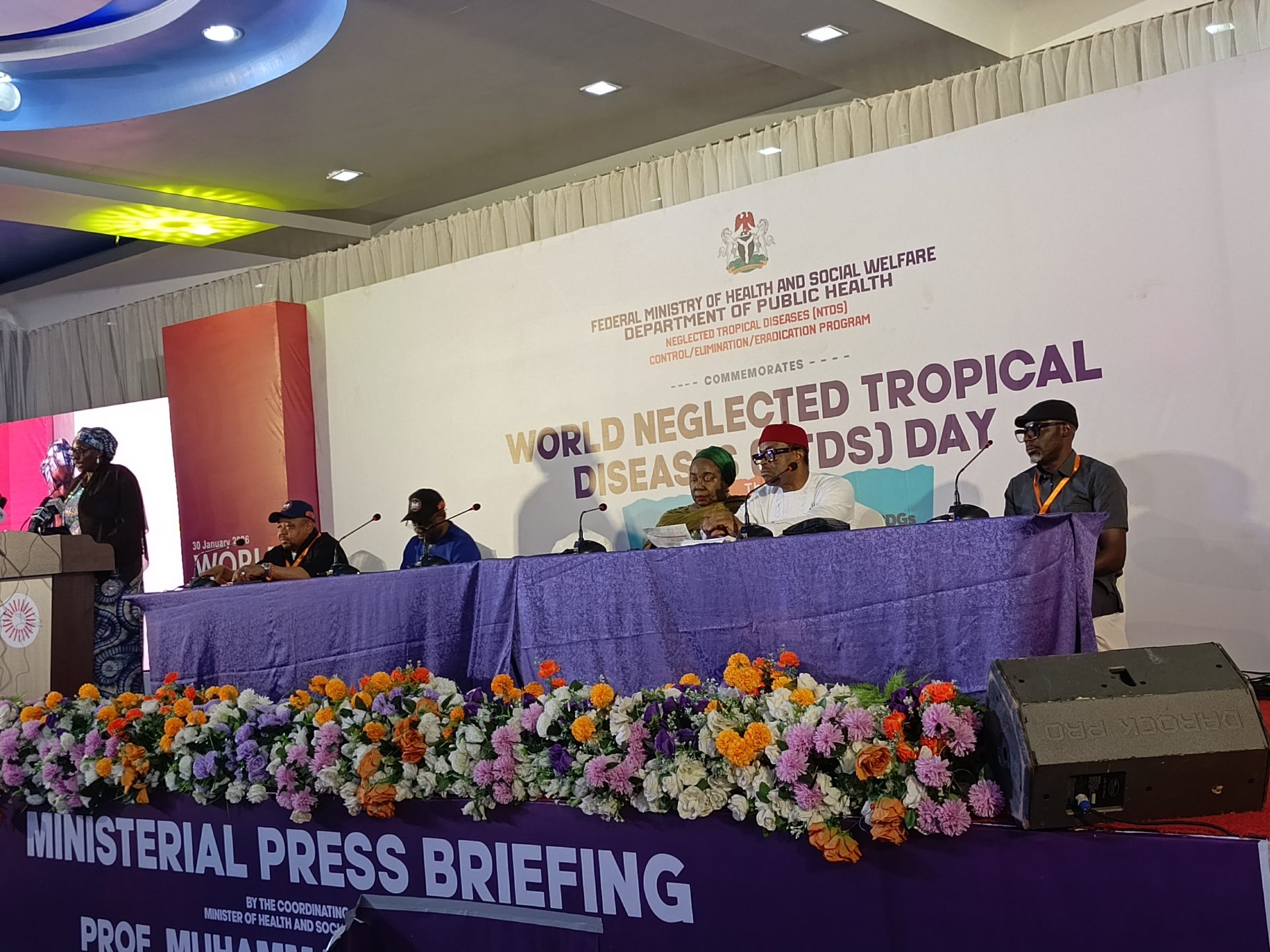
The disclosure was made on Thursday in Abuja by the Minister of State for Health and Social Welfare, Dr. Iziaq Kunle Salako, during the 2026 World Neglected Tropical Diseases Day and World Leprosy Day commemoration. The event brought together government officials, development partners, health experts, and advocates committed to ending diseases that disproportionately affect the poorest and most vulnerable populations.
Nigeria Bears a Heavy Share of Africa’s NTD Burden
Dr. Salako painted a sobering global and continental picture, noting that more than one billion people worldwide are affected by NTDs across 149 countries, with Africa carrying nearly half of the global burden.
“Nigeria alone accounts for about 25 per cent of Africa’s NTD cases,” he said. “Over 200 million Nigerians are at risk of one neglected tropical disease or the other, and 165 million people currently need preventive chemotherapy.”
According to the minister, the scale of the problem demands sustained political commitment, increased domestic funding, strong partnerships, and coordinated action across all levels of government.
World NTD Day: A Moment to Reflect, Act, and Renew Commitments
He explained that World NTD Day, observed annually, is more than a ceremonial event.
“It provides an opportunity to renew public awareness, mobilise resources, celebrate our achievements, confront persistent challenges, and advocate for stronger prevention, control, and elimination efforts,” Salako said.
This year’s commemoration was jointly observed with World Leprosy Day under the theme:
“Leprosy is Curable, The Real Challenge is Stigma.”
While emphasising that leprosy can be completely cured with timely diagnosis and treatment, the minister stressed that stigma and discrimination remain the greatest obstacles to elimination.
“Fear, misinformation, and social exclusion prevent people from seeking care early, even when effective treatment is available,” he noted.
Anchored on Global Commitments, Driven by National Action
Salako said Nigeria’s NTD response is guided by key global frameworks, including the London Declaration on NTDs (2013), the Kigali Declaration (2019), and the World Health Organisation (WHO) NTD Roadmap 2021–2030. These frameworks emphasise government ownership, accountability, service integration, sustainable financing, and strong political will.
Despite the scale of unmet needs, the minister highlighted significant national achievements recorded in recent years.
Among the most notable is progress against lymphatic filariasis, commonly known as elephantiasis.
“About 119.9 million Nigerians no longer require treatment for lymphatic filariasis, while onchocerciasis transmission—river blindness—has been interrupted in 10 states,” Salako announced.
He added that 59 million Nigerians no longer need ivermectin treatment for onchocerciasis as of December 2025, marking a major milestone in disease control.
Trachoma, Rabies, Snakebite: Gains Across Multiple Fronts
Nigeria has also made significant progress in tackling trachoma, a leading infectious cause of blindness.
“We have recorded an 89 per cent reduction in trachoma prevalence among at-risk populations, with treatment stopped in most endemic local government areas,” the minister said.
Other achievements include the procurement and nationwide distribution of anti-rabies vaccines and anti-snake venom, conditions that often cause preventable deaths in rural and underserved communities.
Salako further noted that Nigeria has digitised NTD data systems and integrated NTD interventions with other health programmes, including malaria control, routine immunisation, nutrition services, and measles-rubella campaigns — steps aimed at improving efficiency, reducing costs, and reaching more people.
Renewed Push Against Leprosy and Stigma
On leprosy, the minister said the country has intensified efforts in early case detection, contact tracing, and expanded the use of single-dose rifampicin for post-exposure prophylaxis in more states.
“We are ensuring uninterrupted access to free multidrug therapy nationwide, leveraging digital tools for targeted interventions, and involving persons affected by leprosy in community engagement to help reduce stigma and discrimination,” he said.
‘NTDs Are Diseases of Inequality’ — Permanent Secretary
Earlier in her remarks, the Permanent Secretary of the Federal Ministry of Health and Social Welfare, Daju Kachollom, described NTDs as more than medical conditions.
“These are diseases driven not just by poverty, but by inequality, weak health systems, and insufficient political attention,” she said.
Kachollom noted that Nigeria has aligned its National NTD Elimination Roadmap with the WHO framework, resulting in milestones such as 10 states interrupting river blindness transmission and 33 million people no longer requiring mass drug administration for trachoma.
She urged state governments to increase domestic funding, integrate NTD services into primary healthcare systems, and maintain strong collaboration with development partners to sustain progress.
A Long Road Ahead, But Hope in Progress
As Nigeria celebrates its achievements, health leaders warn that the journey toward eliminating NTDs is far from over. With 165 million people still needing treatment, experts agree that only consistent investment, strong leadership, community engagement, and the fight against stigma will ensure that no Nigerian is left behind.
World NTD Day 2026, they say, is both a celebration of progress and a powerful reminder that ending neglected tropical diseases is not just a health goal — it is a matter of dignity, equity, and social justice.
Click the link below to join our WhatsApp channel


