

Ibadan | Sept. 26, 2025
Calls for a more inclusive approach to Nigeria’s Sexual and Reproductive Health and Rights (SRHR) policy took centre stage in Ibadan, as disability rights advocates, health experts, government officials, and civil society leaders demanded urgent reforms to close persistent gaps in implementation.
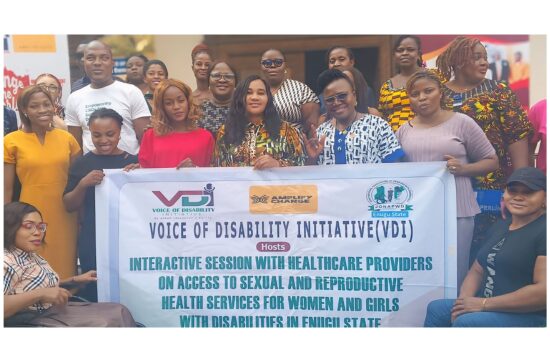
The appeal was made during a two-day stakeholders’ meeting and community consultation organized by the Voice of Disability Initiative (VDI), with support from Amplify for Change under the PAMOJA Project.
The workshop, held at Three Star Hotel, Ikolaba-Agodi GRA, Ibadan, was themed: “Driving Inclusive SRHR Policy for Persons with Disabilities – Our Rights, Our Voice, Our Future.” Participants said that despite Nigeria’s existing laws and ratification of key international commitments, women and girls with disabilities remain largely excluded from mainstream SRHR programmes.
“We Are Assets, Not Liabilities” – VDI
In her welcome address, Barr. Catherine Edeh, Executive Director of VDI, decried the widespread discrimination, cultural taboos, and ignorance that continue to marginalize persons with disabilities in health spaces.
“We are assets; we are not liabilities. Many of us have been silenced by cultural and religious taboos, and ignorance of our rights has worsened our situation,” she said.
“Mortality rates among persons with disabilities are very high. The embarrassment and discrimination we face in accessing sexual and reproductive health services inspired me to set up this initiative.”
Edeh emphasized that the workshop was designed to amplify the voices of women and girls with disabilities, ensuring they influence policy frameworks that directly affect their health and wellbeing.
Weak Enforcement Despite Existing Laws
Dr. Moriam Olaide Jagun, Executive Director of the Centre for Bridging Health Gaps (CBHGAPS) and facilitator of the session, noted that while Nigeria has made commitments by ratifying international conventions and enacting the Discrimination Against Persons with Disabilities (Prohibition) Act of 2018, enforcement has remained weak.
“When it comes to sexual and reproductive health for people with disabilities, what we have had so far are ad-hoc activities. This is why sensitization like this is crucial,” Jagun said.
“We must gather concerns directly from women and girls with disabilities, document them, and push for their inclusion in budgets and policies.”
She added that the meeting would produce practical outputs such as indicators for health facilities, communication strategies for health workers, and recommendations for low-cost government interventions.
Federal and National Agencies Commit to Action
Representing the Federal Ministry of Health and Social Welfare, Disability Desk Officer Mrs. Adaeze Ike assured participants that the government was working to mainstream disability concerns into national health programmes.
“We have established a Family Health Department to ensure information flows properly to all categories of Nigerians, including persons with disabilities,” she explained.
“This consultation will feed into our strategic action plan to guarantee that sexual and reproductive rights are inclusive and accessible.”
On her part, Patience Ogolo-Dickson, Head of Women and Gender at the National Commission for Persons with Disabilities (NCPWD), highlighted the need for grassroots engagement.
“Community-level awareness is crucial. Until the woman in the rural village with a disability feels safe and confident to walk into a clinic and access SRHR services without stigma, our work is incomplete,” she said.
“The Challenge Is Not the Absence of Laws”
Barr. Abayomi Ogundele, Oyo State Coordinator of the National Human Rights Commission, reminded participants that Nigeria already has a strong legal framework to protect the rights of persons with disabilities.
“The 2018 Disability Act is clear: discrimination against persons with disabilities is prohibited, and government institutions must ensure integration in education, health care, and social services. The challenge is not the absence of laws but ensuring these laws work in real life.”
This concern was echoed by Mrs. Zainab Mustapha, National Leader of the Joint National Association of Persons with Disabilities (JONAPWD), who warned that inconsistent enforcement continues to undermine progress.
“Some policies recognise our rights, but in practice, we still face discrimination. Until laws are fully implemented, we cannot say inclusion has been achieved,” she said.
Call to Translate Dialogue Into Action
Delivering a goodwill message, Barr. Ayodele Adekanbi, Director-General of the Oyo State Agency for Persons with Disabilities, commended VDI and its partners for leading the advocacy effort.
“This consultation is timely. I encourage all participants to tap into the deliberations and ensure that the voices of people with disabilities, especially women and girls, are translated into concrete actions.”
Next Steps: From Consultation to Policy
The workshop concluded with a clear message: Nigeria must urgently move beyond rhetoric to action. Participants resolved to produce practical recommendations that will influence government budgets, health policies, and facility-level practices, ensuring that women and girls with disabilities can access SRHR services without stigma or discrimination.
Stakeholders agreed that empowering women with disabilities to access SRHR services is not just a matter of rights, but a step toward building a healthier and more inclusive Nigeria.
As one participant noted, “Inclusion is not charity—it is justice, dignity, and the foundation for a stronger future.”
Follow the The Qualitative Magazine channel on WhatsApp: https://whatsapp.com/channel/0029VanfIB50wajpjGi3JJ1G


