

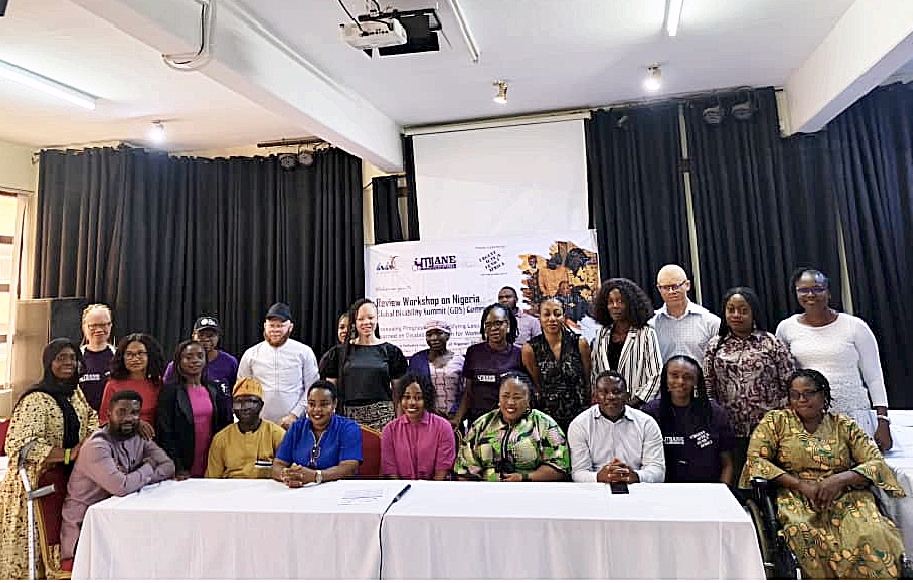
Abuja, Nigeria — July 30, 2025 — In what can only be described as a landmark moment for disability inclusion and gender justice in Nigeria, the Mimijane Foundation for Women and Children with Disabilities hosted a press conference in Abuja that brought together key voices across government, civil society, development institutions, media, and the disability rights movement. The event celebrated the successful implementation of a pioneering project dedicated to upholding the rights and improving the visibility of women and girls with disabilities across the country.
The event wasn’t just a celebration of past milestones—it was a declaration of a new phase in Nigeria’s disability rights advocacy, driven by a bold assertion that disability inclusion is not charity—it is justice.
From Summit to Street: Nigeria’s GDS Commitments Under the Spotlight
At the heart of the initiative is Nigeria’s participation in the Global Disability Summit (GDS), which took place in Berlin, Germany on April 2–3, 2025. The international summit brought together over 100 nations, alongside hundreds of disability-led organizations, development agencies, and civil society leaders. Participants adopted the Amman-Berlin Declaration and launched over 800 new commitments geared toward inclusive development and humanitarian systems.
Amb. Beatrice Mube, Executive Director of the Mimijane Foundation, emphasized that while Nigeria was among the countries that stood tall in making pledges at the GDS, it was imperative to move from promises to implementation.
“The true test lies in whether these commitments are reflected in the daily lives of the people who need them most—especially women and girls with disabilities, who continue to face double or even triple layers of discrimination,” Mube said in her opening remarks.
Feminist and Disability-Led: A Movement Rooted in Lived Experience
With the support of Urgent Action Fund–Africa, the Mimijane Foundation implemented the project in collaboration with four powerful women-led, disability-focused organizations:
- Disability Justice Initiative
- Hope Alive for Possibilities Initiative (HAPI)
- Family Centered Initiative for Challenged Persons (FACIP)
- Albinism Aid Center
Together, they formed a grassroots accountability consortium guided not just by data and frameworks, but by lived realities. The project took a bottom-up approach—putting the voices, experiences, and needs of women and girls with disabilities at the center of advocacy, monitoring, and solution-building.
Their joint mission? To track Nigeria’s Global Disability Summit commitments through a gender lens, highlight neglected disability-related issues, and hold all actors accountable to inclusive development.
The Four Pillars of Inclusive Transformation
According to Mercy Jovkyundan, Program Officer at Hope Alive Possibilities Initiative, the initiative rested on four key pillars that directly impact the lives, dignity, and rights of women and girls with disabilities:
1. Inclusive Education
The project called for education systems that embrace every learner. From advocating for wheelchair-accessible schools to pushing for inclusive curricula and teacher training, the initiative fought to ensure that no child is left behind in learning.
2. Sexual and Reproductive Health and Rights (SRHR)
Recognizing the intersection of gender, health, and disability, the campaign addressed persistent barriers in healthcare—from inaccessible facilities to widespread stigma. The project emphasized bodily autonomy, access to quality healthcare, and the right to comprehensive SRHR services.
3. Economic Empowerment
The initiative made it clear: disability is not incapacity. Through advocacy for vocational training, access to employment opportunities, and financial tools, the project aimed to break cycles of dependency and poverty for women with disabilities.
4. Disaggregated Data and Accountability
“We cannot plan what we do not measure,” organizers emphasized. They pushed for the collection and use of gender- and disability-disaggregated data as a critical tool for shaping inclusive policies, budgets, and implementation plans.
Project Achievements: From Advocacy to Impact
The project’s press conference served as a showcase for the significant progress made. According to organizers, the initiative delivered results that have already started reshaping the conversation around disability inclusion in Nigeria. Key achievements included:
- ✅ Over 30 GDS commitments reviewed and analyzed
- ✅ 4 policy and advocacy briefs developed on Inclusive Education, SRHR, Economic Empowerment, and Data/Accountability
- ✅ All briefs published in standard and simplified formats for accessibility and wider reach
- ✅ A robust project website launched — www.postgdsaction.org — serving as a 3-year knowledge hub
- ✅ Creation of an Online Monitoring & Evaluation (M\&E) tool to track real-time progress and foster transparency
- ✅ Production and dissemination of 12 storytelling features aired on radio, TV, and shared across digital platforms
- ✅ Digital campaigns reached over 50,000 people nationwide
- ✅ Strong and growing collaborations with government ministries, legislators, media outlets, Disabled Persons Organizations (DPOs), and development agencies
Technology for Transparency: A Game-Changer in Accountability
One of the initiative’s most innovative outputs was its online platform and reporting tool, built to track the progress of GDS commitments.
Cynthia Ukachi, who was instrumental in developing and promoting the tool, noted that technology must play a role in ensuring that government commitments move beyond bureaucratic pledges.
“We now have a tool that can provide the public with real-time insight into what’s happening with the GDS commitments. But this cannot succeed without the collaboration of all sectors—government, media, private sector, and civil society. We are calling on everyone to join disability rights advocates in ensuring these promises do not remain rhetorical, but are fully implemented—and implemented with a gender lens,” Ukachi said.
Shifting the Narrative: Storytelling for Social Change
Another standout aspect of the project was its powerful storytelling and awareness campaign. Departing from traditional narratives that paint persons with disabilities as passive recipients of aid, the campaign instead spotlighted their resilience, leadership, and strength.
Through interviews, skits, short videos, and social media storytelling, the voices of women with disabilities were elevated—not as victims, but as changemakers actively shaping Nigeria’s development.
What Comes Next: From Momentum to Movement
The Mimijane Foundation made it abundantly clear that the press conference was not a grand finale—but the beginning of a sustained movement for inclusion.
Next steps include:
- Driving the adoption of the M\&E tool by federal and state ministries and agencies
- Hosting periodic accountability forums between civil society and policymakers
- Advocating for inclusive budgeting informed by real-time data and grassroots input
- Continuing the use of storytelling as a tool for transformation
- Expanding local and international partnerships to sustain the impact
“We believe that change is possible—but it must be intentional, inclusive, and irreversible,” the Foundation emphasized.
A Movement Fueled by Partnership and Purpose
Gratitude flowed to Urgent Action Fund–Africa, whose feminist and flexible funding was described as a lifeline for grassroots-led innovation. The Foundation also acknowledged the tireless contributions of its partner organizations, media collaborators, consultants, and most importantly, the women and girls whose testimonies and advocacy fueled the project.
In her closing message, Amb. Beatrice Mube delivered a call that rang far beyond the walls of the conference hall:
“Let us not treat this as a conclusion, but as a movement. One where governments, development partners, civil society, media, and everyday Nigerians walk the path of inclusion—side by side with women and girls with disabilities. Because when they rise, we all rise.”
As the curtains closed on the Abuja event, one message echoed loudly: Nigeria’s journey toward inclusive development is no longer an ideal—it’s a responsibility. And thanks to the women of the Mimijane Foundation and its allies, that responsibility is finally being met with bold, unapologetic action.


