

DRAC urges communities, government and partners to sustain gains, confront harmful practices and strengthen accountability beyond project close-out
For women and girls with disabilities who continue to face discrimination, harmful practices and barriers to justice, the end of a project should not mean the end of protection, advocacy or accountability.
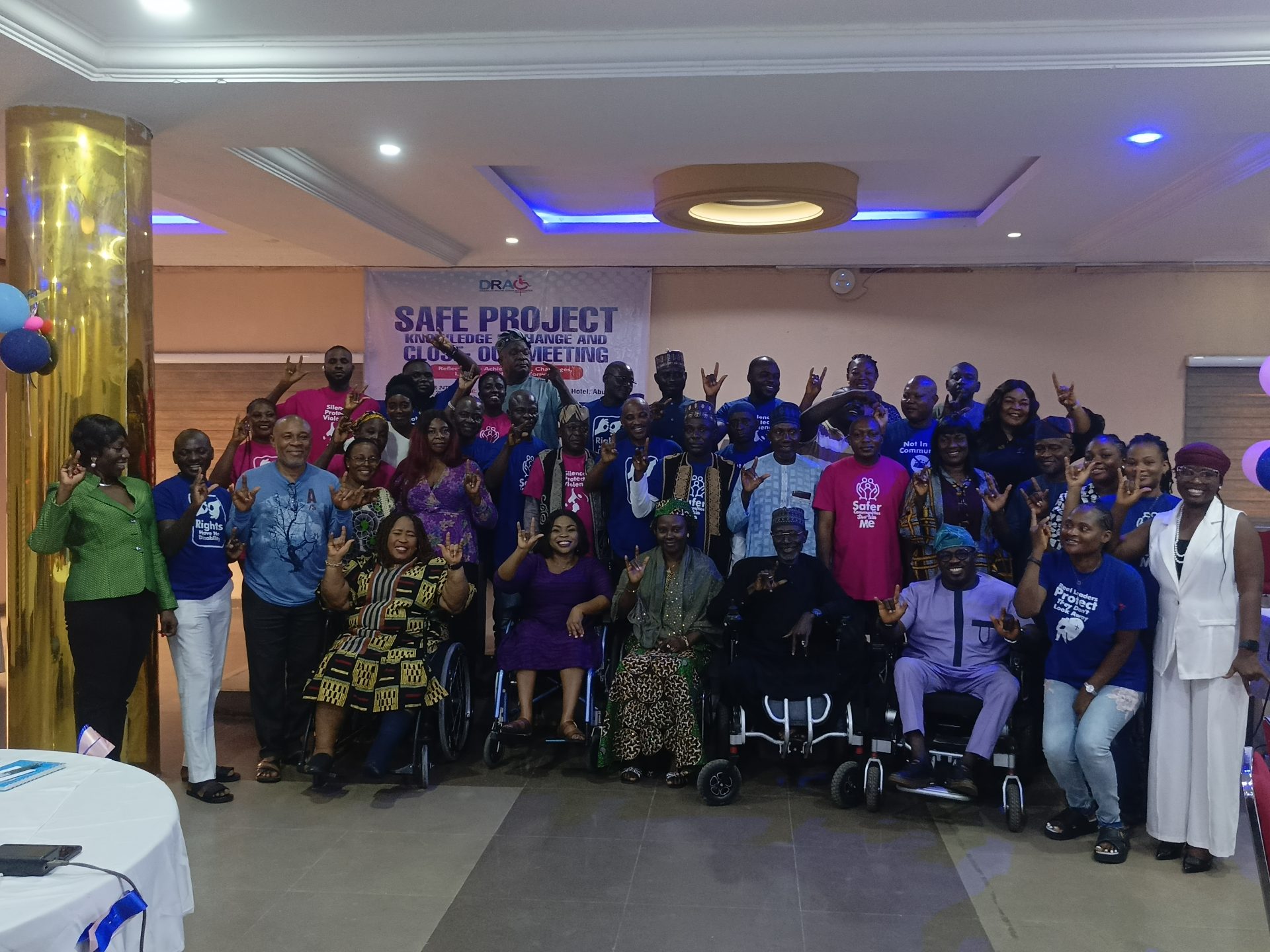
That was the central message from the Disability Rights Advocacy Center (DRAC) as it brought stakeholders together to reflect on the achievements, challenges and lessons from the SAFE Project.
Speaking at the SAFE Project Knowledge Exchange and Close-Out Meeting, themed “Reflecting on Achievements, Challenges, Lessons and the Way Forward,” DRAC Deputy Executive Director, Bukola Fakunle, stressed that the project’s conclusion must become a starting point for sustained action rather than a full stop.
“The close-out of SAFE should not be viewed simply as an ending, but as an opportunity to strengthen the commitments and relationships that will continue beyond the project.”
Fakunle made the remarks while welcoming government representatives, partners, community and traditional leaders, colleagues and other stakeholders to the meeting.
She spoke on behalf of DRAC Executive Director, Irene Patrick Ogbogu, and expressed appreciation to the Ford Foundation, project partners and all stakeholders whose contributions supported the implementation of SAFE.
Beyond Activities, Towards Lasting Change
According to Fakunle, SAFE has been more than a series of project activities. It has provided an opportunity for DRAC and its partners to engage communities, confront harmful practices and strengthen accountability for gender equality, particularly for women and girls with disabilities.
She said the experience had reinforced the importance of building trust and ensuring that communities are not merely participants in development interventions but become owners of the change being pursued.
“Meaningful change requires collaboration, trust and sustained community ownership,” she said.
The Deputy Executive Director acknowledged that the journey was not without obstacles.
Some stakeholders proved difficult to engage, while other activities required persistent follow-up to achieve the desired level of participation. These experiences, she noted, offered valuable lessons for future programming.
Rather than glossing over those difficulties, Fakunle encouraged stakeholders to use the close-out meeting as a platform for honest reflection.
‘What Worked? What Didn’t?’
The meeting is expected to provide stakeholders with an opportunity to examine the project from multiple perspectives—what worked, what did not work, what lessons emerged and what needs to change in future interventions.
Participants will also review the project’s key achievements and results, hear directly from community leaders and beneficiaries, examine findings from the endline assessment, and discuss practical strategies for sustaining the gains recorded under SAFE.
For DRAC, sustainability is critical.
The organisation believes that the true legacy of SAFE will ultimately be determined by what happens after the project’s formal closure—whether the relationships built, knowledge generated, community structures strengthened and commitments secured continue to influence action.
A Call for Collective Responsibility
Fakunle therefore urged participants to approach the meeting not simply as a ceremony marking the end of a project, but as a collective opportunity to chart the road ahead.
She encouraged stakeholders to engage in open and constructive conversations capable of identifying both successes and gaps.
“Today gives us an opportunity not only to celebrate what has been achieved, but also to reflect honestly on what worked, what did not, what we have learnt, and how we can sustain and build on the gains made.”
She expressed confidence that the lessons generated through SAFE would help strengthen future interventions aimed at promoting gender equality, challenging harmful practices and advancing the rights of women and girls with disabilities.
As stakeholders exchanged experiences and reflected on the project’s journey, one message stood out: projects may have timelines, but the struggle for dignity, equality, safety and inclusion cannot be confined to a project cycle.
For the women and girls with disabilities at the heart of SAFE, sustaining the gains will require continued commitment from communities, government, civil society organisations, development partners and other stakeholders.
The project may be closing. The work must continue.


