

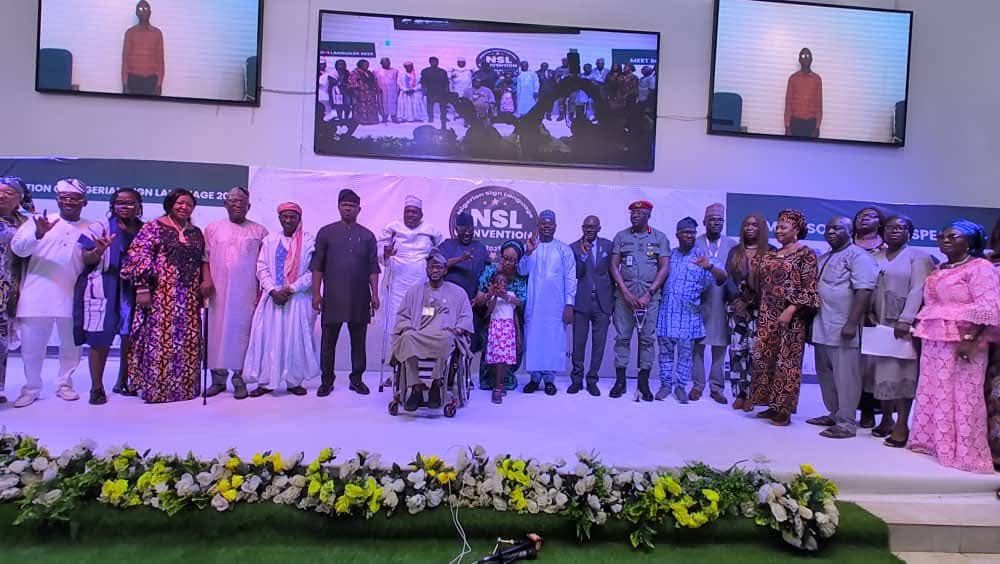
Abuja, Nigeria – September 2025
The Nigeria National Association of the Deaf (NNAD) has renewed its call for the full recognition of Nigerian Sign Language (NSL) as a fundamental human right, stressing that the language is central to Deaf identity, dignity, and inclusion in national life.
Speaking at a press conference in Abuja ahead of the 2025 National Convention on Nigerian Sign Language, NNAD National President, Hon. Haruna Muhammad Tsafe, declared that “no human rights can truly exist without sign language rights.”
This year’s convention is themed “No Human Rights Without Sign Language Rights”, with a sub-theme, “Advancing Deaf Identity and Inclusion through Nigerian Sign Language Recognition.” Both, according to Tsafe, capture the urgent need for Nigeria to embed NSL in policy, education, justice, governance, and health systems to ensure full participation of Deaf citizens.
A Week of Advocacy and Action
The 2025 NSL National Convention promises a rich lineup of activities designed to amplify the voices of Deaf Nigerians and push for systemic change. Among these are:
- Press and Public Engagements: including advocacy visits, a road walk, and strategic dialogues with policymakers.
- Technical Sessions and Plenaries: focusing on policy, education, and the standardization of Nigerian Sign Language.
- Leadership Training and AGM: aimed at strengthening Deaf leadership, organizational governance, and advocacy.
- Cultural Activities and Visibility Campaigns: including a novelty football match, community tours, and faith-based services celebrating Deaf culture.
Tsafe underscored that recognition of NSL is not symbolic but practical, requiring systemic changes and tangible resources.
A Call to Stakeholders
NNAD made a strong appeal to critical institutions and stakeholders:
- Federal Government and National Assembly: to formally recognize Nigerian Sign Language in law and policy, including during the ongoing constitutional review.
- Ministry of Education and Tertiary Agencies: to integrate NSL into teacher training, curricula, and examination access to ensure Deaf children learn in their natural language.
- Judiciary, Health, and Media Institutions: to guarantee the availability of qualified interpreters so Deaf Nigerians can access justice, health care, and public information.
- Development Partners and Donors: to invest in interpreter training, standardized NSL resources, and Deaf-led economic opportunities.
- Media Organizations: to amplify Deaf voices, employ interpreters during broadcasts, and use accessible formats in reporting.
“We must go beyond recognition on paper,” Tsafe stressed. “Recognition must come with resources — trained interpreters, NSL curricula, accessible materials, and support for Deaf entrepreneurs providing education and communication services.”
Why Sign Language Recognition Matters
NNAD emphasized that Nigerian Sign Language is not just a communication tool but a vehicle of culture, identity, and belonging for Deaf Nigerians. Without legal and policy backing, millions remain excluded from education, healthcare, justice, and governance.
The association linked its advocacy to international frameworks such as the United Nations Convention on the Rights of Persons with Disabilities (UNCRPD), which Nigeria has ratified, and global calls for linguistic rights as human rights.
Gratitude and Urgency
NNAD expressed gratitude to partners, development agencies, and the media for their support, while urging journalists to turn advocacy into visibility that drives policy change.
“Our message is simple and urgent,” Tsafe concluded. “There can be no full human rights if sign language rights are left behind. Nigerian Sign Language recognition is not optional — it is a necessity.”
The 2025 NSL Convention, already drawing national attention, is expected to end with a strong communique that will be presented to the Federal Government and relevant institutions as part of the Deaf community’s push for legal and policy recognition of Nigerian Sign Language.
Follow the The Qualitative Magazine channel on WhatsApp: https://whatsapp.com/channel/0029VanfIB50wajpjGi3JJ1G


