

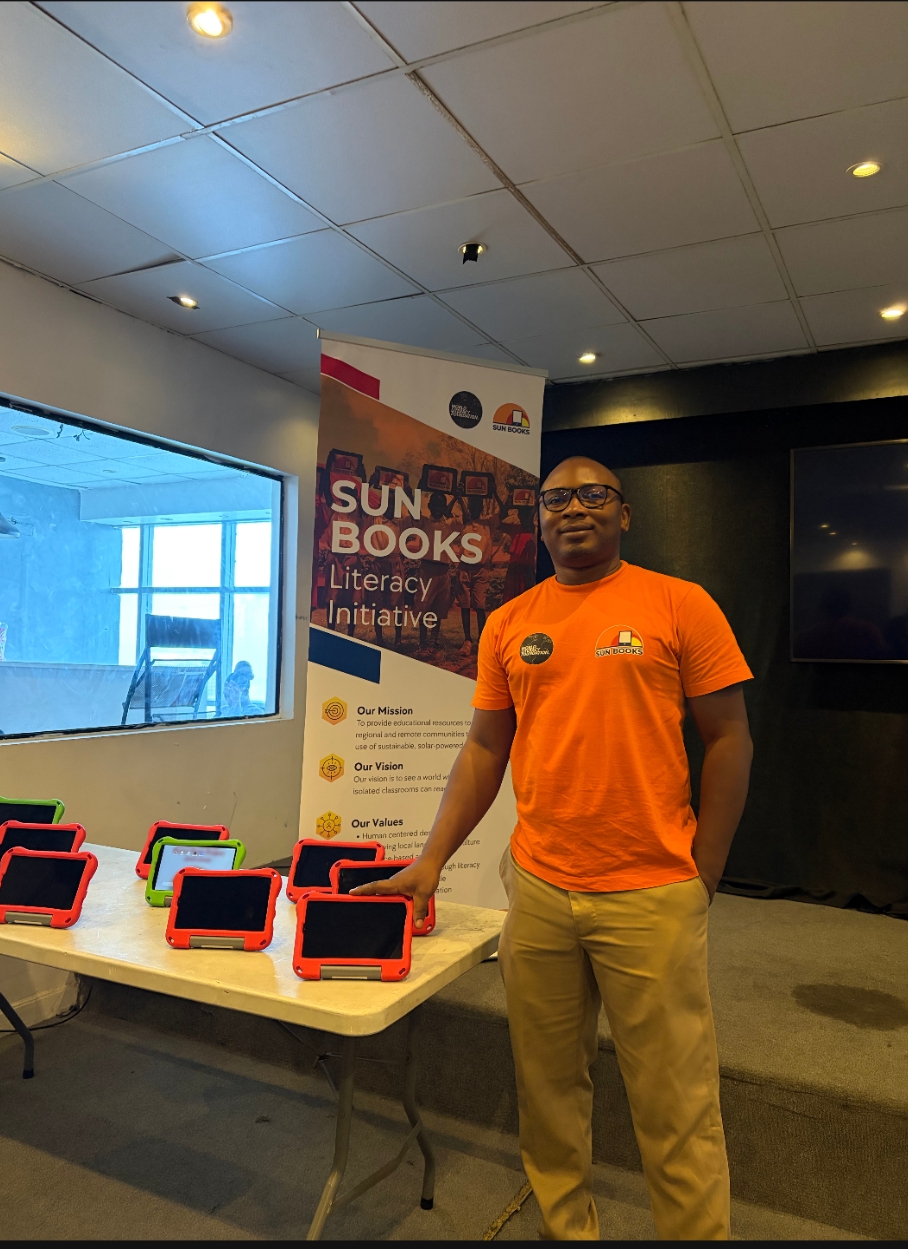
LAGOS, September 9, 2026 — What if a child could carry an entire library in their hands—even in a community without reliable electricity or internet access?
That question was at the heart of an International Literacy Day event held in Lagos, where the World Literacy Foundation (WLF) highlighted its efforts to expand access to books, digital learning and literacy support for children across Nigeria and beyond.
The event, held as the world marked the 60th anniversary of International Literacy Day, brought together education stakeholders, corporate partners, school leaders and youth advocates to spotlight initiatives designed to ensure that children are not left behind simply because they lack access to books, electricity or digital infrastructure.
Among the Foundation’s initiatives showcased were the Sun Books and Pen Pal programmes.
Millions of Nigerian Children Still Out of School
The celebration came against the backdrop of Nigeria’s continuing education crisis.
According to UNICEF figures cited at the event, approximately 18.3 million Nigerian children are out of school, including about 10.2 million children of primary-school age.
But getting children into classrooms is only part of the challenge.
Being physically present in school does not automatically mean a child is learning.
Concerns about literacy and learning outcomes remain significant, particularly in rural and underserved communities where children may have limited access to books, trained teachers, electricity and other learning resources.
Figures presented at the event indicate that Nigeria’s adult literacy rate is approximately 70 per cent, while learning poverty remains particularly pronounced in rural communities.
The challenge therefore extends beyond school enrolment to the fundamental question of whether children are actually acquiring the skills they need to read, understand information and participate fully in society.
A Solar-Powered Library Without Internet
One of the most striking solutions highlighted at the event is the Sun Books programme.
The initiative provides solar-powered tablets loaded with up to 600 e-books, stories, educational games, videos and audiobooks.
The devices are designed to work without mains electricity or an internet connection—a feature that could prove particularly valuable in communities where power supply and connectivity remain unreliable.
The programme also includes teacher training to help educators effectively integrate the devices into classroom learning.
Since its launch in 2014, the Sun Books programme has distributed more than 1,000 tablets and operates in several African countries, including Nigeria, Uganda, Zimbabwe and South Africa.
In Nigeria, the programme is currently active in Rivers State.
‘Literacy Goes Beyond Learning to Read’
World Literacy Foundation CEO and Founder Andrew Kay emphasised that literacy should not be viewed simply as the ability to decode words on a page.
According to Kay, literacy is a critical tool for unlocking opportunities, reducing poverty and helping children reach their full potential.
He also highlighted the reality that millions of young people still lack access to books and the support necessary to develop strong literacy skills.
That message resonates strongly in communities where children may attend school but still have limited access to reading materials outside the classroom.
Corporate and Education Stakeholders Rally Behind Literacy
The Lagos event attracted representatives from organisations including Sterling Bank, Money Africa, TotalEnergies, Heirs Energies and Coronation Group.
Head teachers from Ikota Nursery and Primary School and El Perez Nursery and Primary School, alongside the Education Secretary for Eti-Osa Local Government and Youth Ambassador Rayman Agban, also participated.
Their presence underscored the growing recognition that solving Nigeria’s literacy challenge requires more than government intervention alone.
It requires collaboration among schools, teachers, parents, communities, businesses, civil society organisations and development partners.
The Geography of Nigeria’s Literacy Crisis
The literacy challenge is also closely connected to geography and inequality.
The country’s Northwest and Northeast regions continue to face some of Nigeria’s weakest educational outcomes, despite significant donor investment in education over the past decade.
This raises an uncomfortable but important question:
Is Nigeria investing enough in education—or are we investing without adequately addressing the reasons why children continue to struggle to learn?
The answer may lie not only in funding but also in how resources are deployed, how teachers are supported, how communities are engaged and whether interventions are designed around the realities of children living in poverty and underserved environments.
One Book at a Time
The Foundation is also promoting its One Book at a Time campaign, which encourages people around the world to contribute $10 to provide a book for a child in need.
The campaign aims to reach 500,000 children, with donors able to select Africa as the region where their contribution will be directed.
The initiative reflects a simple but powerful idea: sometimes, changing a child’s future can begin with something as basic as putting a book in that child’s hands.
Literacy, Technology and Inclusion
As Nigeria searches for solutions to its education crisis, technology could become an important part of the answer—but only if access is designed around the realities of disadvantaged communities.
Solar-powered devices that do not depend on constant electricity or internet connectivity offer one possible pathway.
However, technology alone will not solve Nigeria’s literacy crisis.
Children still need trained and supported teachers, safe schools, relevant learning materials, supportive families and communities, and sustained investment in education.
And inclusion must remain at the centre of that conversation.
Children with disabilities, children in rural communities and those affected by poverty or displacement must not be left behind in the digital transformation of education.
A 60-Year-Old Global Call
International Literacy Day was established by UNESCO in 1966, making 2026 its 60th anniversary.
This year’s theme, “Literacy for People, the Planet, and Prosperity,” places literacy within a much broader development conversation.
For Nigeria, the message is particularly urgent.
Literacy is not merely about passing examinations.
It is about giving children the ability to understand the world around them, communicate, access information, pursue opportunities and participate meaningfully in society.
And as millions of Nigerian children continue to face barriers to education and learning, the question confronting policymakers and society is no longer simply:
“Are our children in school?”
It is:
“Are our children actually learning—and do they have the tools they need to build a better future?”
The World Literacy Foundation’s solar-powered tablets may be one piece of that puzzle.
But Nigeria’s literacy crisis will ultimately require something much bigger: sustained political commitment, smarter investment, innovation and a determination to ensure that no child is denied the opportunity to read, learn and thrive.


