

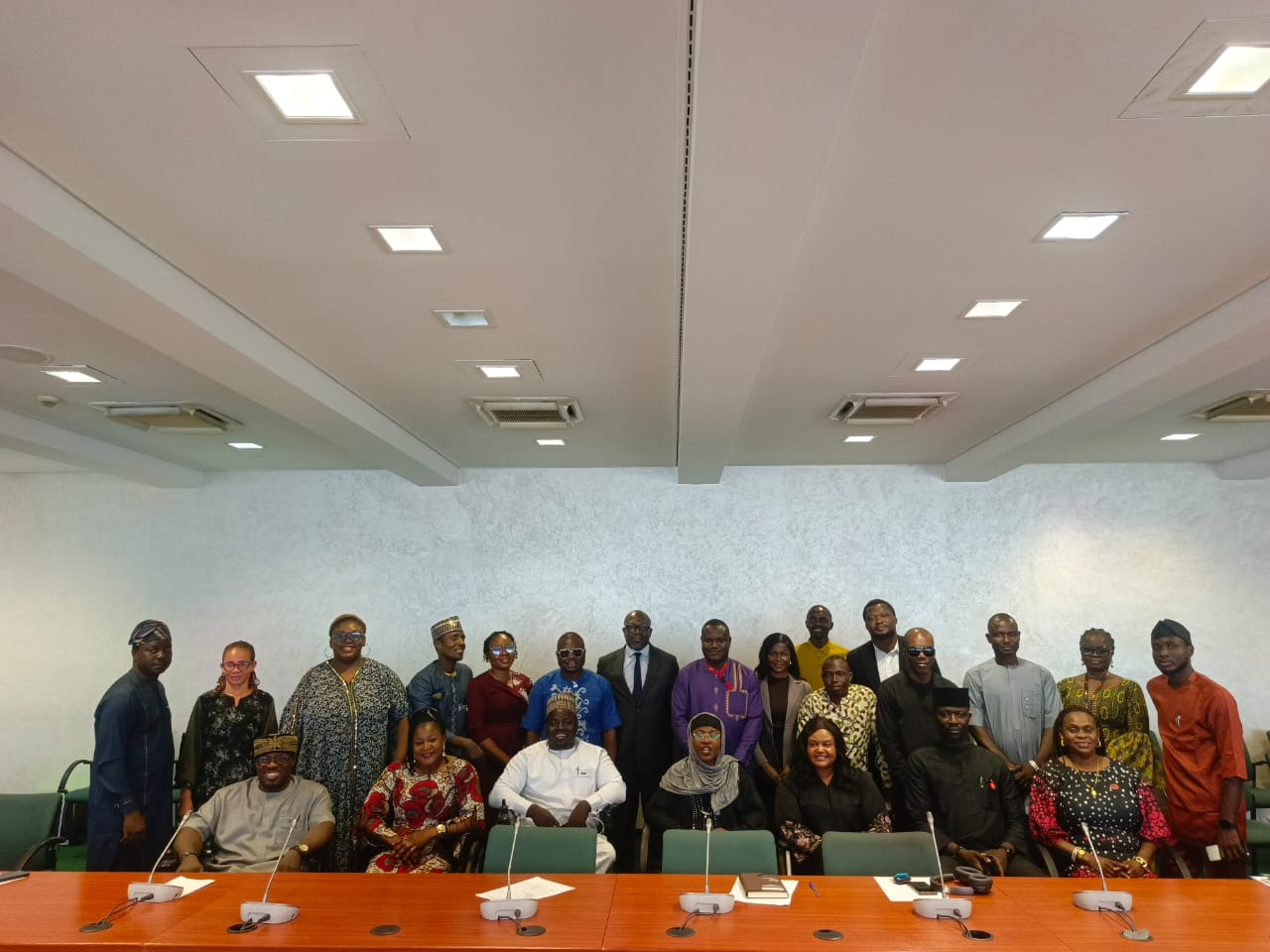
ABUJA, August 19, 2026 — The Global Disabilities Green Initiative (GDGI) has called for stronger inclusion of persons with disabilities in Nigeria’s climate policies, programmes and financing, insisting that the country’s climate action agenda must not leave behind the millions of Nigerians living with disabilities.
The call was made at a stakeholders’ meeting on the proposed National Summit on Disability-Inclusive Climate Action, held on Wednesday, August 19, at Committee Room 301 of the House of Representatives, National Assembly Complex, Abuja.
The meeting brought together representatives of government institutions, development partners, United Nations agencies, civil society organisations, Organisations of Persons with Disabilities (OPDs), private-sector actors and other stakeholders to deliberate on the planned national summit scheduled for October 14–15, 2026.
Speaking at the meeting, the Founder and President of GDGI, Angelina Ugben, said the forthcoming summit presents Nigeria with an opportunity to move beyond conversations about climate change and disability towards concrete commitments, policies and measurable actions.
According to her, while climate change affects everyone, its consequences are not experienced equally, with persons with disabilities often facing additional barriers before, during and after climate-related disasters.
She particularly highlighted women, children and persons with disabilities living in vulnerable communities as groups that can face disproportionate risks due to limited access to information, infrastructure, emergency response systems, livelihoods and other essential services.
‘This Must Change’
Ugben stressed that persons with disabilities must no longer remain at the margins of climate policy and decision-making.
“Climate change affects everyone, but its impacts are not experienced equally,” she said, noting that persons with disabilities are often underrepresented in climate policy, decision-making, green jobs, renewable energy initiatives and climate financing.
“This must change,” she declared.
She explained that the National Summit is being conceived as more than another gathering where stakeholders deliver speeches and take photographs.
Rather, GDGI wants the October summit to generate clear commitments, partnerships, policy recommendations and practical actions that can contribute to Nigeria’s climate agenda while strengthening the participation and leadership of persons with disabilities.
Disability Inclusion Must Be Part of Nigeria’s Climate Agenda
Ugben also drew attention to the global climate agenda as the international community prepares for COP31 in Antalya, Türkiye, describing the forthcoming conference as an important opportunity for Nigeria to ensure that disability inclusion is reflected in its climate priorities.
She noted that areas of focus in the global climate conversation—including the clean energy transition, electrification, climate finance, resilient cities and infrastructure, sustainable agriculture, green industrial transformation, circular economy and strengthening the resilience of vulnerable communities and ecosystems—must be approached through an inclusion lens.
For persons with disabilities, she said, this should translate into practical opportunities and improved access to renewable energy and clean technologies, green skills, decent green jobs, climate-smart agriculture, accessible infrastructure, climate information, adaptation programmes and inclusive climate financing.
She argued that climate action cannot be considered truly inclusive if persons with disabilities continue to face barriers to participating in or benefiting from these emerging opportunities.
‘Nothing About Us Without Us’
A major message from the stakeholders’ meeting was the need for meaningful participation of persons with disabilities in climate decision-making.
Ugben reaffirmed GDGI’s commitment to the principle that nothing about persons with disabilities should be decided without their meaningful participation.
She stressed that inclusion must go beyond inviting persons with disabilities to meetings or placing them among participants for visibility.
“Persons with disabilities must not only be present at the table; they must be part of shaping policies, programmes and solutions,” she emphasised.
This, she said, would require a deliberate shift from token representation to genuine participation, leadership and decision-making.
Building a Broad Coalition
The GDGI President acknowledged that achieving disability-inclusive climate action cannot be the responsibility of a single organisation.
She called for a strong coalition involving the Federal Government, National Assembly, development partners, UN agencies, private-sector organisations, civil society, academia, the media and, most importantly, Organisations of Persons with Disabilities.
According to her, collaboration among these actors will be critical to ensuring that the October summit produces outcomes capable of influencing policy and practice beyond the event itself.
She expressed appreciation to the Office of the Senior Special Assistant to the President on Climate Technology and Operations, Federal Ministry of Environment, National Council on Climate Change (NCCC), International Labour Organization (ILO), United Nations Development Programme (UNDP), National Assembly, development partners, government institutions and OPDs for their support and commitment to the initiative.
From Consultation to Action
The stakeholders’ meeting was framed as an important preparatory step towards the October summit, providing an opportunity for key actors to discuss how disability inclusion can be positioned within Nigeria’s wider climate action framework.
Ugben urged participants to approach the process with unity, openness and a spirit of partnership, stressing that the quality of the October summit would depend largely on the commitments and decisions emerging from preparatory engagements such as the Abuja meeting.
She said the decisions reached by stakeholders would help shape the direction, impact and relevance of the National Summit on Disability-Inclusive Climate Action.
A Turning Point for Disability and Climate Action
As Nigeria confronts the growing realities of climate change, the GDGI believes the country has an opportunity to ensure that persons with disabilities are recognised not merely as vulnerable populations requiring protection, but also as active contributors, innovators, leaders and partners in climate solutions.
The organisation is therefore positioning the October summit as a platform for elevating the voices of persons with disabilities within Nigeria’s climate discourse and creating pathways for their participation in the emerging green economy.
Closing her remarks, Ugben challenged stakeholders to make the forthcoming summit a defining moment for disability inclusion in climate action.
“Let this Summit be a turning point—from visibility to meaningful participation, from participation to leadership, and from leadership to measurable action.”
With the National Summit scheduled for October 14–15, attention will now turn to how stakeholders can translate the commitments and discussions from the Abuja meeting into concrete outcomes that will place disability inclusion at the heart of Nigeria’s climate action agenda.
Follow the The Qualitative Magazine channel on WhatsApp:


